Residential and commercial spaces differ significantly in their flooring installation needs. A homeowner usually focuses on warmth, comfort, and beautiful flooring that makes a house feel like home. A business owner, on the other hand, needs a surface that can take a beating, meet safety codes, and maintain its appearance under heavy use.
The material you choose influences much more than just appearance. It affects durability, maintenance costs, noise levels, and even resale value. Understanding these distinctions ensures you pick flooring that fits your property’s function, design, and long-term needs.
Let’s explore how residential and commercial flooring differ in material composition, installation, and performance, and why those differences matter for every property owner.
What Is Residential Flooring?
Residential flooring adds comfort to daily living, enhances your home’s design, and creates a warm, inviting atmosphere. You’ll find it in living rooms, bedrooms, kitchens, hallways, and basements, spaces where visual appeal and comfort underfoot take priority over industrial toughness.
Main Goals of Residential Flooring
- Provide comfort for daily living
- Match the home’s overall design theme
- Offer easy cleaning and low maintenance
- Deliver long-term value for homeowners
Homeowners choose residential floors based on their lifestyle and daily needs. A family might prefer soft, noise-absorbing carpet for the bedroom, while another homeowner may love the timeless look of hardwood for the living room.
Popular Types of Residential Flooring
- Hardwood Flooring: Hardwood flooring adds timeless elegance and natural warmth to any home. It offers lasting durability and classic appeal, and you can refinish it multiple times to keep it looking fresh for years.
Available in species like oak, maple, and walnut, hardwood offers a natural texture that enhances living rooms, dining areas, and hallways. With proper care, hardwood floors can last for decades, making them a true long-term investment in both style and value.
- Luxury Vinyl Plank (LVP): LVP combines realistic wood or stone visuals with superior water resistance, making it one of today’s most popular residential flooring choices. It’s durable enough for busy households and completely waterproof, making it perfect for kitchens, bathrooms, and basements.
The cushioned backing provides extra comfort and sound reduction underfoot, while its click-lock installation makes it easy to replace or repair. LVP offers the best balance of affordability, appearance, and practicality for modern homes.
- Laminate Flooring: Laminate flooring delivers the beauty of hardwood at a fraction of the cost. Its protective wear layer resists scratches, stains, and fading, making it ideal for homes with children or pets. Installation is quick and simple, often using a floating system that locks into place over existing subfloors. Laminate is a smart, budget-friendly choice that delivers high visual impact with low maintenance.
- Ceramic and Porcelain Tile: Tile flooring offers exceptional durability and moisture resistance, making it ideal for wet areas like kitchens, bathrooms, and laundry rooms.
Ceramic tiles are budget-friendly and come in endless colors and patterns, while porcelain provides extra strength and water resistance for long-term use.
They are easy to clean, allergy-friendly, and resistant to stains and odors—a perfect fit for families or high-moisture environments. Tiles also help keep interiors cool, especially in warm climates, while giving any space a clean, polished look.
- Carpet: Carpet brings unmatched comfort, warmth, and sound absorption to your home. Its soft texture makes it a favorite for bedrooms, living rooms, and family areas where relaxation is key.
Carpet also reduces noise and provides insulation, helping to maintain a cozy indoor environment. With endless options in color, pile, and pattern, it allows homeowners to personalize their spaces with comfort and style.
Pro Tip:
Many homeowners combine materials strategically, for example, installing LVP in kitchens and hallways for durability and carpet in bedrooms for comfort. This mix creates a cohesive design that balances practicality, aesthetics, and overall home flow.
What Is Commercial Flooring?
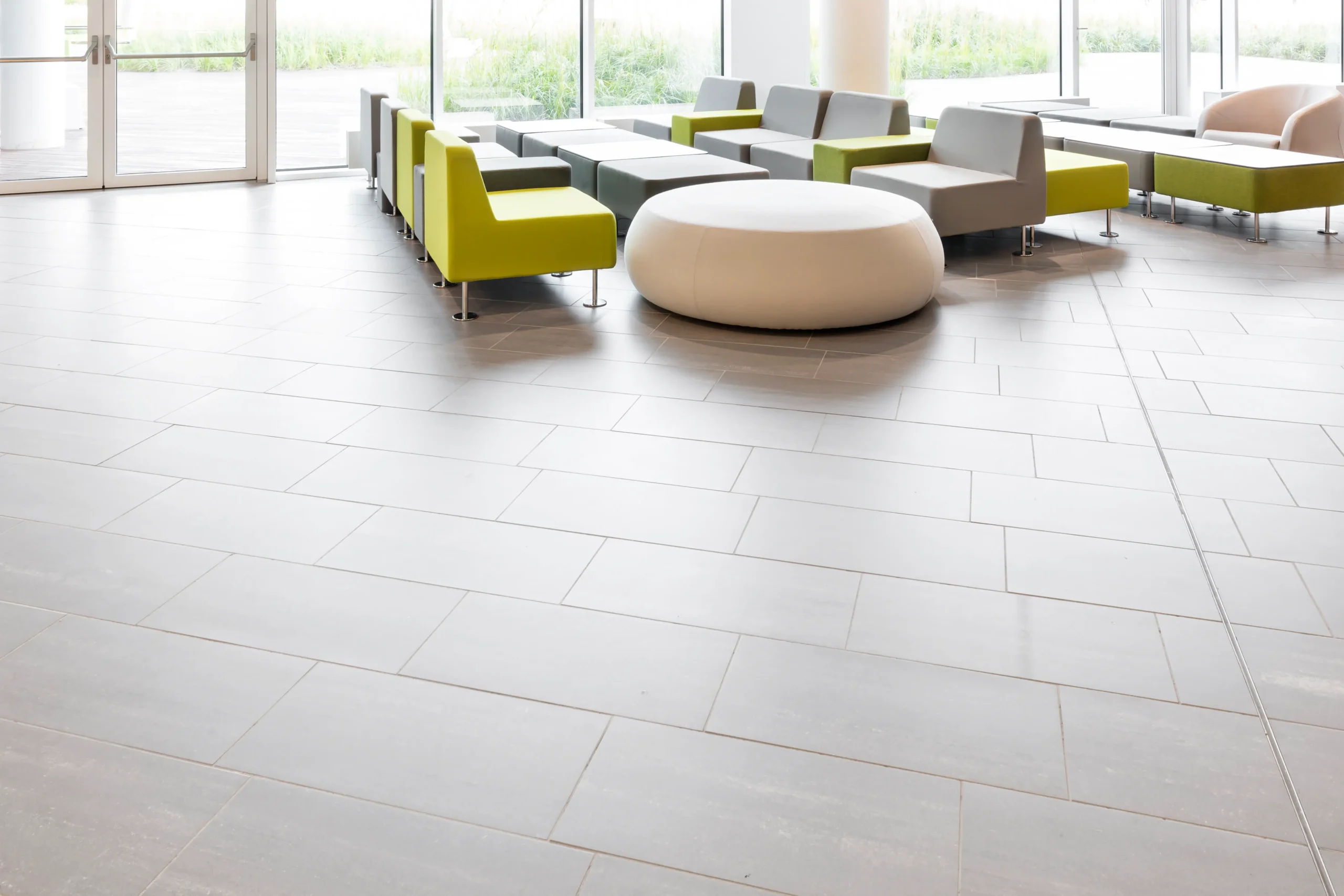
Commercial flooring withstands the toughest conditions constant foot traffic, heavy equipment, and frequent cleaning. Unlike residential flooring, which focuses on comfort and design, commercial flooring prioritizes strength, performance, and safety.
Business owners, property managers, and facility planners must consider durability, maintenance efficiency, and long-term value when selecting materials.
Commercial floors don’t just look good, they’re built to last. They resist scratches, stains, chemicals, and impacts while maintaining a polished, professional appearance that reflects a company’s image.
Key Features of Commercial Flooring
1. Thick Wear Layers (20–40 mils or more) for Superior Protection
Commercial floors include heavy-duty wear layers that shield against scuffs, dents, and continuous movement. This layer protects the floor’s design and structure, even in areas with thousands of daily footsteps. A thicker wear layer also extends the lifespan, reducing the need for frequent replacements.
2. Reinforced Backings to Prevent Dents and Warping
The backing layer of commercial flooring provides stability and resilience. It prevents warping from temperature changes and supports heavy furniture or equipment without deformation. This reinforced base keeps the surface smooth, secure, and comfortable to walk on, even under high-pressure use.
3. Compliance With ADA Accessibility and Fire-Resistance Standards
Every commercial floor must meet safety and accessibility regulations. The Americans with Disabilities Act (ADA) ensures that flooring offers proper traction and slip resistance. Additionally, materials must pass fire safety and smoke emission tests to comply with local building codes. These standards guarantee that commercial spaces remain safe and accessible for all users.
4. Installed Using Strong Industrial Adhesives
Commercial floors rely on specialized adhesives designed to handle moisture, weight, and movement. These adhesives bond materials firmly to the subfloor, preventing lifting, gaps, or bubbling over time. Because businesses can’t afford downtime, this method ensures durability, reliability, and minimal future maintenance.
5. Designed for Seamless Cleaning and Low Upkeep
Ease of cleaning is one of the biggest priorities in commercial flooring. Materials like LVT, VCT, and epoxy are smooth, non-porous, and resistant to spills and chemicals. This makes routine maintenance faster and more cost-effective while keeping spaces hygienic and professional-looking.
Common Types of Commercial Flooring
- Vinyl Composition Tile (VCT): Vinyl Composition Tile is a long-standing favorite in commercial interiors such as schools, offices, and retail stores.
It’s strong, budget-friendly, and easy to maintain, making it ideal for spaces with consistent foot traffic. You can refinish or wax VCT multiple times to restore its shine and keep it looking new, even after years of use. The tiles are easy to replace individually if damaged, keeping maintenance costs low. Thanks to its balance of durability, affordability, and versatility, VCT remains one of the most popular commercial flooring choices today. - Epoxy Flooring Systems: Epoxy flooring creates a seamless, glossy surface that’s resistant to moisture, stains, and chemicals. You’ll often find it in hospitals, laboratories, garages, and industrial warehouses where hygiene, safety, and easy cleaning matter most. The coating bonds tightly to concrete, forming a surface that withstands heavy machinery, spills, and high impacts.
Epoxy flooring lets you customize its surface with decorative flakes or non-slip textures to boost both safety and visual appeal. With its strength and smooth, reflective finish, epoxy offers a perfect mix of functionality and style for demanding environments. - Commercial Carpet Tiles: Commercial carpet tiles bring comfort, color, and acoustic control to professional spaces. They come in modular pieces that are easy to install, letting you replace damaged tiles without redoing the entire floor. These tiles reduce noise levels and add warmth to offices, coworking areas, and conference rooms. They also come in a wide range of patterns and textures, helping brands express personality through interior design. Because of their practicality and flexibility, carpet tiles have become a preferred choice in modern commercial buildings.
- Luxury Vinyl Tile (LVT): Luxury Vinyl Tile combines the elegance of hardwood or stone with industrial-grade durability. It’s waterproof, scratch-resistant, and resilient under constant foot traffic. Many LVT products feature cushioned backing that improves comfort and reduces noise, a big advantage in offices and hospitality settings. Installation is straightforward, and maintenance is minimal, requiring only routine sweeping and mopping. For restaurants, showrooms, and hotel lobbies that demand both style and performance, LVT delivers exceptional long-term value.
- Rubber Flooring: Rubber flooring stands out for its safety and comfort. It’s slip-resistant, shock-absorbing, and naturally anti-static, perfect for gyms, hospitals, and childcare centers. This material provides excellent traction even when wet, reducing the risk of accidents. It’s also environmentally friendly, often made from recycled rubber, and offers impressive sound insulation. With low maintenance needs and a long lifespan, rubber flooring is one of the most dependable and sustainable options for commercial spaces.
Key Differences Between Residential and Commercial Flooring
Residential and commercial floors may look alike, but they differ greatly in design, construction, and installation. The difference lies in how each space functions, the amount of foot traffic it handles, and the performance demands placed on the flooring over time.
Below is a clear breakdown showing how both types differ in focus, durability, cost, and lifespan:
| Feature | Residential Flooring | Commercial Flooring |
|---|---|---|
| Main Focus | Comfort, design, and warmth | Strength, safety, and durability |
| Durability | Moderate — built for daily home use | High — handles constant, heavy traffic |
| Wear Layer | 6–12 mil | 20–40+ mil |
| Slip Resistance | Optional | Required (ADA & OSHA compliant) |
| Installation | Simple, often DIY-friendly | Complex, requires adhesives and curing time |
| Maintenance | Light cleaning | Regular maintenance and inspections |
| Cost Range | $3–8 per sq. ft. | $6–15 per sq. ft. |
| Lifespan | 5–25 years | 10–25 years (depending on use and care) |
Understanding the Differences
1. Purpose and Design Focus: Homeowners choose residential flooring to add warmth, comfort, and a sense of personal style to their spaces. It’s about how the space feels underfoot and how well it complements the home’s décor. Commercial flooring, however, is designed for performance built to endure heavy wear, ensure safety, and deliver lasting reliability under constant use. It must look good and perform flawlessly in high-traffic conditions.
2. Durability and Performance: Floors in homes deal with regular activities like walking, lounging, and cleaning. In contrast, commercial floors face constant stress from rolling chairs, equipment, and hundreds of people every day. That’s why commercial materials use thicker wear layers, stronger backings, and reinforced adhesives, all designed for maximum longevity.
3. Safety and Compliance: Commercial spaces must follow strict safety codes, with flooring materials tested for slip resistance, fire safety, and accessibility compliance. Residential floors don’t always require these certifications since they’re made for comfort, not heavy-duty performance.
4. Installation Process: Installing residential flooring is often simpler, with floating planks, click-lock systems, or nail-down hardwood being common. Commercial installations require more preparation. Contractors may need to grind or level the subfloor, apply moisture barriers, and use high-performance adhesives. Some floors, like epoxy or vinyl composite tile, also require a curing time before use.
5. Maintenance and Longevity: Home floors usually require light cleaning, occasional refinishing, or replacement every couple of decades. Commercial floors undergo scheduled maintenance programs, including polishing, waxing, or resealing to preserve appearance and meet safety standards. Although they cost more initially, they offer better value over time because they last longer and need fewer replacements.
6. Cost and Investment: Residential flooring typically costs less per square foot, but it’s not designed for continuous wear. Commercial flooring costs more upfront due to specialized materials, installation techniques, and added safety features. However, when you factor in lifespan and durability, commercial options often provide a lower total cost of ownership.
7. Lifespan and Value: A residential floor can last decades with gentle care, but in a commercial setting, that same material might fail within a few years. Commercial floors are built to handle that pressure, delivering reliable performance for 10–25 years, sometimes longer, with proper maintenance.
Best Flooring Options for High-Traffic Commercial Areas
In commercial spaces, the flooring endures constant movement from footsteps, rolling carts, heavy equipment, and daily cleaning. This is why durability, safety, and low maintenance are non-negotiable features.
When choosing flooring for these environments, it’s not just about looks; it’s about long-term performance, compliance, and cost efficiency. Below are some of the best materials trusted by professionals for high-traffic commercial areas:
1. Vinyl Composition Tile (VCT)
Vinyl Composition Tile remains a dependable workhorse for offices, schools, hospitals, and retail stores. It’s made from a combination of vinyl resins, fillers, and pigments pressed into durable tiles. VCT handles constant foot traffic, heavy rolling loads, and frequent cleaning without losing structure.
It can be stripped, waxed, and polished multiple times to restore its shine, extending its usable life. Maintenance is simple, and replacement of individual tiles is quick, minimizing disruption to operations. Because of its cost-effectiveness and longevity, VCT is a top choice for large commercial buildings with steady activity.
2. Epoxy Flooring Systems
Epoxy flooring is a favorite for industrial facilities, hospitals, and warehouses where hygiene and toughness are essential. It forms a seamless coating over concrete surfaces, creating a glossy, chemical-resistant barrier that’s easy to clean. This flooring can withstand forklifts, machinery, and constant movement while staying attractive for years.
Epoxy is available in multiple finishes, from high-gloss decorative coatings to non-slip textures for safety zones. Its impermeable surface resists moisture and prevents bacterial buildup, making it ideal for spaces that require sanitation. Few materials can match epoxy’s combination of beauty, performance, and industrial-grade endurance.
3. Commercial Carpet Tiles
Carpet tiles are a practical solution for spaces that need comfort, sound absorption, and a welcoming atmosphere. Their modular design means individual squares can be replaced if damaged without tearing up the entire floor. They help reduce noise in busy offices, coworking spaces, and call centers, creating a quieter work environment.
Carpet tiles come in a vast range of patterns, colors, and pile types, allowing brands to express their identity through design. They’re also easy to install and maintain, offering flexibility during renovations or layout changes. For commercial interiors that require both comfort and functionality, carpet tiles strike a perfect balance.
4. Luxury Vinyl Tile (LVT) and Stone Plastic Composite (SPC)
Luxury Vinyl Tile, and its rigid-core version SPC, combine style with performance.
They replicate the natural look of hardwood, marble, or ceramic yet resist scratches, dents, and spills. Their multi-layer construction provides dimensional stability, waterproofing, and high-impact resistance. These floors are ideal for restaurants, hotels, and retail shops where design matters as much as durability.
LVT and SPC also offer cushioned underlays for comfort and improved acoustics, making them great for modern open offices. With simple maintenance and outstanding visual appeal, LVT and SPC are among the most popular choices for high-traffic spaces.
5. Rubber Flooring
Rubber flooring is known for its slip resistance, resilience, and comfort underfoot.
It provides a naturally cushioned surface that absorbs impact and reduces fatigue, essential for employees who stand for long hours. Its textured surface offers excellent traction, even in wet areas like gyms, locker rooms, or hospitals.
Rubber is also eco-friendly, often made from recycled materials, and it dampens noise effectively. With minimal maintenance and exceptional durability, it’s one of the safest and most sustainable commercial flooring materials available.
Pro Tip: Before selecting a material, always review its Coefficient of Friction (COF) rating. This number measures how slip-resistant the flooring is, a critical factor for safety compliance under ADA and OSHA standards. A higher COF ensures greater traction, protecting both employees and customers in high-traffic zones.
Cost Comparison: Residential vs. Commercial Flooring
One of the biggest differences between residential and commercial flooring is cost—not only in the price per square foot but also in long-term maintenance and performance.
While residential materials tend to be cheaper upfront, commercial-grade flooring is an investment that pays off through durability, safety, and a longer lifespan.
Initial Installation Costs
Residential flooring projects typically cost less because they cover smaller areas and use lighter materials. Homeowners often install floating floors or simple underlayments that require less labor.
Commercial installations, on the other hand, demand extensive subfloor preparation, industrial adhesives, moisture barriers, and sometimes acoustic layers. These extra steps increase upfront costs but ensure that the flooring performs well under constant use.
| Flooring Type | Residential Price (per sq. ft.) | Commercial Price (per sq. ft.) |
| Hardwood | $6–10 | $10–15 |
| Vinyl / LVP | $3–5 | $6–8 |
| Carpet | $2–4 | $4–6 |
| Tile | $4–8 | $8–12 |
| Epoxy | Rare in homes | $8–15 |
Maintenance Costs and Lifecycle Value
While residential floors are easier and cheaper to maintain, they often need earlier replacement. A home carpet may last 7 years, while a commercial-grade carpet tile can endure 10+ years with proper cleaning. Commercial materials are engineered for long-term ROI; they can handle daily traffic, cleaning, and equipment use without early wear.
Over time, the total cost of ownership (TCO) for commercial flooring tends to be lower. That’s because maintenance schedules extend product life, reducing the need for complete replacements. A polished epoxy floor, for instance, can last 20 years with basic recoating, while residential vinyl may require full replacement within 10 years.
Hidden and Indirect Costs
Commercial installations can involve additional, often overlooked expenses:
- Moisture mitigation systems to prevent bubbling or warping
- Acoustic underlayment for noise control in multi-floor buildings
- Safety coatings for slip resistance
- Downtime costs, since businesses may need to pause operations during installation
These hidden costs can make commercial projects appear more expensive upfront, but they protect your investment and prevent future repair costs.
Return on Investment (ROI)
Residential flooring adds aesthetic and comfort value to a home, often improving resale appeal. However, commercial flooring directly impacts business operations, influencing employee safety, customer perception, and even brand image. Durable flooring materials such as epoxy, LVT, or VCT deliver a strong ROI by minimizing downtime, repair costs, and safety risks.
The right floor can also help maintain a professional appearance for years, reducing the need for frequent renovations.
Flooring Lifespan and Maintenance
The lifespan of your flooring depends on where it’s installed, the type of material, and how it’s maintained over time. Residential floors are designed for comfort and visual appeal. Materials like hardwood, vinyl, and tile can last for decades with proper care.
Commercial flooring, however, is built for performance. It endures continuous traffic, frequent cleaning, and heavy use, requiring stronger options such as epoxy, LVT, or VCT.
Proper maintenance, including routine cleaning, periodic recoating, and scheduled inspections, can significantly extend the life of any floor. You can learn more about which flooring materials last longest and how to maintain them effectively in our detailed guide on Flooring Lifespan and Maintenance.
Can Residential Flooring Be Used in a Commercial Space?
Many property owners wonder whether residential flooring can perform well in a business setting. The answer depends on factors like foot traffic, safety standards, and durability expectations. Residential materials may look beautiful and cost less upfront, but they’re not always designed for heavy use. In commercial spaces, they often wear faster, fade more easily, or lose warranty coverage altogether.
That said, hybrid options such as commercial-rated LVP or engineered hardwood offer a great balance between style and strength, perfect for light commercial areas that want a home-like feel. Our full article on Using Residential Flooring in Commercial Spaces explains when this approach works and when it’s best to choose fully commercial-grade materials.
Installation Differences
The installation process is another major distinction between residential and commercial flooring. Residential installation is often faster and simpler, with systems like click-lock planks, nail-down hardwood, or glue-down vinyl. These options are DIY-friendly and ideal for homeowners who want quick results.
Commercial flooring installation, on the other hand, demands professional skill.
It involves subfloor preparation, moisture barriers, heavy-duty adhesives, and specific curing times, all while meeting ADA and OSHA compliance standards. This extra attention ensures the floor remains stable, safe, and long-lasting under continuous use.
For a closer look at how installation methods differ and why proper technique affects longevity, read our in-depth article on Residential vs. Commercial Flooring Installation.
Choosing the Right Flooring
With so many options available, choosing the right flooring requires balancing design, function, and budget. For homes, focus on warmth, comfort, and aesthetic appeal. For businesses, consider durability, safety, maintenance costs, and long-term ROI.
Environmental conditions and daily traffic play a big role in performance, so always match materials to how the space is used. At PK Floors Rockwall, we guide homeowners and business owners through this decision, from hardwood and tile to commercial-grade epoxy and LVT, ensuring your floor fits both your style and your needs.
You can explore more detailed recommendations in our complete guide on How to Choose the Right Flooring for Your Space.
Overall
Residential and commercial flooring may appear similar at first glance, but their purpose, structure, and performance could not be more different. Each is designed to meet a unique set of needs, one prioritizing comfort and design, the other durability and compliance.
Residential flooring focuses on warmth, beauty, and everyday livability. It transforms a house into a home, making each step feel comfortable and inviting. Materials like hardwood, LVP, and carpet help create personalized spaces that reflect your lifestyle and taste.
Commercial flooring, on the other hand, is built for performance and safety. It’s engineered to handle heavy foot traffic, rolling equipment, and strict maintenance standards. From epoxy-coated surfaces to LVT and VCT, these materials combine resilience, hygiene, and low maintenance, the pillars of any successful business environment.
Choosing the right flooring is not just a design decision; it’s a long-term investment in comfort, safety, and value. Whether you’re upgrading a living room or remodeling a busy office, the right material ensures lasting beauty and dependable performance.
At PK Floors Rockwall, we understand that every property is unique. Our expert team helps you compare flooring options based on your needs, traffic levels, and budget.
We provide honest guidance, professional installation, and premium materials that deliver both elegance and endurance.
So, if you’re planning a new flooring project, residential or commercial, let us help you make a confident choice that enhances your space for years to come.