

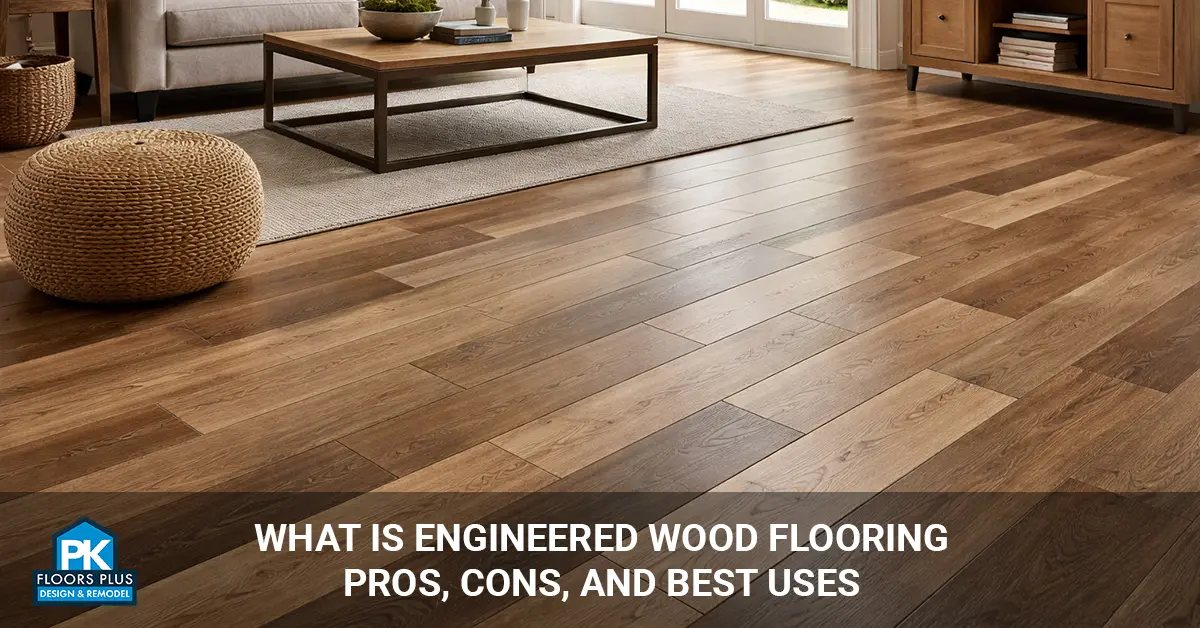
Engineered wood flooring is real wood flooring designed to be more stable and flexible than solid hardwood. It gives you the natural wood look many homeowners want, without some of the limits that come with solid wood.
People choose engineered wood because it handles moisture and temperature changes better. It also works in more areas of the home, including places where solid hardwood isn’t always a good idea. That said, it’s not the right choice for every situation.
This guide explains what engineered wood flooring is, how it’s made, its pros and cons, and when it makes more sense than solid hardwood or other flooring options.
What Is Engineered Wood Flooring?
Engineered wood flooring is real wood flooring built to be more stable than solid hardwood. It uses a thin layer of natural hardwood on top of several layers of plywood or fiberboard.
Because the surface is real wood, it looks and feels like traditional hardwood. The layered base underneath helps control movement from moisture and temperature changes, which makes engineered wood a better option for more rooms in the home.
How Engineered Wood Flooring Is Made
Engineered wood flooring is made using multiple layers to improve strength and stability. This layered design helps the floor handle moisture and temperature changes better than solid wood.
The top layer is a thin piece of real hardwood, usually oak, maple, or walnut, which gives the floor its natural wood look. Under that are several layers of plywood or high-density fiberboard, arranged in opposite directions. This cross-layer construction helps reduce warping, cupping, and shrinking in changing environments.
Pros of Engineered Wood Flooring
Engineered wood flooring is valued for its stability and flexibility in everyday living spaces. It handles changes in humidity and temperature better than solid hardwood, which helps reduce movement and long-term issues.
Another advantage is where it can be installed. Engineered wood works well over concrete subfloors and is compatible with radiant heating systems. It also supports multiple installation methods, such as floating or glue-down, which can lower installation time and cost.
In many cases, engineered wood is more affordable than solid hardwood while still delivering the look and feel of real wood.
Cons of Engineered Wood Flooring
Engineered wood flooring has advantages, but it also comes with a few limitations to keep in mind. Understanding these helps set the right expectations before choosing it.
The main drawback is refinishing. Engineered wood can only be refinished a limited number of times, depending on how thick the top wood layer is. Floors with very thin veneers may not be refinishable at all. Quality can also vary between manufacturers, and lower-quality options may wear out faster, so choosing a well-made product is important for long-term use.
Engineered Wood vs Solid Hardwood Flooring
Engineered wood and solid hardwood may look alike, but they behave very differently once installed. The right choice depends on how and where the floor will be used.
Solid hardwood flooring is made from one solid piece of wood and can be refinished many times, which gives it a longer overall lifespan. Engineered wood is built in layers, so it handles moisture and temperature changes better but has fewer refinishing options. If long-term durability and refinishing are your top priorities, solid hardwood is usually the better option. If you need more flexibility, better moisture resistance, and easier installation, engineered wood often makes more sense.
Best Rooms for Engineered Wood Flooring
Engineered wood flooring works best in rooms where moisture and temperature levels can change. Its layered construction helps it stay stable in conditions where solid hardwood may struggle.
Basements, kitchens, and condos are common spaces where engineered wood performs better than solid hardwood. It’s also a strong choice for rooms built over concrete subfloors or homes with radiant heating. Homes in climates with humidity swings benefit from engineered wood’s added stability and flexibility.
Where Engineered Wood Flooring Should Be Avoided
Engineered wood flooring should be avoided in areas with constant or heavy moisture. While it handles moisture better than solid hardwood, it is not waterproof.
Bathrooms, laundry rooms with frequent spills, and flood-prone spaces can damage engineered wood over time. In these areas, tile or other waterproof flooring options are usually a safer and longer-lasting choice.
How Long Does Engineered Wood Flooring Last?
Engineered wood flooring usually lasts between 20 and 40 years with proper care. The exact lifespan depends on the quality of the floor and how well it’s maintained.
Floors with thicker wear layers tend to last longer and may allow for one or two refinishing cycles. Good installation and regular maintenance, like routine cleaning and quick spill removal, also play a big role in keeping engineered wood in good condition over time.
Installation Options for Engineered Wood Flooring
Engineered wood flooring offers more installation options than solid hardwood. This flexibility makes it easier to use in different homes and room types.
It can be installed using floating, glue-down, or nail-down methods. Floating installations are common and quicker to install, while glue-down works well over concrete subfloors. Choosing the right installation method helps prevent movement and improve long-term performance, which is why professional installation is often recommended.
Choosing the right flooring installation options helps prevent movement and improves long-term performance.
Maintenance and Care Tips
Engineered wood flooring is easy to care for when you follow a few simple habits. Regular maintenance helps keep it looking good and performing well over time.
Sweeping or vacuuming often removes dirt and grit that can cause scratches. Spills should be cleaned right away to prevent moisture damage. Furniture pads help protect the surface from dents and wear, especially in high-traffic areas. If the wear layer is thick enough, refinishing can refresh the floor’s appearance and extend its lifespan.
When Is Engineered Wood the Better Choice?
Engineered wood flooring is the better choice when you need real wood with more flexibility and moisture resistance. It’s designed to handle conditions where solid hardwood may struggle.
Engineered wood works well in basements, condos, kitchens, and homes with concrete subfloors. It’s also a practical option for remodels or upgrades where solid hardwood isn’t suitable. For homeowners who want the look of real wood without as many limitations, engineered wood offers a balanced and reliable solution.
Cost of Engineered Wood Flooring
Engineered wood flooring usually costs less than solid hardwood but more than laminate flooring. It sits in the middle when it comes to price and value.
The total cost depends on the wood species, the thickness of the top veneer, and the overall build quality. Installation costs can also vary based on the method used and the condition of the subfloor. While the upfront price is moderate, engineered wood offers good value because it combines real wood appearance with strong performance and durability.
Common Mistakes to Avoid
The most common mistakes with engineered wood flooring happen when quality and preparation are overlooked. Avoiding these issues helps protect your floor long term.
Choosing engineered wood with a very thin wear layer can limit how long the floor lasts. Skipping the acclimation process before installation may also lead to movement or gaps later. Installing engineered wood in wet areas or ignoring proper subfloor preparation can cause damage and reduce performance over time.
Final Thoughts
Engineered wood flooring gives you the look of real hardwood with added stability and flexibility. It performs well in areas where solid hardwood can struggle, while still delivering a natural wood finish that suits many homes.
By knowing where engineered wood works best and where it should be avoided, you can make a confident choice that fits your space, lifestyle, and long-term needs.