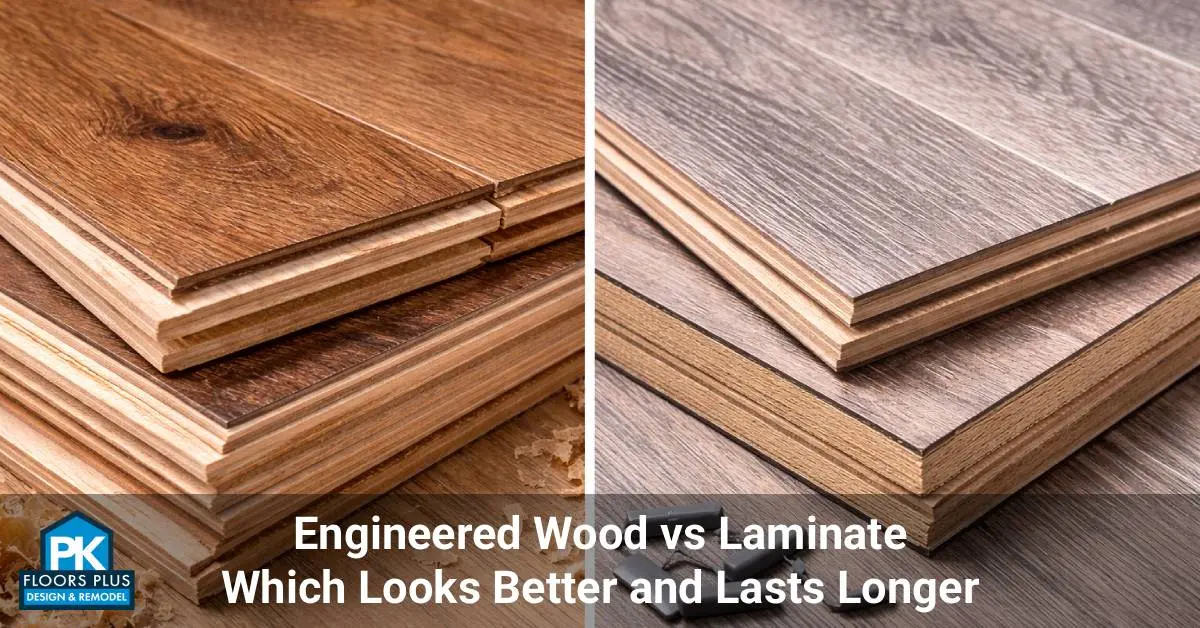
Engineered wood usually looks more natural and lasts longer than laminate, but laminate can be the better choice for some homes. The difference comes down to how each floor is made and how it holds up over time.
Both options are popular because they look like wood. But they don’t perform the same. Engineered wood uses real hardwood, while laminate uses a printed surface designed to mimic wood.
The right choice depends on what matters most to you. Appearance, durability, budget, and how long you expect the floor to last all play a role. This guide explains the differences in simple terms so you can choose what works best for your home.
What Is Engineered Wood Flooring?
Engineered wood flooring is real hardwood on the surface with a strong, layered base underneath. The top layer is genuine wood, while the lower layers are built to add stability.
Because it uses real wood, many homeowners choose engineered flooring for its natural look and flexibility. You can learn more in our detailed guide on engineered wood flooring. The layered design helps it handle temperature and moisture changes better than solid wood, which makes it a good option for more rooms in the home.
What Is Laminate Flooring?
Laminate flooring is a synthetic flooring option made to look like wood. It uses a high-resolution image layer covered by a clear protective surface.
While laminate can look like real wood from a distance, it doesn’t contain hardwood on the surface. Its durability comes from a tough wear layer that resists scratches, dents, and everyday wear.
Appearance Comparison: Which Looks Better?
Engineered wood looks more natural than laminate. That’s because it uses real hardwood on the surface.
You can see real grain, texture, and depth in engineered wood that laminate can’t fully match. Laminate has improved a lot, but up close the surface still looks flatter and more uniform.
Both options come in a wide range of colors and styles. Over time, engineered wood ages better and develops natural character. Laminate, on the other hand, shows wear once the top layer is damaged. If appearance matters most, engineered wood is usually the better choice.
Durability and Lifespan: Which Lasts Longer?
Engineered wood lasts longer than laminate in most homes. With proper care, engineered wood floors often last 20 to 40 years, depending on the thickness of the real wood layer.
Laminate flooring usually lasts 10 to 20 years. Once the top wear layer is damaged, it can’t be repaired or refinished and must be replaced.
Engineered wood has a clear advantage because it can be refinished. Floors with thicker wear layers can be sanded once or twice, which helps extend their lifespan. For long-term durability, engineered wood is the better option.
Resistance to Scratches, Dents, and Moisture
Laminate is more resistant to scratches than engineered wood. Its tough surface holds up well in homes with pets or heavy foot traffic.
Engineered wood can scratch more easily, but many surface marks can be repaired or refinished. Laminate doesn’t offer that option. Once the surface is damaged, replacement is the only fix.
Neither flooring type is waterproof. Laminate handles small spills better, while engineered wood resists moisture better than solid hardwood. Standing water, however, can damage both.
Maintenance and Care Differences
Laminate flooring is easier to maintain on a daily basis. Regular sweeping and light damp cleaning are usually all it needs.
Engineered wood requires a bit more care. Spills should be wiped up quickly, and harsh cleaners should be avoided. With proper care, engineered wood keeps its look longer and can be refreshed through refinishing. If low maintenance matters most, laminate is the simpler option.
Installation Differences
Laminate flooring is easier and faster to install. It’s designed for floating installation and is often suitable for DIY projects.
Engineered wood offers more installation options, including floating, glue-down, and nail-down methods. Because of this flexibility, installation is more complex and usually handled by professionals.
In most cases, laminate also costs less to install than engineered wood.
Cost Comparison: Upfront and Long-Term
Laminate flooring costs less upfront than engineered wood. Material and installation costs are usually lower.
Engineered wood costs more at the start, but it often delivers better long-term value. Its longer lifespan and ability to be refinished reduce how often the floor needs to be replaced.
If you’re working with a tight budget, laminate is the better choice. If long-term value matters more, engineered wood is usually worth the investment.
Best Rooms for Each Flooring Type
Engineered wood works best in living rooms, bedrooms, dining rooms, and condos. When installed correctly, it also performs well over concrete subfloors.
Laminate is a good choice for high-traffic areas, rental properties, and homes with pets. It’s also commonly used in basements where durability is more important than refinishing.
Bathrooms and laundry rooms aren’t ideal for either flooring type due to moisture.
Pros and Cons Summary
Engineered wood offers a more natural look and longer lifespan, while laminate focuses on durability and affordability. Each option has clear strengths and trade-offs.
Engineered Wood Pros
Engineered wood looks like real hardwood because it uses real wood on the surface. It lasts longer than laminate, can be refinished, and often adds value to a home.
Engineered Wood Cons
Engineered wood costs more upfront and needs more care. It can also scratch more easily than laminate, especially in busy households.
Laminate Pros
Laminate costs less and resists scratches well. It’s easy to maintain and is often suitable for DIY installation.
Laminate Cons
Laminate is not real wood and cannot be refinished. Once the surface wears out, the floor usually needs to be replaced, which shortens its overall lifespan.
Which Should You Choose?
You should choose engineered wood if you want the most natural look and long-term durability. It’s a good fit for homeowners who plan to stay long term and care most about appearance.
Laminate is the better option if you want a durable floor at a lower cost with minimal upkeep. It works well for busy homes, rental properties, and budget-focused projects.
The right choice comes down to your lifestyle, budget, and how you expect the floor to perform over time.
Final Thoughts
Engineered wood and laminate may look similar at first, but they age and perform very differently. Engineered wood stands out for appearance and long-term value, while laminate offers durability at a lower cost.
By understanding how each option looks, lasts, and holds up over time, you can choose the flooring that fits your home, budget, and lifestyle.