Over the last ten years, Luxury Vinyl Plank (LVP) flooring has changed how homeowners and commercial builders think about durable flooring. LVP is the perfect mix of style and strength because it looks like real wood, lasts a long time, and is waterproof.
Knowing how LVP flooring is made, put down, and cared for will help you make the best choice, whether you’re remodeling your home or choosing materials for a big business project.
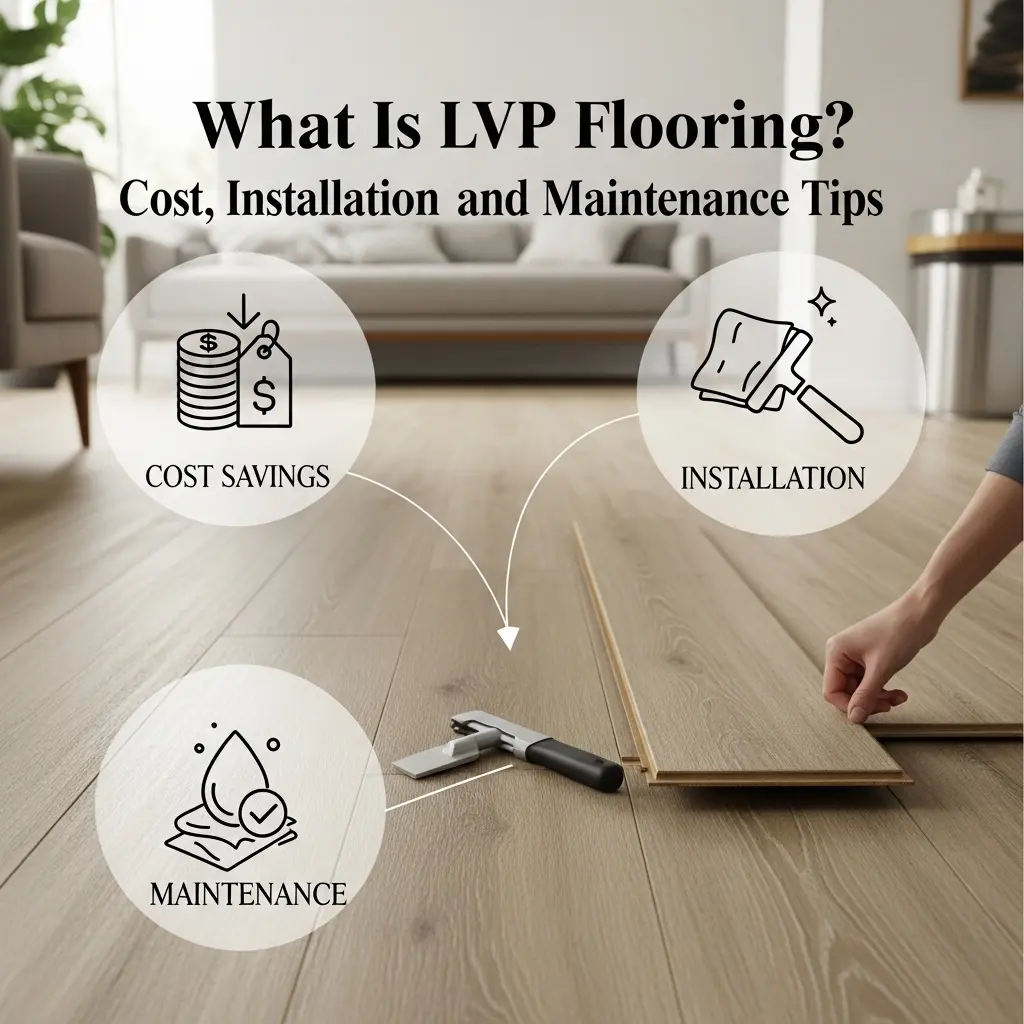
What Is LVP Flooring?
Luxury Vinyl Plank (LVP) flooring is a long-lasting, waterproof type of vinyl flooring that looks and feels like real wood. There are several layers in each plank. The wear layer protects against scratches, the printed vinyl layer gives the wood a realistic look, the rigid core adds strength and stability, and the backing layer makes it comfortable and absorbs sound.
LVP won’t warp, swell, or stain when it gets wet, unlike regular hardwood. This makes it great for kitchens, bathrooms, and basements. It is also easy to put together, doesn’t cost much, and doesn’t need much upkeep. It combines the beauty of wood with the usefulness of modern materials.
Different kinds of LVP flooring
There are three main types of luxury vinyl plank (LVP) flooring. Each one has its own benefits depending on the space and how you want to install it:
- Floating LVP with Click-Lock: Planks snap together and “float” over the subfloor, making them great for do-it-yourself projects and quick installations.
- Glue-Down LVP: Vinyl adhesive holds each plank to the subfloor, making it a stable, long-lasting choice for areas with a lot of foot traffic.
- Loose-Lay LVP: Stays in place thanks to weight and friction. It’s great for small rooms or temporary setups.
There are also SPC (Stone Plastic Composite) and WPC (Wood Plastic Composite) cores that make the material more rigid, soundproof, and waterproof. These are great for both homes and businesses.
What is the price of LVP flooring?
The price of LVP flooring (Luxury Vinyl Plank) varies by brand, thickness, and quality, but it usually costs between $2 and $7 per square foot. Basic residential options start at $2 to $3 per square foot. Mid-range and high-end LVP with thicker wear layers and better textures can cost $4 to $7 or more per square foot.
If you hire someone to install it for you, you should expect to pay an extra $1.50 to $3 per square foot for labor. The total cost of installation is now around $4 to $10 per square foot.
LVP flooring is generally less expensive than hardwood or tile. It looks like real wood, is waterproof, and lasts a long time at a lower price.
How to Put Down LVP Flooring
Follow these easy steps to get a clean, professional look when you install LVP flooring (luxury vinyl plank):
- Get the subfloor ready: Check to see that it is clean, dry, and level. Get rid of old flooring and trash.
- Plan the layout: Find out how big the room is and which way the planks should go, which is usually parallel to the longest wall.
- Cut and fit planks: Trim pieces with a utility knife, leaving a ¼-inch expansion gap along walls.
- Click or glue planks in place: For floating floors, snap planks together; for glue-down types, apply adhesive evenly.
- Finish the edges: Add baseboards or transition strips and clean the surface.
Tip: Acclimate planks to room temperature for 24–48 hours before installation to prevent expansion or contraction.
How to Clean LVP Flooring
To clean LVP flooring (luxury vinyl plank), use gentle methods that protect its finish and waterproof surface:
- Sweep or vacuum daily: Remove dirt, dust, and debris that can cause scratches.
- Mop weekly: Use a damp microfiber mop with a pH-neutral vinyl floor cleaner or warm water. Avoid soaking the floor.
- Spot clean spills immediately: Wipe up liquids with a soft cloth to prevent residue buildup.
- Avoid harsh products: Never use wax, bleach, or steam cleaners, as they can damage the wear layer.
- Protect high-traffic areas: Use rugs and felt pads under furniture to reduce scuffs.
How Long Does LVP Flooring Last?
LVP flooring (luxury vinyl plank) typically lasts 15 to 25 years and even longer with proper care. Its lifespan depends on wear layer thickness, installation quality, and maintenance.
- Residential-grade LVP with a 12–20 mil wear layer usually lasts 20+ years.
- Commercial-grade LVP with a 28+ mil wear layer can exceed 25 years in high-traffic areas.
- Regular cleaning, avoiding moisture damage, and using protective pads under furniture help extend its life.
Unlike hardwood, LVP doesn’t warp, fade, or require refinishing, making it one of the most durable and low-maintenance flooring options available today.
Is LVP Flooring Waterproof?
Yes, LVP flooring (Luxury Vinyl Plank) is 100% waterproof, making it one of the most durable flooring choices for moisture-prone areas. Each plank has a sealed surface and rigid core layer (SPC or WPC) that prevents water from seeping through or damaging the floor.
Because of its waterproof design, LVP can be safely installed in kitchens, bathrooms, basements, laundry rooms, and commercial spaces without swelling or warping.
Unlike laminate or hardwood, luxury vinyl plank resists spills, humidity, and standing water, offering the natural look of wood with the long-term protection of vinyl.
Is LVP Flooring Better Than Laminate?
Yes, LVP flooring (Luxury Vinyl Plank) is generally better than laminate for most homes, especially in areas exposed to moisture. The most significant difference is that LVP is fully waterproof, while laminate is only water-resistant.
LVP also has a softer, warmer feel underfoot, better scratch and stain resistance, and requires less maintenance over time. It can handle humidity and spills without warping, unlike laminate floors.
While laminate offers a similar wood look at a slightly lower price, LVP flooring lasts longer, performs better in wet areas, and provides greater overall durability and comfort, making it the smarter long-term investment.
What Is LVP Flooring Made Of?
LVP flooring (Luxury Vinyl Plank) is made of multiple engineered layers that work together to create a durable, realistic, and waterproof surface. Each plank typically includes:
- Wear Layer: A clear, protective coating that resists scratches, stains, and UV damage.
- Decor Layer: A high-definition printed vinyl film that mimics natural wood grain and color.
- Core Layer: Made of PVC, SPC (Stone Plastic Composite), or WPC (Wood Plastic Composite) for stability and water resistance.
- Backing Layer: Provides support, sound absorption, and balance.
This layered construction gives luxury vinyl plank flooring its realistic wood look, comfort underfoot, and exceptional durability for both residential and commercial use.
Where Can You Install LVP Flooring?
You can install LVP flooring (Luxury Vinyl Plank) almost anywhere in your home or business, thanks to its waterproof, scratch-resistant, and durable design. It performs exceptionally well in both dry and moisture-prone areas, including: Kitchens and dining rooms
- Bathrooms and laundry rooms
- Basements and entryways
- Living rooms and bedrooms
- Offices, retail stores, and commercial spaces
Because LVP resists humidity, temperature changes, and spills, it’s ideal for high-traffic or high-moisture environments where hardwood or laminate might fail.
What Are the Pros and Cons of LVP Flooring?
LVP flooring (luxury vinyl plank) offers a strong balance of beauty, durability, and value, but it’s not perfect for every situation. Here’s a quick overview:
Pros:
- Waterproof and scratch-resistant, ideal for kitchens, bathrooms, and basements.
- Affordable compared to hardwood and tile.
- Easy to install with click-lock or glue-down systems.
- Low maintenance, requiring only simple cleaning.
- Realistic wood and stone looks enhance any space.
Cons:
- It can fade under direct sunlight if unprotected.
- Not as rigid or valuable as real hardwood.
- May dent under heavy furniture if no padding is used.
Overall, LVP flooring delivers long-lasting performance, waterproof reliability, and modern aesthetics, making it one of today’s most popular flooring choices.
Can You Install LVP Flooring Over Tile or Concrete?
Yes, you can install LVP flooring (luxury vinyl plank) over both tile and concrete, as long as the surface is clean, dry, and level.
For tile floors, make sure the tiles are firmly set and the grout lines aren’t too deep. If needed, apply a thin leveling compound for a smooth surface.
For concrete subfloors, ensure the slab is fully cured, free from moisture, and sealed if necessary to prevent vapor issues. Click-lock LVP works best for floating installations over these surfaces, while glue-down LVP requires a suitable adhesive. This makes LVP a versatile flooring option for renovations, letting you upgrade old floors without costly demolition.
How Thick Should LVP Flooring Be?
The ideal thickness for LVP flooring (luxury vinyl plank) depends on where it’s being installed and how much foot traffic the space gets.
- Residential spaces: Choose planks that are 4–6 mm thick with a 12–20 mil wear layer for long-lasting durability.
- High-traffic or commercial areas: Go for 6–8 mm thick planks with a 28 mil or higher wear layer for extra protection.
- Low-traffic rooms (like bedrooms): 3.5–4 mm planks can be sufficient.
In general, thicker LVP offers better sound absorption, comfort, and dent resistance. Always balance thickness with wear-layer quality to ensure the best performance for your flooring.
Is LVP Flooring Safe or Toxic?
Yes, LVP flooring (Luxury Vinyl Plank) is safe for homes and commercial spaces when made by reputable manufacturers. Most modern LVP products are low-VOC, phthalate-free, and FloorScore® or GreenGuard Gold certified, meaning they emit very few chemicals into the air.
High-quality LVP uses non-toxic materials in its wear and core layers, making it safe for children, pets, and indoor air quality.
To ensure safety, always check for certifications like low-VOC, CARB2, or GreenGuard on the packaging.
How Does LVP Compare to Hardwood Flooring?
LVP flooring (Luxury Vinyl Plank) offers the look of hardwood with greater durability, water resistance, and affordability. While hardwood flooring is made from real wood and adds natural beauty and long-term resale value, it’s also prone to scratches, moisture damage, and higher maintenance expenses.
By contrast, LVP is 100% waterproof, easier to install, and budget-friendly, making it ideal for kitchens, bathrooms, and basements where hardwood may fail.