Solid hardwood flooring is real wood flooring that offers long-lasting beauty and value, but it isn’t the best choice for every home. It’s loved for its natural look, solid feel underfoot, and ability to last for decades when properly cared for.
Homeowners have used solid hardwood for generations because it ages well and never goes out of style. At the same time, it does come with limits. Moisture, humidity, and lifestyle needs can affect how well it performs in certain spaces.
This guide breaks down what solid hardwood flooring is, how it holds up over time, and the pros and cons to consider. By the end, you’ll know whether solid hardwood makes sense for your home or if another option would be a better fit.
What Is Solid Hardwood Flooring?
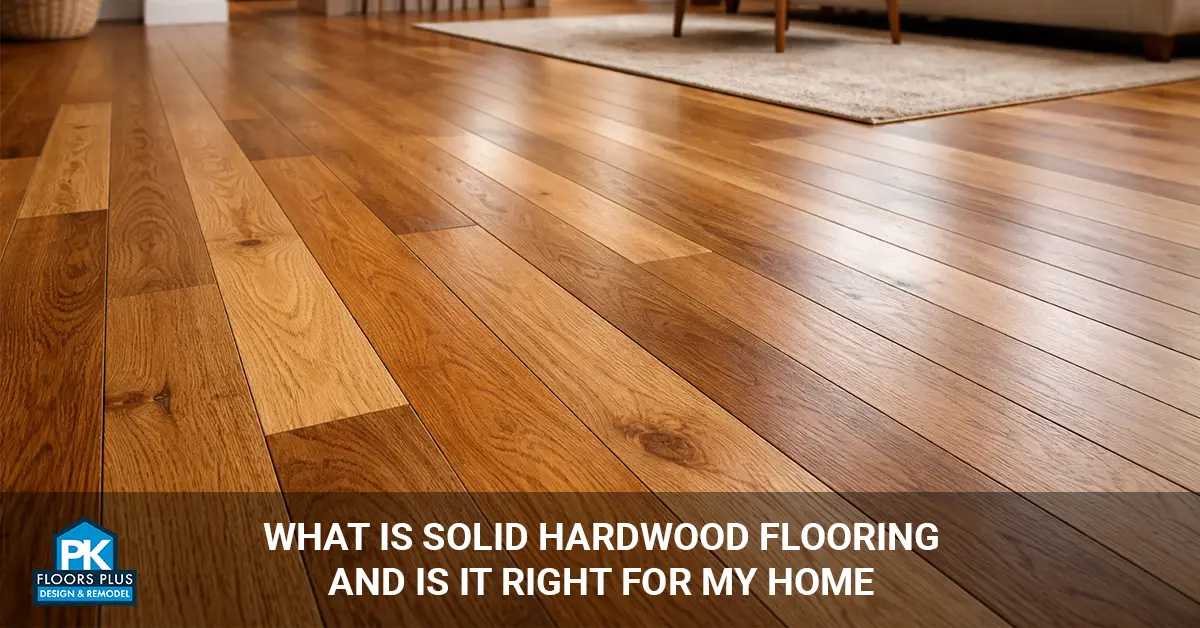
Solid hardwood flooring is real wood flooring made from one solid piece of natural wood from top to bottom. Each plank is cut from hardwood and finished to create a strong, long-lasting surface.
Because it’s made entirely from real wood, solid hardwood has a natural look and feel that manufactured flooring can’t fully match. Another major benefit is that it can be sanded and refinished multiple times, which helps extend its life and keep it looking good for decades.
How Solid Hardwood Flooring Is Made
Solid hardwood flooring is made by cutting hardwood logs into planks of consistent size and shape. Most planks are about ¾ inch thick, which gives the floor enough depth to be sanded and refinished multiple times over its lifespan.
Different wood species are used depending on the look and durability desired. Oak, maple, walnut, cherry, and hickory are common choices, each offering its own grain pattern, hardness, and color. This variety allows homeowners to choose a style that fits both their space and how the floor will be used.
Pros of Solid Hardwood Flooring
Solid hardwood flooring is a long-lasting and valuable flooring option for many homes. It’s known for its durability, classic appearance, and ability to stand the test of time.
One of the biggest advantages is its lifespan. With proper care, solid hardwood floors can last 50 years or more, and surface wear can be fixed through refinishing instead of full replacement. Solid hardwood also adds resale value, as many homebuyers prefer real wood floors when choosing a home.
Another major benefit is its timeless look. Solid hardwood never goes out of style and fits well in both traditional and modern interiors, making it a safe long-term design choice.
Cons of Solid Hardwood Flooring
Solid hardwood flooring has clear advantages, but it also comes with a few important drawbacks to consider. Knowing these limits helps avoid problems later.
One major concern is moisture and humidity. Solid wood reacts to changes in moisture, which can cause it to expand, shrink, or warp over time. Solid hardwood also has a higher upfront cost, as both the material and professional installation are usually more expensive than engineered wood or laminate.
Because of its sensitivity to moisture, solid hardwood isn’t suitable for every room. Areas like basements, bathrooms, and other moisture-prone spaces are usually better served by alternative flooring options.
Cons of Solid Hardwood Flooring
Solid hardwood flooring has clear advantages, but it also comes with a few important drawbacks to consider. Knowing these limits helps avoid problems later.
One major concern is moisture and humidity. Solid wood reacts to changes in moisture, which can cause it to expand, shrink, or warp over time. Solid hardwood also has a higher upfront cost, as both the material and professional installation are usually more expensive than engineered wood or laminate.
Because of its sensitivity to moisture, solid hardwood isn’t suitable for every room. Areas like basements, bathrooms, and other moisture-prone spaces are usually better served by alternative flooring options.
Best Rooms for Solid Hardwood Flooring
Solid hardwood flooring works best in rooms with stable moisture and temperature levels. Consistent indoor conditions help the wood stay flat and perform well over time.
Living rooms, bedrooms, and dining rooms are ideal spaces because they typically have low moisture and steady humidity. Homes with good climate control and proper humidity regulation are especially well-suited for solid hardwood flooring.
Where Solid Hardwood Flooring Should Be Avoided
Solid hardwood flooring should be avoided in areas with high moisture or frequent spills. Excess moisture can cause the wood to swell, warp, or develop gaps over time.
Basements, bathrooms, and laundry rooms are not good locations for solid hardwood. Kitchens can also be risky, especially in busy homes where spills and humidity are common. In these spaces, engineered wood flooring usually performs better and lasts longer because it handles moisture and humidity more effectively than solid wood.
How Long Does Solid Hardwood Flooring Last?
Solid hardwood flooring can last decades when properly installed and maintained.
Most solid hardwood floors last 50 years or more. Some historic homes still have original hardwood floors that are over a century old.
Refinishing plays a big role in longevity. Each hardwood floor refinishing process restores the surface and extends the floor’s life.
Installation Considerations for Solid Hardwood
Solid hardwood flooring is usually installed using a nail-down method over a wood subfloor. This method keeps the planks secure and allows the floor to expand and contract naturally.
Before installation, the subfloor must be dry, level, and stable to prevent future movement or damage. The hardwood also needs time to acclimate to the home’s indoor environment so it adjusts to temperature and humidity. Because proper installation directly affects how the floor performs over time, professional installation is strongly recommended.
Maintenance and Care Tips
Solid hardwood floors are easy to maintain when simple care habits are followed. Regular upkeep helps protect the surface and extend the life of the floor.
Sweeping or vacuuming often removes dirt and grit that can cause scratches. Spills should be cleaned immediately to prevent moisture damage. Using furniture pads helps reduce dents and scratches, especially in high-traffic areas. Depending on use and wear, refinishing is usually needed every 7 to 15 years to keep the floor looking its best.
Is Solid Hardwood Flooring Right for Your Home?
Solid hardwood flooring is a good choice if you want long-term value, natural beauty, and a floor that can be refinished over time. It performs best in homes with stable humidity and in rooms where moisture exposure is minimal.
If your home has basements, higher humidity, or frequent spills, another flooring option may be more practical. Your budget, daily lifestyle, and where the flooring will be installed should all be considered before making the final decision.
Cost of Solid Hardwood Flooring
Solid hardwood flooring costs more upfront than most other flooring options. The price of materials depends on the wood species you choose, while installation costs vary based on room size and the condition of the subfloor.
Although the initial investment is higher, solid hardwood often costs less over time. Because it can be refinished instead of replaced, it usually lasts longer and provides better long-term value than many alternatives.
Common Mistakes to Avoid
The most common mistakes with solid hardwood flooring happen when preparation and environment are overlooked. Avoiding these issues helps protect your investment.
Installing solid hardwood in moisture-prone areas is a major mistake, as excess moisture can cause warping or gaps. Skipping the acclimation process before installation can also lead to movement problems later on. Ignoring proper subfloor preparation or choosing a wood species that doesn’t suit your climate can shorten the floor’s lifespan and affect performance.
Final Thoughts
Solid hardwood flooring delivers natural beauty, strength, and long-term value that few flooring options can match. When installed in the right rooms and cared for properly, it can last for decades and continue to add value to your home.
By knowing where solid hardwood performs best and where it should be avoided, you can make a confident decision that fits your space, lifestyle, and long-term goals.