The better flooring choice depends on your home, your budget, and how the space will be used. Solid wood and engineered wood may look almost the same once installed, but they perform very differently.
The main difference comes down to construction and moisture handling. Solid wood is made from one piece of wood and lasts longer, while engineered wood is built in layers and handles humidity better. Some rooms need durability and refinishing. Others need stability and flexibility.
This guide explains the key differences in simple terms so you can choose the flooring that makes sense for your space and everyday life.
What Is Solid Wood Flooring?
Solid wood flooring is real wood flooring made from one solid piece of natural hardwood. Each plank runs wood from top to bottom, giving it a strong, natural feel underfoot.
Because it’s solid all the way through, solid wood can be sanded and refinished multiple times. This is what allows it to last for decades and makes it one of the longest-lasting flooring options available.
What Is Engineered Wood Flooring?
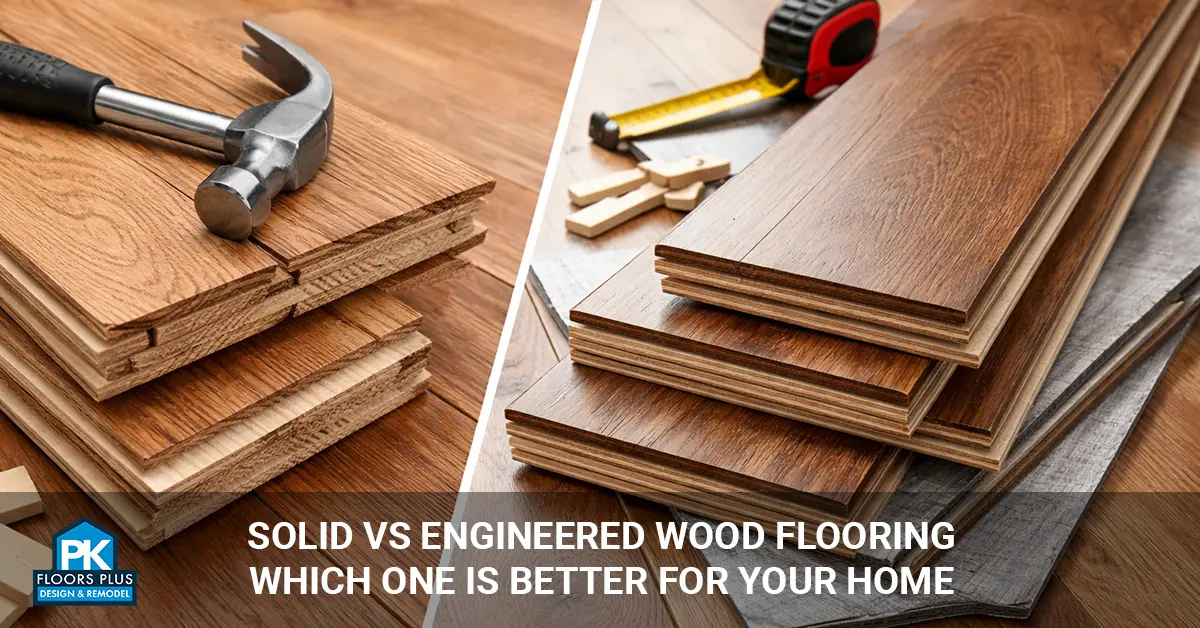
Engineered wood flooring is real wood flooring built to be more stable than solid wood. It uses a thin layer of natural hardwood on top, with multiple layers of plywood or fiberboard underneath.
This layered design helps control movement caused by moisture and temperature changes. You get the look of real wood, with more flexibility to install it in areas where solid wood may not perform as well.
Solid vs Engineered Wood
The main difference between solid and engineered wood is how they’re built. Solid wood is made from one solid piece of wood, while engineered wood is built in layers for added stability.
Because solid wood can be refinished many times, it usually lasts longer over the years. Engineered wood, on the other hand, handles moisture and temperature changes better and offers more flexible installation options for different areas of the home.
Durability and Lifespan Comparison
Solid wood flooring is known for its long lifespan and can last 50 years or more with proper care. In fact, some homes still have original hardwood floors that are well over 100 years old.
Engineered wood flooring typically lasts between 20 and 40 years. Floors with thicker wear layers tend to last longer and may allow for one or two refinishing cycles, depending on the product quality and maintenance.
Moisture and Humidity Performance
Solid wood flooring is sensitive to moisture and humidity changes. When moisture levels rise or fall, the wood can expand, shrink, or warp over time.
Engineered wood performs better in these conditions. Its layered construction helps it stay stable, making it a better choice for homes with humidity swings or flooring installed over concrete subfloors.
Installation Differences
Solid wood flooring is usually installed using a nail-down method over a wood subfloor. This limits where it can be installed and makes it less flexible for certain spaces.
Engineered wood offers more installation options. It can be installed using floating, glue-down, or nail-down methods and works well over concrete. This flexibility makes engineered wood a better fit for condos, basements, and remodeling projects.
Solid vs Engineered Wood Cost Comparison
Solid wood flooring usually costs more upfront, while engineered wood is often more affordable to install. To understand pricing in detail, see our cost of wood flooring guide.
Engineered wood typically costs less than solid wood but more than laminate flooring. Installation can also be more affordable because of faster and more flexible methods. While solid wood has a higher initial cost, it often offers better long-term value since it can be refinished instead of replaced.
Best Rooms for Solid Wood Flooring
Solid wood flooring works best in rooms with stable temperature and low moisture. Consistent conditions help the wood stay flat and perform well over time.
Living rooms, bedrooms, and dining rooms are ideal spaces for solid wood. Homes with good climate control and steady humidity levels are especially well-suited for this type of flooring.
Best Rooms for Engineered Wood Flooring
Engineered wood flooring works best in areas where moisture or temperature changes are more common. Its layered construction helps it stay stable in conditions that can cause solid wood to shift.
Basements, kitchens, and rooms built over concrete subfloors are good candidates for engineered wood. If you’re planning below-grade installation, our guide on the best flooring for basements explains which options perform best. It’s also a smart choice for homes with radiant heating or climates that experience seasonal humidity changes.
Maintenance and Refinishing
Solid wood flooring can be refinished many times, which is one of the reasons it lasts for decades. Regular sweeping, quick spill cleanup, and keeping indoor humidity under control help maintain its appearance and performance.
Engineered wood flooring needs similar day-to-day care, but refinishing depends on how thick the top wood layer is. Some engineered floors can’t be refinished, while higher-quality options may allow one or two refinishing cycles.
Solid vs Engineered Wood for Pets and Kids
For homes with pets or kids, durability matters most. Both solid and engineered wood can work, but they perform a bit differently under daily wear.
Solid wood can scratch more easily, especially from pet nails, but those scratches can be sanded out later. Engineered wood with a strong wear layer often holds up better to everyday activity. Choosing harder wood species and durable finishes helps protect either option in busy households.
Which Flooring Is Better for Your Home?
The better flooring choice depends on how your home is built and how you live in it. There’s no one-size-fits-all answer.
Solid wood is the better option if you want the longest lifespan, the ability to refinish many times, and strong long-term value, especially in homes with stable humidity. Engineered wood is the better choice if you need more moisture resistance, flexible installation, or flooring over concrete, which makes it a practical option for many modern homes.
Common Mistakes to Avoid
The most common mistake is choosing flooring based on looks alone. Ignoring moisture levels, subfloor type, or wear layer thickness can cause problems down the line.
Skipping the acclimation process before installation is another issue that can lead to movement or gaps. Buying low-quality materials may save money upfront, but it often shortens the floor’s lifespan and leads to higher costs later.
Final Thoughts
Solid and engineered wood flooring both offer the beauty of real wood, but they’re designed for different needs. Solid wood stands out for its long lifespan and classic, timeless appeal. Engineered wood offers more flexibility, better stability, and easier installation in a wider range of spaces.
When you match the flooring type to your space, budget, and lifestyle, you’ll end up with a floor that not only looks good but also performs well for many years to come.