Technically, yes, residential flooring can be used in commercial spaces. However, doing so usually leads to faster wear, higher maintenance costs, and voided warranties. That’s because residential materials are simply not built for the level of traffic, moisture, and impact that commercial environments experience every day.
Why It’s Not Recommended
Residential flooring is designed for light, everyday use, walking, lounging, and the occasional furniture movement. Commercial flooring, on the other hand, faces rolling chairs, delivery carts, and hundreds (sometimes thousands) of footsteps daily. That kind of strain quickly breaks down residential materials, even if they look similar on the surface.
For instance, a luxury vinyl plank (LVP) rated for home use may start scuffing or peeling within a year in a busy retail store. Similarly, residential laminate flooring might warp or bubble when exposed to heavy cleaning cycles, commercial-grade cleaners, or temperature fluctuations.
Key Risks of Using Residential Flooring in Businesses
- Premature Surface Wear and Fading: The finish on residential floors isn’t meant to withstand heavy scrubbing or rolling loads. Over time, the protective layer wears down, leading to discoloration, dull spots, and visible scuffing.
- Structural Weakness and Warping: Softer cores, thinner wear layers, and light adhesives make residential floors vulnerable to bending and separation. Moisture, cleaning chemicals, and uneven weight distribution accelerate this damage.
- Voided Manufacturer Warranties: Most flooring manufacturers clearly state that residential products are not warranted for commercial use. Installing them in offices, stores, or public buildings can immediately cancel coverage for defects or wear issues.
- Increased Maintenance and Replacement Costs: Because these floors deteriorate faster, they require more frequent repairs and replacements. That means higher long-term costs, even if the initial purchase seemed like a bargain.
- Non-Compliance With Safety Standards: Commercial floors must meet safety regulations, including slip-resistance (ADA), fire ratings, and indoor air-quality standards (VOC limits). Residential flooring may not pass those requirements, potentially creating liability risks.
When It Can Work
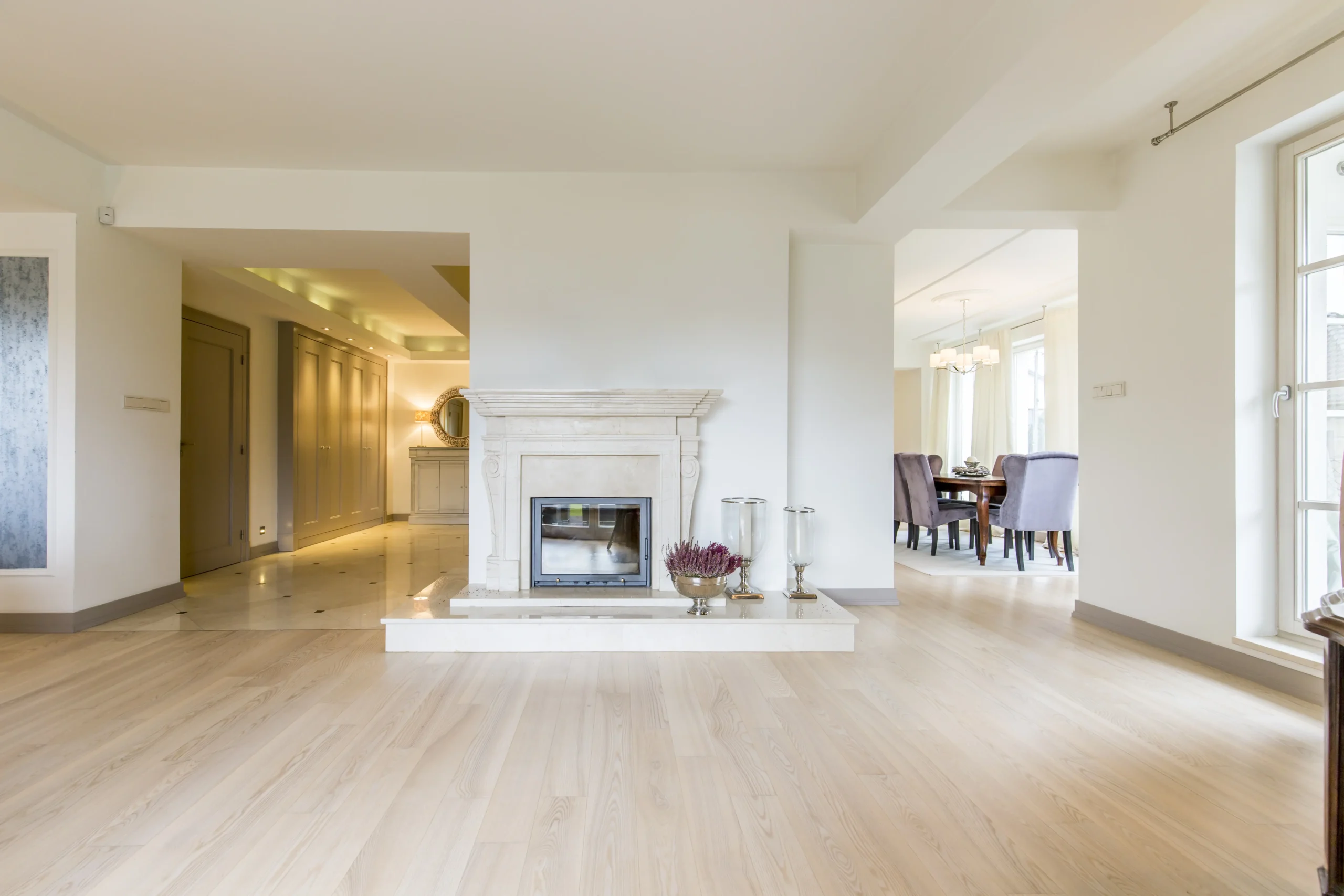
In very low-traffic commercial spaces like small offices, boutique showrooms, or consulting studios, residential flooring can be used successfully if chosen carefully. The key is to select high-end materials that blend comfort with performance, such as
- Commercial-rated Luxury Vinyl Plank (LVP): Offers residential aesthetics but with rigid cores and thicker wear layers (20-mil+).
- Engineered Hardwood: Provides the beauty of real wood with better dimensional stability and durability.
- Hybrid Flooring Systems: Combine the comfort of residential vinyl with the strength of commercial adhesives and coatings.
If you want a warm, homelike look in your business, such as in a spa, clinic, or boutique, these upgraded materials are excellent middle-ground options.
Design vs. Durability
Many business owners choose residential flooring for its design versatility, wider color options, richer textures, and softer underfoot feel. However, what works visually in a home doesn’t always hold up under constant use. The ideal approach is to balance appearance with performance: choose commercial-grade products that replicate residential styles but meet durability and safety standards.
For example, commercial LVT with a wood-grain finish offers the charm of oak planks with the resilience needed for offices or retail floors.
Practical Example
Imagine a salon using residential laminate because it looks beautiful and costs less.
After a few months, hair dye stains, water drips, and chair wheels start leaving permanent marks. Soon, the floor loses its finish, and replacing it means closing for days, losing both time and money. If that same space had installed commercial-rated vinyl or SPC flooring, it would have stayed flawless for years with minimal upkeep.
Final Takeaway
Using residential flooring in commercial settings might save money at first, but it often costs more over time. The difference isn’t just in appearance; it’s in performance, compliance, and longevity. If your goal is to create a professional, durable, and low-maintenance space, always invest in materials built for commercial use. For smaller businesses that want a residential feel, commercial-rated LVP or engineered wood provides the perfect blend of warmth and strength.
At PK Floors Rockwall, we help clients find the right flooring for both comfort and performance, whether it’s a cozy home or a high-traffic commercial property.