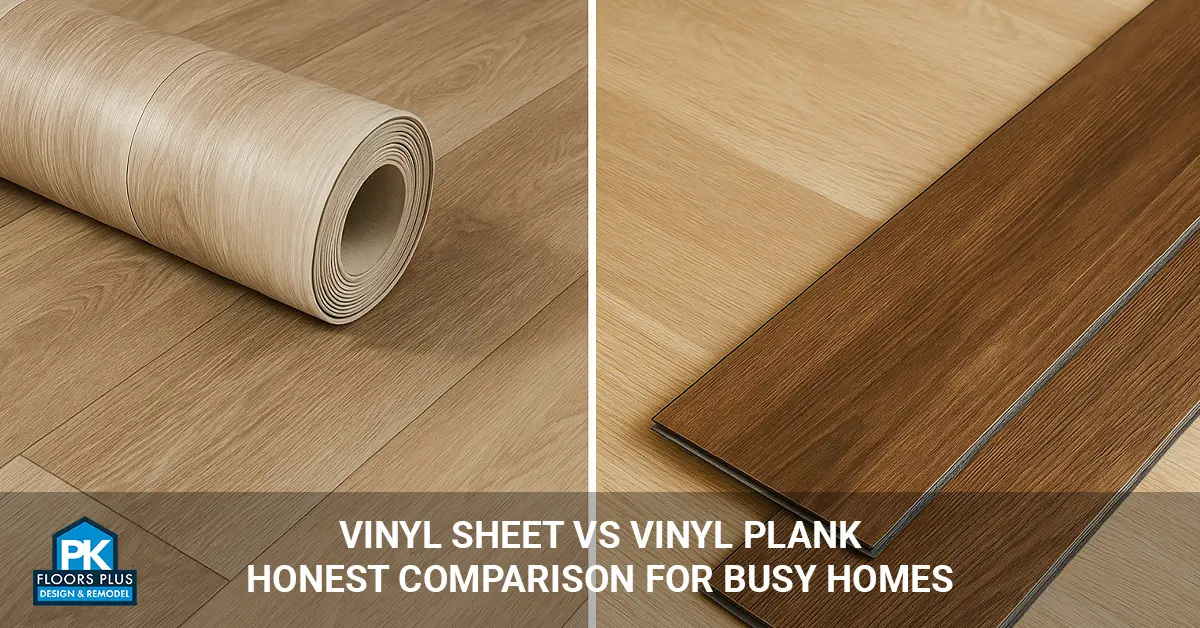
The quickest way to choose between vinyl sheet and vinyl plank is to understand how they differ in look, performance, and how they handle everyday wear in a busy home. Both are waterproof, durable, and easy to clean, but they work very differently once installed.
Vinyl flooring has become a top pick for active households because it’s affordable, long-lasting, and built to handle real-life kids running, pets playing, heavy foot traffic, and the occasional spill. But when it’s time to pick the right type, many homeowners find themselves torn between vinyl sheet and vinyl plank.
At first glance, they may seem similar, but each one has its own strengths. Vinyl sheet gives you a smooth, seamless surface that’s great for moisture-heavy areas. Vinyl plank gives you the realistic look and texture of hardwood with added comfort underfoot. Choosing the right one can make a big difference in how your room looks and feels.
In this guide, we’ll break down the key differences between vinyl sheet and vinyl plank, including appearance, durability, comfort, installation, and cost. By the end, you’ll know exactly which option fits your rooms, your lifestyle, and your budget.
What Is Vinyl Sheet Flooring?
Vinyl sheet flooring is a waterproof flooring material that comes in large rolls and is installed in one big piece, creating a smooth and mostly seamless surface. Because it has very few seams, it gives any room a clean, uniform look that’s easy to maintain.
Each sheet is made of multiple layers, including a durable wear layer on top, a printed design layer with your chosen pattern or color, and a backing layer that adds strength and support. The result is a floor that’s flexible, sturdy, and designed to handle daily use.
Vinyl sheet flooring is completely waterproof, which makes it a great option for bathrooms, kitchens, basements, laundry rooms, and rental properties. It’s also one of the most budget-friendly flooring choices on the market. Another big benefit is comfort; many vinyl sheet products have a cushioned feel, so they’re softer and warmer underfoot compared to ceramic tile.
What Is Vinyl Plank Flooring (LVP)?
Vinyl plank flooring, or LVP, is a waterproof vinyl floor designed to look just like real hardwood. The planks come in long, narrow boards that mimic popular wood species such as oak, walnut, hickory, and maple. Each plank is built with multiple layers, including a durable wear layer, a realistic wood-look design, a waterproof core, and a backing layer for support and stability.
LVP is a great choice for homeowners who love the beauty of hardwood but don’t want the high price or the constant upkeep that comes with it. It’s durable, fully waterproof, and comfortable to walk on, which makes it perfect for living rooms, bedrooms, hallways, basements, and almost any room in a busy home.
Vinyl Sheet vs Vinyl Plank: Quick Comparison Table
The biggest difference between vinyl sheet and vinyl plank is that vinyl sheet gives you a seamless look, while vinyl plank gives you the realistic appearance of hardwood. Both are waterproof, durable, and great for busy homes.
| Feature | Vinyl Sheet | Vinyl Plank (LVP) |
| Look | Wood, tile, and stone patterns | Realistic hardwood look |
| Seams | Seamless in many rooms | Plank joints visible |
| Comfort | Softer and cushioned | Soft but more stable |
| Durability | Good, but can tear | Excellent, resists scratches |
| Waterproof | 100% waterproof | 100% waterproof |
| Installation | Harder, pro recommended | Easy DIY click-lock |
| Repairs | Difficult to replace | Replace single planks |
| Best For | Kitchens, bathrooms | Living rooms, bedrooms |
Appearance & Style
Vinyl Sheet
Vinyl sheet flooring comes in wood, tile, and stone designs, but its biggest advantage is the smooth, seamless look. Since it’s installed in large sections, there are fewer visible lines or joints. This makes it perfect for homeowners who want a clean, simple style without any breaks across the floor.
Vinyl Plank (LVP)
Vinyl plank flooring offers the most realistic hardwood look. Each plank has detailed texture, grain, and depth that closely mimic real wood. This makes it a favorite for living rooms, bedrooms, and any space where you want a warm, natural, and cozy feel. If you’re aiming for an authentic wood appearance, LVP is the best choice.
Water Resistance & Moisture Protection
Both vinyl sheet and vinyl plank are fully waterproof, but vinyl sheet offers better moisture protection because it has fewer seams. The right choice depends on how much water exposure your room gets.
Vinyl Sheet
Vinyl sheet flooring is completely waterproof and one of the best choices for wet areas. Because it’s installed in large pieces with very few seams, water has almost no chance to seep underneath. This makes it ideal for bathrooms, kitchens, laundry rooms, and basements where moisture is common, and spills happen often. If you want maximum protection against water getting below the flooring, vinyl sheet is the strongest option.
Vinyl Plank (LVP)
LVP is also fully waterproof and performs extremely well in moisture-prone rooms. The only difference is that LVP has seams between the planks. If the installation isn’t tight or if standing water sits on the floor for too long, small amounts of moisture can sometimes get between the boards. Even with that, LVP still handles spills, humidity, and daily moisture very well, especially in kitchens, basements, and busy homes with kids or pets.
Durability & Wear Resistance
The biggest durability difference between vinyl sheet and vinyl plank is that vinyl sheet can tear, while vinyl plank is much better at resisting scratches, dents, and daily wear. Both are strong, but LVP holds up better in busy homes.
Vinyl Sheet
Vinyl sheet flooring is durable and handles everyday use well. It resists scratches and scuffs, but it has one weakness, it can tear if something sharp catches the surface. And once a tear starts, it can spread, which makes repairs more difficult. Because of this, vinyl sheet is better for low- to medium-traffic areas where heavy stress is less common.
Vinyl Plank (LVP)
LVP is known for excellent durability. Its thick wear layer protects the surface from scratches, dents, and scuffs, even in busy homes with kids and pets. It handles heavy foot traffic and daily activity without showing much wear. Thanks to its strength and long-lasting performance, vinyl plank is usually the better choice for high-traffic rooms and active households.
Comfort & Feel Underfoot
The biggest comfort difference between vinyl sheet and vinyl plank is that vinyl sheet feels softer and more cushioned, while vinyl plank feels more stable and similar to real hardwood. Both are comfortable, but they create different experiences underfoot.
Vinyl Sheet
Vinyl sheet flooring has a built-in cushion that makes it soft, warm, and comfortable to walk on. It’s easier on your feet compared to tile, and many people like it for rooms where they stand for long periods, such as kitchens, laundry rooms, and utility spaces. This extra softness makes the vinyl sheet feel gentle and supportive underfoot.
Vinyl Plank (LVP)
Vinyl plank is also comfortable, but it has a firmer, more supportive feel that’s closer to real hardwood. It’s softer and warmer than tile, but not as cushioned as a vinyl sheet. Many homeowners prefer LVP in living rooms, bedrooms, hallways, and family spaces because it feels warm, natural, and inviting.
Installation: Which One Is Easier?
The easier flooring to install is vinyl plank (LVP) because the click-lock planks snap together quickly, while vinyl sheet requires careful cutting and is better handled by a professional. Both can look great, but they offer very different installation experiences.
Vinyl Sheet Installation
Vinyl sheet flooring can be challenging to install because it comes in large, heavy rolls that must be cut precisely. Even a small mistake can ruin the entire piece, which is why most homeowners prefer professional installation. When installed correctly, vinyl sheet gives you a smooth, seamless finish, but achieving that clean look definitely takes skill and experience.
Vinyl Plank Installation (LVP)
Vinyl plank is one of the easiest flooring types for DIY installation. The click-lock planks snap together without glue, nails, or special tools, making the process simple and beginner-friendly. If you want to save money on installation or enjoy doing home projects, LVP is usually the best choice. Even first-time installers can get great results.
If you’re planning to install it yourself, follow our complete guide on how to install vinyl plank flooring for step-by-step instructions.
Cost Comparison
The biggest cost difference between vinyl sheet and vinyl plank is that vinyl sheet is usually cheaper upfront, while vinyl plank often delivers better long-term value. Both are affordable, but they fit different budgets and needs.
Average Cost Range
- Vinyl Sheet (Material Only): $1.00–$3.50 per sq. ft.
- Vinyl Plank (Material Only): $2.00–$5.00 per sq. ft.
- Installed Cost (Either Option): $3.50–$10 per sq. ft., depending on labor and product quality
Vinyl sheet is typically the more budget-friendly option, especially when covering large areas or working with tight budgets. It delivers a clean, seamless look at a lower price.
Vinyl plank costs a bit more upfront, but it usually offers better long-term value. It’s more durable, easier to repair, and holds up better in homes with kids, pets, or heavy foot traffic. For most busy households, LVP ends up being the more cost-effective choice over time.
Maintenance & Cleaning
The easiest part of choosing between vinyl sheet and vinyl plank is maintenance, because both flooring types are simple to clean and take care of. A few basic habits will keep either surface looking great for years.
Vinyl Sheet
- Sweep or vacuum regularly to remove dust and dirt.
- Mop as needed with a mild cleaner to keep the surface fresh.
- Avoid harsh scrubbers that could scratch or damage the top layer.
- Repairs can be difficult if the sheet tears, fixing just one area is challenging.
Vinyl sheet holds up well with simple cleaning, but because repairs are harder, it’s better for homes where heavy damage is less likely.
Vinyl Plank (LVP)
- Sweep or vacuum daily to prevent scratches.
- Mop with a gentle cleaner for deeper cleaning.
- Replace individual planks easily if one gets damaged.
- No waxing or polishing is required.
LVP is easier to repair and maintain long-term, which makes it the more practical choice for active households with kids, pets, or constant foot traffic.
Pros & Cons Summary
The easiest way to choose between vinyl sheet and vinyl plank is to look at their pros and cons side by side. Each flooring type has strengths that work better in different rooms and lifestyles.
Pros of Vinyl Sheet
Vinyl sheet flooring has a smooth, seamless look that works well in any room where you want a clean, simple style. It’s also completely waterproof, so it’s a safe choice for bathrooms, kitchens, basements, and laundry rooms. The cushioned backing makes it soft and comfortable to walk on, especially if you stand for long periods. Another big plus is the price—vinyl sheet is one of the most affordable flooring options out there.
Cons of Vinyl Sheet
The biggest downside of vinyl sheet is that it can tear, especially if something sharp catches the surface. Once a tear starts, it’s hard to repair. Installation is also more difficult because the sheets are large and require precise cuts. If one section gets damaged, fixing just that spot is rarely easy or seamless, which makes repairs more complicated than other flooring types.
Pros of Vinyl Plank (LVP)
Vinyl plank flooring gives you a realistic hardwood look, which is why it’s so popular in living rooms, bedrooms, and hallways. It’s incredibly durable, scratch-resistant, and built to handle kids, pets, and heavy foot traffic. The click-lock installation makes it easy for DIY projects, and repairs are simple because you can replace single planks without touching the rest of the floor. Overall, LVP is one of the best choices for busy, high-traffic homes.
Cons of Vinyl Plank (LVP)
LVP is slightly more expensive than vinyl sheet, although still far cheaper than hardwood or tile. Because the planks are installed piece by piece, you’ll see seams between them, which may not suit homeowners who prefer a seamless look. Like many flooring types, LVP can also fade if it’s exposed to direct sunlight all day without blinds or curtains to protect it.
Best Choice for Busy Homes
The best flooring for busy homes is vinyl plank (LVP) because it’s tougher, easier to repair, and holds up better under kids, pets, and heavy daily use. It also gives your home a warm, hardwood look that fits well in living spaces.
Choose Vinyl Sheet If You Want:
- A smooth, seamless floor
- A very budget-friendly option
- Flooring for bathrooms, laundry rooms, or basements
Vinyl sheet works best in rooms where water is common and where you want a simple, clean appearance without visible seams.
Choose Vinyl Plank (LVP) If You Want:
- A realistic hardwood appearance
- Better long-term durability
- Easy installation and simple repairs
LVP is the top choice for active families and high-traffic rooms because it blends practicality, durability, and style. It’s especially great for living rooms, bedrooms, hallways, and basements.
Final Thoughts
The best flooring for your home depends on the room you’re updating, your style, and how much activity the space gets. Vinyl sheet is perfect if you want a smooth, seamless floor that’s fully waterproof and budget-friendly. But if your home is busy, has kids or pets, or you want the warm look of real hardwood, vinyl plank is the better choice.
Take a moment to think about where the floor will go, how much traffic it will handle, and the overall look you want. Once you consider those things, it becomes clear which option will fit your home and lifestyle best.