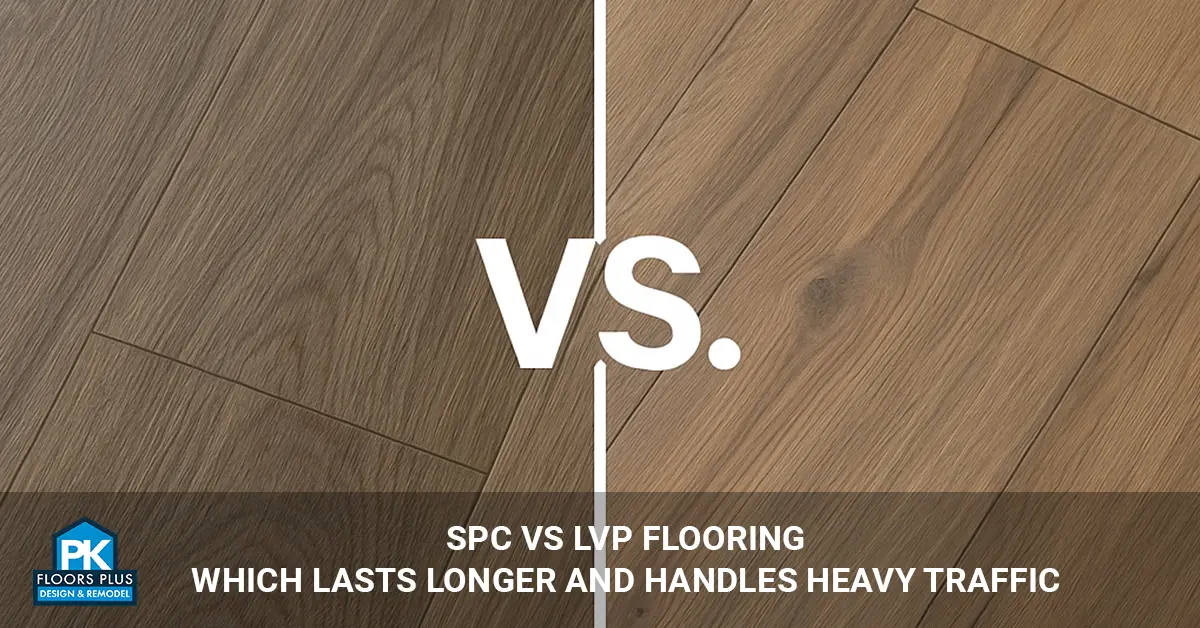
Choosing the right flooring for a busy home can be challenging. Your floors deal with a lot of kids playing, pets running, spills, scratches, moving furniture, and constant foot traffic. That’s why many homeowners compare two of the toughest vinyl flooring options: SPC flooring and LVP flooring. They may look similar on the surface, but they perform very differently once they’re installed.
Both SPC and LVP are waterproof, stylish, and available in beautiful wood-look designs. But their cores are what truly set them apart. SPC has a rigid stone-based core, while LVP has a flexible vinyl core, and this difference affects strength, comfort, and long-term durability.
In this simple guide, we’ll break down how each flooring type is built, how it performs, and how long it lasts in real-life conditions. By the end, you’ll know exactly whether SPC or LVP is the better choice for your home, your lifestyle, and your long-term needs.
What Is LVP (Luxury Vinyl Plank)?
LVP, or Luxury Vinyl Plank, is a waterproof vinyl flooring designed to look and feel like real hardwood. It comes in long planks with realistic wood grain patterns, giving your home the warm, natural look of wood without the high cost or heavy maintenance.
Each plank is made of several layers that work together to protect the floor and keep it comfortable:
- A protective wear layer that resists scratches and scuffs
- A high-resolution printed design layer that mimics real wood
- A flexible PVC vinyl core that adds comfort and durability
- A backing layer that provides stability and reduces noise
LVP is popular because it’s strong, stylish, and very easy to live with. It’s waterproof enough for basements, comfortable enough for bedrooms, and durable enough for busy living rooms and hallways. If you want a wood-look floor that’s built to handle everyday life, LVP is a great choice.
What Is SPC Flooring (Stone Plastic Composite)?
SPC flooring is a rigid-core vinyl floor made with a stone-based core that makes it much stronger and denser than traditional LVP. Instead of bending or flexing, SPC stays firm and stable even under heavy pressure.
Each SPC plank is built with several durable layers:
- A thick wear layer that protects against scratches and everyday damage
- A realistic printed design that looks like natural wood
- A rigid stone-plastic composite core that gives the floor its strength and stability
- An attached underlayment (on many products) that adds comfort and reduces noise
Because of its dense core, SPC flooring is extremely durable. It handles heavy traffic, rolling office chairs, large furniture, and temperature changes without denting or warping. That’s why SPC is often used in commercial buildings, rental properties, and high-traffic homes that need maximum strength and long-term performance.
SPC vs LVP: Quick Comparison Table
The biggest difference between SPC and LVP is that SPC is stronger and more dent-resistant because of its stone-based core, while LVP is softer, warmer, and more comfortable for everyday home use.
| Feature | SPC Flooring | LVP Flooring |
| Core | Stone-plastic composite (rigid) | Flexible PVC vinyl |
| Durability | Extremely high | Very good |
| Lifespan | 20–30+ years | 15–25 years |
| Scratch Resistance | Excellent | Good |
| Dent Resistance | Excellent | Moderate |
| Waterproof | 100% waterproof | 100% waterproof |
| Comfort | Firmer and harder | Softer and warmer |
| Noise | Louder underfoot | Quieter |
| Installation | Slightly harder | Very DIY-friendly |
| Best For | Heavy traffic, commercial use | Everyday home use |
Which Flooring Type Is Stronger?
SPC flooring is the stronger and more durable option because its stone-based core gives it superior strength, stability, and resistance to dents.
SPC Flooring
SPC flooring is the clear winner when it comes to durability. Its rigid, stone-based core makes each plank extremely strong, so it doesn’t bend or flex under pressure. This toughness allows SPC to handle:
- Heavy furniture
- Rolling office chairs
- Constant foot traffic
- Kids and pets running around
Because SPC performs so well under stress, it’s commonly used in commercial buildings, offices, retail stores, and rental properties anywhere that needs long-lasting, high-performance flooring.
LVP Flooring
LVP is also durable, but it’s not as strong as SPC. Its flexible vinyl core makes the planks more comfortable underfoot, but it also means they can dent more easily under very heavy furniture or sharp impact. Even so, LVP holds up extremely well in most homes. It handles daily wear, kids, pets, and normal foot traffic without issues, making it a great choice for everyday living spaces.
Which Flooring Lasts Longer?
SPC flooring generally lasts longer than LVP because its stone-based core gives it better long-term strength and resistance to wear.
SPC Lifespan
SPC flooring is built for long-term durability. Most SPC floors last 20–30+ years, and many last even longer in the right conditions. Its dense, stone-based core keeps it stable, dent-resistant, and strong, even under constant pressure.
This is why SPC performs well in busy homes, commercial buildings, and other high-traffic environments where floors take a daily beating.
LVP Lifespan
LVP also has an impressive lifespan, typically 15–25 years. It’s durable and dependable for most residential spaces, but the flexible vinyl core makes it slightly less resistant to long-term pressure than SPC. The lifespan of LVP depends heavily on the wear layer; thicker wear layers last longer, resist scratches better, and hold up well to everyday use.
Which Flooring Handles Scratches and Dents Better?
SPC flooring handles scratches and dents better than LVP because its stone-based core gives it superior strength and stability.
SPC Flooring
SPC flooring is extremely resistant to scratches, dents, and everyday impacts. Its dense, rigid stone-based core gives it outstanding strength, making it ideal for homes with pets, kids, or rooms where chairs and furniture are constantly being moved. If you need flooring that stands up to heavy activity and won’t dent easily, SPC is one of the toughest options you can buy.
LVP Flooring
LVP is also scratch-resistant and holds up well in most homes, but its flexible vinyl core makes it more prone to dents under heavy pressure. Furniture legs, appliances, and anything with significant weight can leave marks more easily compared to SPC. While LVP still performs great for everyday residential use, it’s not as strong as SPC when it comes to dent protection.
Water Resistance & Moisture Performance
Both SPC and LVP flooring are fully waterproof, which means they can handle spills, humidity, and everyday moisture without swelling or warping. This is one of the biggest reasons homeowners choose vinyl for busy rooms.
SPC Strength
SPC performs better in moisture-heavy or changing conditions because its stone-based core stays stable even when the environment shifts. It handles big temperature changes, high humidity, and constant moisture exposure without expanding or contracting. This rigid core keeps SPC flat, firm, and reliable in rooms where conditions are less predictable.
LVP Strength
LVP is also 100% waterproof and works great in kitchens, bathrooms, basements, and laundry rooms, where spills and moisture are common. It handles everyday humidity well, but its flexible core makes it slightly less stable than SPC when exposed to extreme temperature changes or continuous high moisture. For most homes, though, LVP still offers excellent water resistance. If you’re upgrading moisture-prone spaces like kitchens or basements, explore our waterproof flooring options for more choices.
Comfort & Feel Underfoot
SPC and LVP feel very different underfoot, and LVP is usually the more comfortable option for everyday home use.
SPC Flooring
SPC flooring feels firmer because of its rigid, stone-based core. It has very little flexibility, so the surface can feel harder when you walk or stand on it for long periods. If the flooring doesn’t come with an attached underlayment, it may feel even more solid and less forgiving. SPC is strong and stable, but comfort isn’t its biggest advantage.
LVP Flooring
LVP is softer, warmer, and much more comfortable to walk on. Its flexible vinyl core gives it a slight “give,” making it feel closer to real hardwood underfoot. This makes LVP a better choice for spaces where comfort matters, such as:
- Bedrooms
- Living rooms
- Playrooms
- Homes with young children
If you want flooring that feels warm, cozy, and comfortable throughout the day, LVP is usually the better pick.
Noise Level
The biggest difference in noise comes from the core SPC is louder underfoot, while LVP absorbs sound better and feels quieter.
SPC Flooring
SPC flooring tends to sound louder when you walk on it because of its rigid stone-based core. Each step creates a firmer, sharper sound, especially in rooms with high ceilings or lots of hard surfaces where noise can echo. An attached underlayment can help soften the sound, but SPC is naturally a bit noisier than LVP.
LVP Flooring
LVP flooring absorbs sound much better thanks to its flexible vinyl core. It feels softer and quieter with each step, which makes a big difference in bedrooms, apartments, hallways, and multi-level homes. If reducing noise is important, LVP is usually the better choice.
Installation: Which One Is Easier?
Both SPC and LVP use click-lock systems, but LVP is easier to install because it’s lighter, more flexible, and simpler to cut.
SPC Installation
SPC flooring is a little harder to install because the planks are heavier and more rigid. The stone-based core makes the boards strong, but it also means they don’t bend or flex at all. This can make tight spaces or angled cuts more challenging. SPC also requires a perfectly level subfloor since the planks can’t bend to hide bumps or dips. Cutting SPC is tougher as well, you’ll need stronger tools to get clean, accurate cuts.
LVP Installation
LVP is much easier to install because it’s lighter, more flexible, and simpler to cut. The planks have a little “give,” which makes it easier to lock pieces together and work around corners or uneven areas. You can cut LVP with a basic utility knife, and the installation usually goes quickly, even for beginners. For most DIY projects, LVP is the easier and more forgiving option. If you want the best results, consider professional vinyl flooring installation to ensure a smooth and long-lasting finish.
Cost Comparison of SPC and LVP
SPC is usually slightly more expensive than LVP because its stone-based core is denser and more durable. Both options, however, are still very affordable compared to hardwood or tile.
Average Cost (Material Only)
- SPC: $3–$6 per sq. ft.
- LVP: $2–$5 per sq. ft.
Installed Cost
Both SPC and LVP typically cost $4–$10 per sq. ft. installed, depending on the brand, plank thickness, underlayment, and labor costs.
Which One Offers Better Value?
SPC costs a little more upfront, but it often delivers better long-term value in high-traffic homes or commercial-style spaces because it lasts longer and handles pressure better. LVP is the more budget-friendly option and still offers excellent performance for most households, making it a great choice for everyday living areas.
Best Use Cases of SPC and LVP
The best way to choose between SPC and LVP is to match each flooring type with the room’s traffic level, comfort needs, and long-term expectations.
Choose SPC Flooring If You Need:
SPC is the better choice when you need maximum durability and a floor that can handle constant pressure. It’s built for strength and performs extremely well in:
- Commercial spaces or rental properties
- High-traffic areas like hallways, kitchens, and entryways
- Rooms with heavy furniture or rolling office chairs
- Homes where floors take daily impact or movement
- Spaces that need the longest possible lifespan
SPC is ideal when your floors take a beating every day. If durability is your priority, SPC is the safer long-term option.
Choose LVP Flooring If You Want:
LVP is the better option when comfort, warmth, and a cozy feel matter most. It works best in:
- Bedrooms and living rooms
- Family areas and playrooms
- Homes where a softer, warmer floor is preferred
- Apartments and multi-level homes that need quieter floors
- DIY projects where easy installation is important
- Spaces where a realistic hardwood look enhances the style
LVP is perfect for comfort-focused rooms where you want warmth, style, and a quiet, inviting feel underfoot.
Final Thoughts
The best flooring choice between SPC and LVP depends on how your home is used and what you value most strength or comfort. SPC is the better option if you need maximum durability and a floor that can handle heavy traffic, rolling chairs, or daily wear in tougher environments. It’s built for long-term performance and stability, even under constant pressure.
LVP, on the other hand, is the better fit if you want a softer, warmer, and more comfortable floor for everyday living. It’s quieter, easier to install, and offers a realistic hardwood look that feels inviting in bedrooms, living rooms, and family spaces.
Take a moment to think about the room, the traffic level, and how you want the floor to feel. Once you weigh those factors, it’s easy to see whether SPC or LVP is the right match for your home.