Wood flooring is popular because it makes a home feel warmer, stronger, and more valuable right away. It looks timeless, feels solid underfoot, and works with almost any interior style.
The challenge is choosing the right type. At first glance, solid hardwood, engineered wood, laminate, bamboo, and parquet can look very similar. But they behave differently once installed. Some handle moisture better. Some last longer. Others cost less or need less maintenance. That’s why choosing based on looks alone often leads to regret later.
This guide explains the main types of wood flooring in simple terms. You’ll learn how each option performs, what it’s best used for, and how to choose the right one based on your home, budget, and everyday life.
What Is Wood Flooring?
Wood flooring is a type of flooring made from real wood or wood-based materials that are designed to look and feel like natural wood. Some options are made from solid wood planks, while others use layered or manufactured materials to improve stability, lower costs, or handle moisture better.
The right wood flooring makes a home feel warmer and more comfortable underfoot. It also adds long-term value, which can help with resale later on. When installed correctly and cared for properly, many wood floors can last for decades without losing their appeal.
Wood flooring isn’t just about looks. It’s about choosing a floor that fits your space, your lifestyle, and how you actually use your home every day.
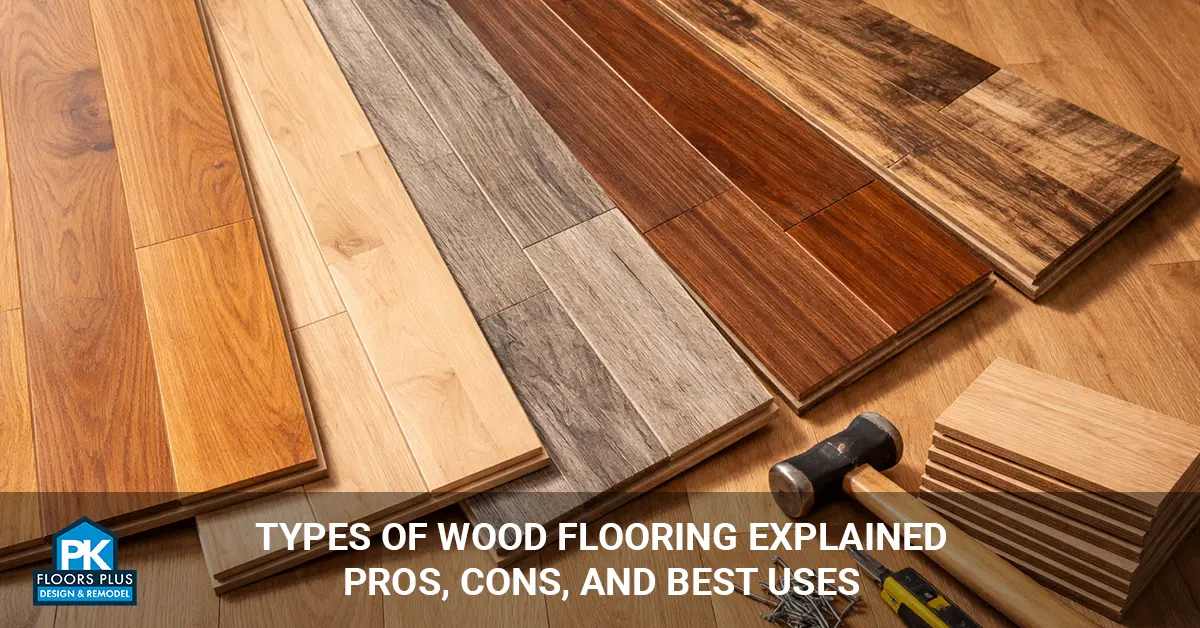
Types of Wood Flooring Explained
The main types of wood flooring include solid hardwood, engineered wood, laminate, bamboo, and parquet, and each type is designed for different spaces, budgets, and moisture levels. Understanding how these options differ helps you choose a floor that looks good, lasts longer, and fits how your home is actually used.
Solid Hardwood Flooring
Solid hardwood flooring is made from a single, solid piece of natural wood. Each plank is cut from hardwood species like oak, maple, walnut, or cherry, giving it a natural look and feel that never goes out of style.
This type of flooring is valued for its strength and long lifespan. It can be refinished multiple times, which helps it last 50 years or more with proper care. Solid hardwood also adds strong resale value and creates a warm, authentic look that many homeowners love.
That said, solid hardwood does have limitations. It reacts to moisture and humidity, so it can expand or shrink over time. It also has a higher upfront cost for both materials and installation. Because of this, it works best in living rooms, bedrooms, and dining rooms where indoor humidity stays stable, and it’s not recommended for basements or bathrooms.
Engineered Wood Flooring
Engineered wood flooring is real wood flooring designed to be more stable and moisture-resistant than solid hardwood. It uses a thin layer of real wood on top of multiple plywood layers, which helps prevent warping while keeping the natural hardwood look.
This type of flooring handles temperature and humidity changes better than solid wood. It works well over concrete subfloors and in areas where moisture levels can fluctuate. Engineered wood also comes in a wide range of styles and finishes and is often more affordable than solid hardwood.
The main drawback is refinishing. Unlike solid hardwood, engineered wood can only be refinished a limited number of times, depending on the thickness of the top layer. Quality can also vary, so choosing a well-made product matters. Because of its stability, engineered wood is best for basements, condos, kitchens, and homes where temperature or humidity changes are common.
Laminate Wood Flooring
Laminate wood flooring is a wood-look flooring option designed to mimic real wood without using natural wood planks. It uses a high-quality photographic layer and a tough protective surface to create the appearance of wood while improving durability.
This type of flooring is budget-friendly and stands up well to scratches and dents, making it a practical choice for busy homes. Laminate is also easy to install, thanks to click-lock systems, and requires very little maintenance compared to real wood floors.
The downside is that laminate cannot be refinished, and it doesn’t feel as natural underfoot as real wood. It also adds less resale value than solid or engineered wood flooring. Because of its durability and low upkeep, laminate works best in high-traffic areas, rental properties, and homes with kids or pets.
Bamboo Flooring
Bamboo flooring is a durable flooring option made from compressed bamboo fibers that closely resemble the look of wood. Although bamboo is technically a grass, it’s commonly grouped with wood flooring because of its strength, appearance, and performance.
One of the biggest advantages of bamboo flooring is its sustainability. Bamboo grows quickly, making it an eco-friendly and renewable choice. Strand-woven bamboo is especially hard and durable, and its clean, modern look works well in contemporary homes.
However, quality can vary depending on how the bamboo is manufactured. Some bamboo floors are more sensitive to moisture, and refinishing options are limited compared to solid hardwood. Because of its sustainability and style, bamboo flooring is best for eco-conscious homeowners and modern interior designs.
Parquet Wood Flooring
Parquet wood flooring is a decorative type of wood flooring made from small pieces of wood arranged in patterns like herringbone, chevron, or mosaic. It’s chosen mainly for its visual impact and detailed design rather than simplicity.
This flooring style adds character and a high-end feel to a space. It creates visual interest and can instantly elevate the look of a room. Parquet flooring is available in both solid and engineered options, giving homeowners flexibility depending on the space and moisture conditions.
On the downside, parquet flooring usually costs more to install because it requires precise layout and skilled workmanship. Repairs can also be more complex if individual pieces are damaged. Because of its design-focused nature, parquet flooring works best in formal living areas, entryways, and spaces where appearance is a top priority.
Comparison of Wood Flooring Types
How do the different types of wood flooring compare in terms of durability, moisture resistance, cost, and refinishing options. It gives a quick, side-by-side view to help you see which flooring type fits your home, budget, and long-term expectations at a glance.
| Flooring Type | Durability | Moisture Resistance | Cost Range | Refinishing |
| Solid Hardwood | High | Low | High | Multiple times |
| Engineered Wood | High | Medium | Medium–High | Limited |
| Laminate | Medium–High | Medium | Low | Not possible |
| Bamboo | High | Medium | Medium | Limited |
| Parquet | Medium–High | Low–Medium | High | Depends on type |
How to Choose the Right Wood Flooring
Choosing the right wood flooring comes down to where it will be installed, how much you want to spend, and how you live in your home. When those three things line up, the decision becomes much easier.
Choose Based on Room
The best wood flooring depends on the room and how much moisture and foot traffic it gets. Living rooms and bedrooms work well with solid hardwood or engineered wood because moisture levels stay stable. Kitchens need flooring that can handle spills, so engineered wood or high-quality laminate is a safer choice. Basements do better with engineered wood or laminate since they manage moisture better than solid wood. Entryways see a lot of traffic, making engineered wood or parquet a durable and stylish option.
Choose Based on Budget
Your budget plays a big role in narrowing down the right flooring. If you’re working with a lower budget, laminate flooring gives you a wood look at a lower cost. For a mid-range budget, engineered wood or bamboo offers a balance of durability and appearance. If budget isn’t a concern, solid hardwood or parquet delivers long-term value and a high-end finish.
If you’re comparing options, understanding the wood flooring cost can help you choose the best material without overspending.
Choose Based on Lifestyle
Your daily routine should guide your flooring choice. Homes with kids or pets benefit from laminate or engineered wood with strong wear layers that resist scratches. If you want something easy to care for, laminate or engineered wood keeps maintenance simple. For homeowners thinking long-term and resale value, solid hardwood remains the best investment.
Solid vs Engineered vs Laminate: Which Is Best?
The best wood flooring depends on your home, your budget, and how the space is used. There isn’t one option that works for everyone.
Solid hardwood is the best choice if you want long-term value and a classic, natural look that can last for decades. Engineered wood is a smart option when you need better moisture resistance and flexibility, especially in basements, kitchens, or condos. Laminate works well if you want a durable, low-cost floor that handles heavy traffic without much upkeep.
In the end, the right choice comes down to where the floor will be installed and how much wear and moisture it will see every day.
Common Mistakes to Avoid
The most common wood flooring mistakes happen when function is ignored in favor of looks. Avoiding these issues can save you money and frustration later.
Installing solid hardwood in moisture-prone areas is a frequent problem. Bathrooms, basements, and kitchens need flooring that can handle humidity, which solid wood often can’t. Ignoring the condition of the subfloor is another mistake, as uneven or damp subfloors can cause long-term damage.
Many homeowners also choose flooring based only on appearance without considering durability. A floor may look great but wear out quickly in high-traffic areas. Lastly, underestimating maintenance can lead to disappointment. Some wood floors need regular care, refinishing, and humidity control to stay in good shape.
Installation Considerations
The best installation method depends on the type of wood flooring and the condition of your home. Wood floors can be installed using nail-down, glue-down, or floating methods, and each works better in certain situations.
Professional wood flooring installation ensures proper fit, long-term durability, and prevents common issues like gaps or moisture damage.
Choosing the wrong method can lead to movement, gaps, or long-term damage. That’s why professional installation is often recommended. Proper installation helps the floor last longer, perform better, and avoid costly problems down the road.
Maintenance and Longevity
Proper care is what determines how long your wood flooring will last. Simple habits make a big difference over time.
Regular sweeping or vacuuming helps prevent scratches from dirt and debris. Spills should be cleaned right away to avoid moisture damage. Using furniture pads protects the surface from dents and wear, especially in high-use areas. When signs of wear appear, refinishing hardwood floors can restore their look and extend their lifespan.
With the right care, laminate flooring typically lasts around 15 years, while solid hardwood floors can last 50 years or more.
Final Thoughts
The right wood flooring is the one that fits your home, not just your taste. Choosing wisely means balancing how the floor looks with how it handles wear, moisture, and everyday use.
Solid hardwood offers timeless beauty and long-term value. Engineered wood adds flexibility for spaces with changing conditions. Laminate keeps costs down while staying durable. Bamboo is a strong choice for sustainability, and parquet stands out for its design appeal.
When you match the flooring type to your space, budget, and lifestyle, you end up with a floor that not only looks good but also performs well for many years.

