
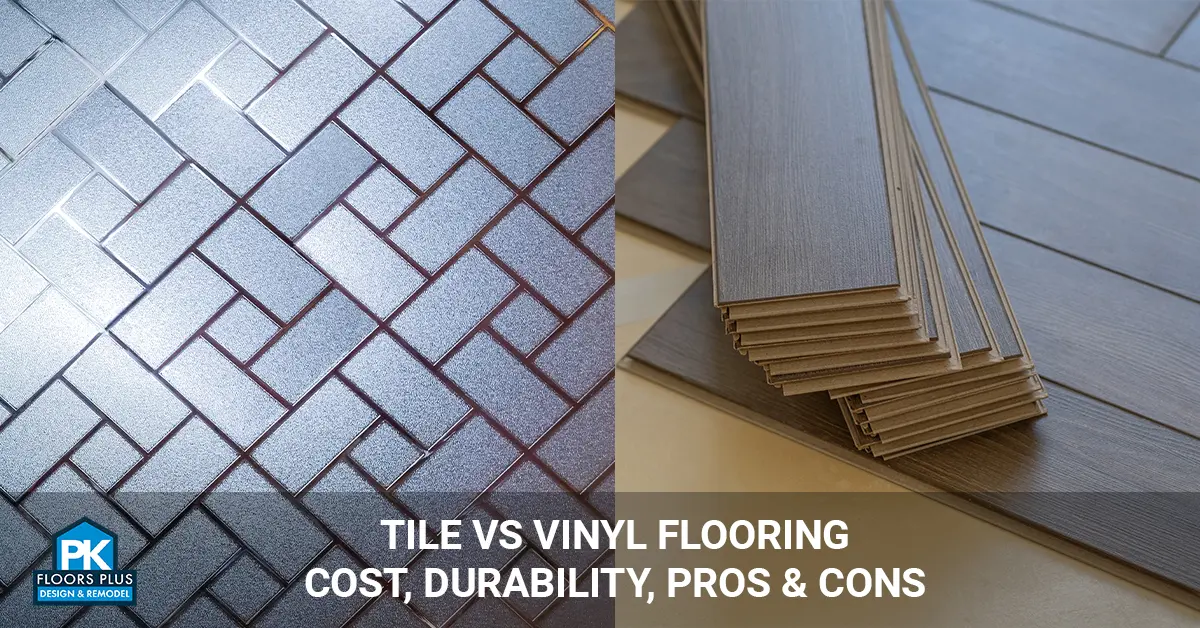
Tile vs vinyl flooring comes down to budget, durability, and how you plan to use each room. Both materials look great, last long, and come in many styles, but they perform very differently when it comes to cost, comfort, and maintenance.
Choosing between the two can feel confusing. Tile is known for its incredible strength and resistance to water. Vinyl is loved for its comfort, warmth, and affordable price. Each one has its own strengths, so the “best” option depends on how you live, where you install it, and how much you want to spend.
If you’re trying to decide which flooring to choose, this guide breaks everything down in simple language. You’ll learn how tile and vinyl compare in cost, durability, installation, and everyday use. By the end, you’ll clearly know which one fits your home, lifestyle, and budget.
What Is Tile Flooring?
Tile flooring is a hard, durable surface made from materials like ceramic, porcelain, or natural stone. It’s designed to handle moisture, heat, and heavy use, which is why it’s a favorite in kitchens, bathrooms, and other busy areas. Tile has been around for decades because it stays strong, looks beautiful, and lasts a very long time with proper care.
What Is Vinyl Flooring?
Vinyl flooring is a synthetic flooring material made to look like real wood, tile, or stone at a more affordable price. It’s designed to be durable, comfortable, and easy to care for, which makes it a popular choice for busy homes. Modern options like LVP (luxury vinyl plank) and LVT (luxury vinyl tile) offer realistic textures and colors, so you get the look you want without the high cost or heavy maintenance.
Tile vs Vinyl Flooring: Cost Comparison
Tile generally costs more than vinyl flooring when you compare both materials and installation. The price difference often becomes a major factor for homeowners, especially on larger projects.
Material Cost
Vinyl flooring costs less per square foot than tile, making it the more budget-friendly option.
- Tile: $3–$12 per sq. ft.
- Vinyl: $2–$7 per sq. ft.
For big areas, these savings add up quickly, which is why many homeowners choose vinyl when working with a tight budget.
Installation Cost
Vinyl is much cheaper and easier to install than tile.
- Tile installation: $6–$15 per sq. ft. Tile needs professional tools, grout, mortar, and skilled labor.
- Vinyl installation: $1–$5 per sq. ft. Vinyl is DIY-friendly, especially click-lock and peel-and-stick planks.
If you’re hiring a professional, vinyl keeps labor costs low. For a deeper breakdown of expenses, see our flooring installation cost guide.
Long-Term Cost
Tile costs more upfront but lasts much longer, while vinyl is cheaper now but may need replacement sooner. Tile can last decades with proper care. Vinyl offers great value but typically has a shorter lifespan.
Tile vs Vinyl Flooring: Durability & Performance
Tile is generally more durable than vinyl, but vinyl offers better comfort and noise control. Both materials perform differently depending on how you use your space.
Water Resistance
Tile is completely waterproof, while vinyl is waterproof in most modern styles but still depends on proper subfloor protection. Tile handles water with no issues, making it ideal for bathrooms and kitchens. Vinyl also performs very well in wet areas, but water can cause problems if it gets underneath the planks.
Scratch & Impact Resistance
Tile resists scratches better, but vinyl handles everyday wear more quietly and softly. Tile is tough, but it may crack if something heavy drops on it. Vinyl is softer and more forgiving but can dent or scratch, especially in lower-quality versions.
Lifespan
Tile lasts much longer than vinyl because of its hard, durable surface.
- Tile lifespan: 20–50+ years
- Vinyl lifespan: 10–30 years
If you want flooring that can last decades, tile wins.
Comfort & Noise
Vinyl is more comfortable and quieter than tile, making it easier on your feet and your home. Tile feels hard and cold underfoot, especially during winter. Vinyl, on the other hand, feels softer, warmer, and does a better job absorbing sound. This makes vinyl a great choice for bedrooms, living rooms, and any space where comfort matters.
Installation Comparison
Vinyl is much easier and faster to install than tile, making it the better choice for most homeowners.
Tile Installation
Tile installation is time-consuming and usually requires a professional. It involves leveling the subfloor, applying mortar, cutting tiles, and finishing with grout. Because of the tools and precision needed, most homeowners hire an expert to get a clean, long-lasting result.
Vinyl Installation
Vinyl installation is quick, simple, and very DIY-friendly. It can be installed as a floating floor with click-lock planks or even peel-and-stick pieces. Most rooms can be finished in a few hours without special tools.
Maintenance & Cleaning
Vinyl is easier to maintain than tile because it has no grout lines and needs very little upkeep. Both options are simple to care for, but the maintenance level is different.
Tile Maintenance
Tile is easy to clean, but the grout lines can stain and require extra attention.
Tile itself is very resistant to moisture and spills, making it great for wet areas. However, natural stone tiles may need sealing to keep them protected and looking fresh.
Vinyl Maintenance
Vinyl is extremely low-maintenance and only needs basic sweeping and mopping. You can also check our guide on how to clean vinyl flooring safely to keep it looking new. It has no grout lines to worry about, so cleaning is effortless. Just avoid dragging heavy furniture, as vinyl can scratch if not protected.
Pros and Cons of Tile Flooring
Tile flooring is one of the most durable and long-lasting options, but it comes with higher installation costs and a colder, harder feel underfoot. Here’s a quick look at the main pros and cons.
Pros
- Extremely durable, making it great for high-traffic areas.
- Completely waterproof, perfect for bathrooms, kitchens, and laundry rooms.
- Available in a wide range of designs, colors, and patterns.
- Heat-resistant, so it works well with radiant floor heating.
- Adds higher resale value, thanks to its longevity and premium appeal.
Cons
- Installation is expensive, especially compared to vinyl.
- Feels hard and cold, which may be uncomfortable in living spaces or bedrooms.
- Grout requires ongoing maintenance, as it can stain or discolor over time.
- Not ideal for DIY installation, because it requires skill, tools, and time.
Pros and Cons of Vinyl Flooring
Vinyl flooring is an affordable, comfortable option that’s easy to install, but it doesn’t last as long as tile and can be more prone to scratches or dents. Here’s a simple breakdown of the pros and cons.
Pros
- Very affordable, especially compared to tile or hardwood.
- Warm and cushioned feel, making it comfortable to walk on.
- Easy installation, perfect for DIY projects.
- Comes in waterproof options, great for bathrooms, kitchens, and basements.
- Ideal for families and pets, thanks to its soft, quiet surface.
Cons
- Can scratch or dent, especially with heavy furniture or sharp objects.
- Doesn’t last as long as tile, so it may need replacement sooner.
- May fade in direct sunlight, depending on the product quality.
- Offers lower resale value, since buyers often prefer tile or hardwood.
Best Rooms for Tile vs Vinyl Flooring
Tile works best in wet or high-traffic areas, while vinyl is ideal for comfortable living spaces and rooms where warmth matters. Each flooring type performs differently depending on where it’s used.
Best Places for Tile
Tile is perfect for rooms that deal with water, spills, or heavy daily use. It’s extremely durable and fully waterproof, making it a reliable choice for:
- Bathrooms
- Kitchens
- Laundry rooms
- Entryways
- Mudrooms
These areas benefit from tile’s strength, moisture resistance, and easy cleaning.
Best Places for Vinyl
Vinyl is the better choice for spaces where comfort, softness, and warmth matter.
It’s quiet underfoot, budget-friendly, and great for everyday living, especially in:
- Living rooms
- Bedrooms
- Dining areas
- Basements
- Rental homes
Vinyl works well in these rooms because it feels comfortable, absorbs sound, and is easy to maintain.
Environmental Impact
Tile is made from natural materials but takes more energy to produce, while vinyl contains PVC but is becoming more eco-friendly with newer manufacturing methods. Both options have pros and cons when it comes to sustainability.
Tile
Tile is considered more natural, since it’s made from clay, minerals, and other earth-based materials. However, the manufacturing process requires high heat and a lot of energy, which raises its environmental footprint. On the positive side, tile lasts for decades, which reduces waste over time.
Vinyl
Vinyl contains PVC, a plastic material that is less natural than tile. But today’s vinyl flooring is improving with low-VOC options and safer production methods. Many modern products are designed to meet stricter indoor air-quality standards.
Choosing the Eco-Friendly Option
If sustainability matters to you, look for third-party certifications like FloorScore or GreenGuard. These labels help you choose flooring with lower emissions and better indoor air quality.
Style and Design Options
Both tile and vinyl offer a wide range of styles, but tile gives you more traditional design options while vinyl offers realistic wood and stone looks at a lower cost. Each flooring type brings its own aesthetic benefits.
Tile Style Options
Tile offers classic, timeless designs that work well in both modern and traditional homes. You can choose from:
- Matte or glossy finishes, depending on the look you want.
- Natural stone appearances, like marble, slate, or travertine.
- Popular patterns, including herringbone, hexagon, mosaic, and more.
Tile lets you create bold, custom designs perfect for bathrooms, kitchens, or feature walls.
Vinyl Style Options
Vinyl offers incredibly realistic wood and stone designs at a fraction of the price. It’s available in:
- Hyper-realistic wood and stone visuals that mimic real materials.
- Plank and tile formats, so you can match the look of hardwood or ceramic tile.
- A wide range of textures, from smooth to hand-scraped finishes.
Vinyl makes it easy to get the style you want without the maintenance or cost of natural materials.
Tile vs Vinyl Flooring Comparison Chart
Tile is the better choice for durability and water resistance, while vinyl wins for comfort, affordability, and easy installation. Here’s a quick comparison to help you decide which one fits your space.
Comparison Table
| Feature | Tile Flooring | Vinyl Flooring |
| Cost | Higher | Lower |
| Lifespan | 20–50+ years | 10–30 years |
| Water Resistance | 100% waterproof | Waterproof options available |
| Installation | Hard and time-consuming | Easy and DIY-friendly |
| Comfort | Hard & cold | Soft & warm |
| Maintenance | Moderate (grout care) | Very easy |
| Resale Value | Higher | Moderate |
| Best For | Wet, high-use areas | Bedrooms, living spaces |
Final Thought
The best flooring for your home depends on your budget, comfort needs, and how each room is used. Tile gives you unmatched durability, waterproof performance, and long-term value. Vinyl offers comfort, warmth, and a much easier installation at a lower cost.
If you want something strong and long-lasting for bathrooms, kitchens, or entryways, tile is the safer choice. But if you prefer a softer, quieter floor that’s affordable and easy to maintain, vinyl is hard to beat.
Both options can look beautiful and perform well; you simply choose the one that fits your lifestyle best.

