

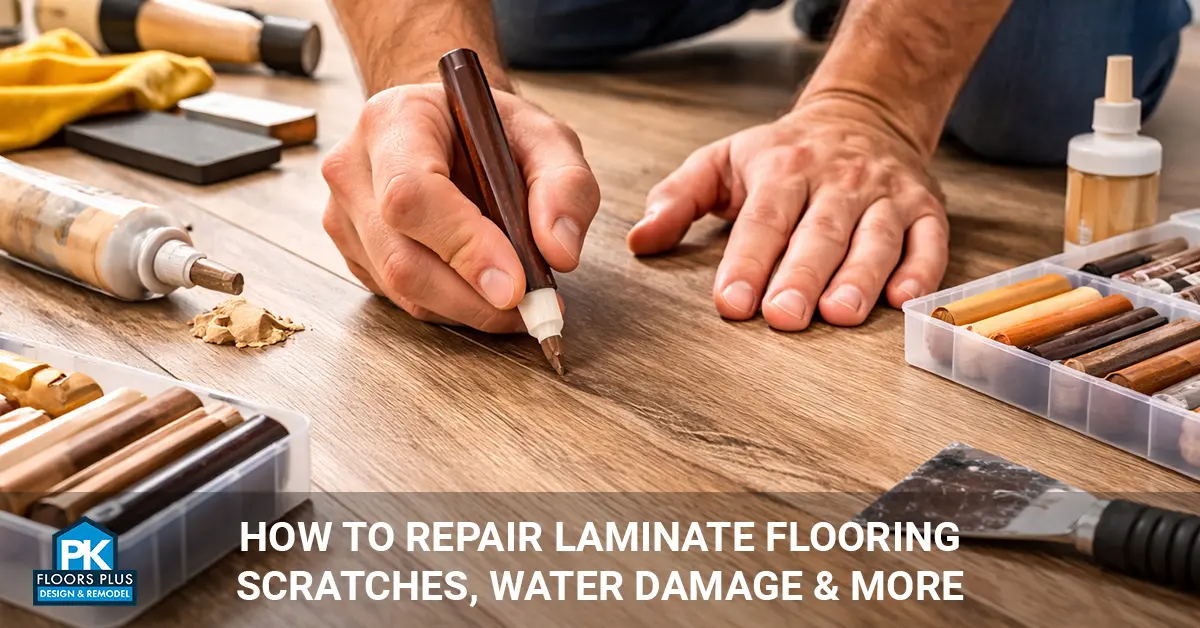
The best way to repair laminate flooring is to match the repair method to the type of damage, whether it’s a scratch, a chip, a gap, or water swelling. Most small problems are easy to fix at home, and you only need a few simple tools to make the floor look clean and smooth again. Laminate can’t be sanded or refinished like hardwood, so knowing the right repair technique is the key to getting great results. With a little care and the right steps, you can restore your laminate flooring and extend its lifespan without replacing the whole floor.
Types of Laminate Flooring Damage (What You’re Really Dealing With)
The main types of laminate flooring damage include scratches, chips, lifting edges, gaps, and water-swollen planks, and each type needs a different repair method. Light scratches are easy to fix, while water damage usually means replacing the boards.
Common Types of Damage:
- Light surface scratches
- Deep scratches
- Chips or small holes
- Peeling or lifting edges
- Warping or buckling
- Water-damaged planks
- Gaps between boards
Knowing exactly what kind of damage you’re dealing with helps you choose the right repair and get the best results.
How to Repair Light Scratches on Laminate Flooring
You can repair light scratches on laminate flooring by using touch-up markers or wax pencils that match your floor color. These simple tools fill the scratch and help it blend in with the rest of the surface.
How to Fix Light Scratches:
- Use a laminate floor repair marker in a matching shade.
- Apply it gently over the scratch, then buff with a soft cloth.
- For slightly deeper scratches, use a wax pencil and blend it smoothly.
This quick and easy method works well for minor surface marks and helps your laminate look fresh again.
How to Fix Deep Scratches in Laminate Flooring
The best way to fix deep scratches in laminate flooring is to use a laminate repair putty kit, because laminate can’t be sanded like hardwood. The putty fills the scratch and helps the damaged area blend into the rest of the floor.
How to Repair Deep Scratches:
- Choose a repair putty that matches your floor color.
- Use a putty knife to fill the scratch evenly.
- Wipe away any excess and smooth the surface.
- Let it dry completely so the repair becomes less noticeable.
This method works well for scratches that are too deep for markers or wax.
How to Repair Chips or Small Holes in Laminate Flooring
You can repair chips or small holes in laminate flooring by filling them with laminate repair putty or acrylic filler. These products cover the damaged spot and make the floor look smooth again.
Steps:
- Clean the chipped area so the filler sticks properly.
- Apply the putty using a putty knife.
- Smooth the patch and blend the color to match your floor.
- Wipe away any extra product before it dries.
When the color is matched correctly, the repair becomes strong and almost invisible.
How to Fix Laminate Flooring That Is Peeling or Lifting
The best way to fix peeling or lifting laminate flooring is to glue the loose edge back down if the damage is minor, or replace the plank if it’s swollen or badly lifted. Laminate often lifts because of moisture or wear.
What to Do:
- Check whether moisture caused the lifting.
- If only the edge is raised, apply a small amount of wood glue under the loose section.
- Press it down firmly until it dries.
- If the board is swollen, warped, or heavily damaged, replace it with a new plank.
For small lifting edges, a quick glue repair usually solves the problem.
How to Repair Buckling or Warping in Laminate Flooring
You can repair buckling or warping in laminate flooring by correcting the expansion gap or replacing any boards damaged by moisture. Buckling happens when the planks don’t have enough room to expand.
Steps to Fix Buckling:
- Remove the molding or baseboards around the floor.
- Check if the planks are pressed tightly against the wall.
- Increase the expansion gap if there isn’t enough space.
- Replace any planks that are swollen, warped, or beyond repair.
Keeping your home’s humidity stable also helps prevent future warping.
How to Fix Water-Damaged Laminate Flooring
Water-damaged laminate flooring usually cannot be repaired and must be replaced because the planks swell once moisture gets inside. Laminate doesn’t shrink back to its original shape after it absorbs water.
How to Fix Water Damage:
- Identify and stop the source of the water.
- Remove all damaged or swollen boards.
- Dry the subfloor completely before installing anything new.
- Install fresh laminate planks to replace the damaged ones.
If only a small area was affected, you can replace just those boards instead of the entire floor.
How to Fix Gaps Between Laminate Planks
The best way to fix gaps between laminate planks is to pull the boards back together using a gap-fixing tool or a tapping block. Gaps usually form because the flooring shifts or the humidity changes.
How to Repair Gaps:
- Use a gap fixer tool to gently tap the planks back into place.
- Add a small amount of flooring glue for older floors if the manufacturer recommends it.
- Check the subfloor to make sure it’s level and not causing movement.
- Keep your home’s humidity stable to prevent gaps from forming again.
Most gaps are easy to fix and only take a few minutes to close.
When You Should Replace Laminate Instead of Repairing It
You should replace laminate flooring instead of repairing it when the damage is too severe, too widespread, or caused by water. Some issues simply can’t be fixed because the laminate doesn’t recover once it swells or breaks down.
Replace your flooring when you see:
- Swollen or spongy boards
- Large sections of peeling
- Mold growing under the planks
- Multiple boards buckling or lifting
- Significant or repeated water damage
In these cases, replacement is the only long-term solution and ensures your floor stays safe, stable, and visually appealing. In many cases, severe damage happens after repeated laminate flooring mistakes that could have been avoided earlier.
Tools & Repair Kits You’ll Need
The best way to repair laminate flooring is to have the right tools on hand, because the proper tools make every repair easier, cleaner, and more effective.
Helpful Tools:
- Laminate repair markers
- Wax pencils
- Repair putty kits
- Putty knife
- Pull bar
- Tapping block
- Replacement boards
These tools allow you to handle everything from tiny scratches to full plank replacements with confidence.
How to Prevent Damage After Repairs
The best way to keep laminate flooring looking great after repairs is to protect it from scratches, moisture, and everyday wear. A few simple habits can make your repairs last much longer.
Protection Tips:
- Add felt pads to all furniture legs to prevent scratches.
- Place mats at entryways to catch dirt and grit.
- Avoid steam mops and anything that uses too much water.
- Keep your home’s humidity between 30%–70% to reduce swelling or gaps.
- Clean with gentle, laminate-safe products only.
These small steps keep your laminate smooth, durable, and looking new for years. After making repairs, following a proper laminate flooring cleaning routine helps prevent scratches, moisture buildup, and repeated damage.
Final Thoughts
The best way to repair laminate flooring is to use the right method for the specific type of damage. Light scratches, chips, and small gaps are quick and easy fixes, while serious water damage usually requires replacing the affected boards. With the proper tools and a little patience, you can restore your laminate flooring and keep it looking clean, smooth, and beautiful for many years.