
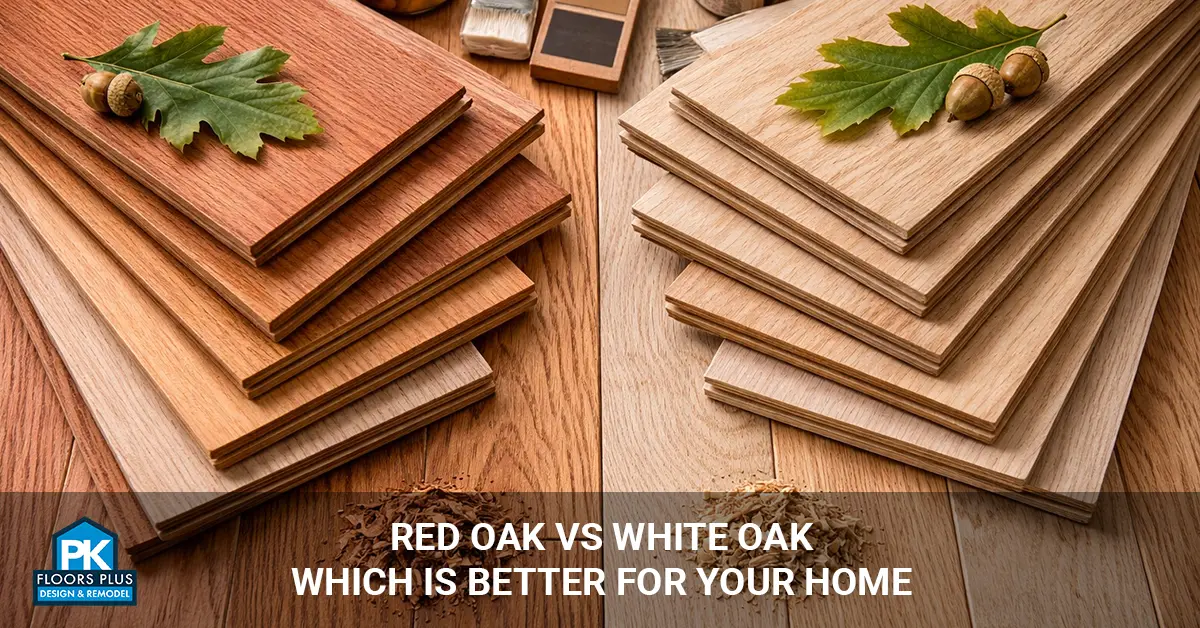
Choosing between red oak and white oak flooring can feel confusing at first. Both are strong hardwood options, both look great, and both have been used in homes for decades. The real difference comes down to how they look, how they perform over time, and how well they fit your lifestyle. This guide explains those differences in clear, simple terms so you can confidently choose the right oak for your home.
What Is Red Oak Flooring?
Red oak flooring is a popular hardwood known for its warm tones and bold grain pattern.
It often has a pink or reddish undertone with visible grain lines that create a classic, traditional look. Red oak has been used in homes for decades, which makes it familiar, widely available, and easier to match with existing floors. It also takes stain well, so it works with a wide range of finishes, from light natural colors to deeper brown shades.
What Is White Oak Flooring?
White oak flooring is a hardwood option known for its neutral color and tighter grain pattern. It usually features beige, tan, or light brown tones with little to no red, creating a clean and balanced look. The grain is smoother and more subtle, which gives white oak a modern feel. Because of its natural tone and versatility, white oak has become a popular choice in contemporary and minimalist homes.
Red Oak vs White Oak: Key Differences
Red oak and white oak differ in color, grain, durability, and moisture resistance.
Red oak has warmer tones and a more noticeable grain pattern, while white oak offers a calmer, more uniform look. White oak is slightly harder and handles moisture better, while red oak is typically more affordable. Both are durable hardwoods, but their look and performance make each better suited for different homes and lifestyles.
Durability and Hardness Comparison
White oak is slightly harder and more durable than red oak. It resists dents and everyday wear a bit better, which makes it a good choice for busy homes and high-traffic areas. Red oak is still a durable option and performs well in most households, but it may show signs of wear sooner in very active spaces. With proper finishing and regular care, both types hold up well in everyday residential use.
Moisture Resistance and Stability
White oak handles moisture better than red oak. Its tighter cellular structure slows moisture absorption, which helps it stay more stable in humid conditions. This makes white oak a better option for kitchens, entryways, or homes in areas with higher humidity. Red oak still works well in most rooms, but it can be more sensitive to moisture over time.
Appearance and Design Style
Red oak offers a warmer, more traditional look, while white oak suits modern and transitional styles. Red oak pairs well with classic homes, detailed trim, and warmer color palettes. White oak blends easily with light walls, open layouts, and contemporary décor. Both types can be stained, but white oak usually keeps a more neutral tone, even with darker finishes.
Cost Comparison
Red oak is usually more affordable than white oak. It’s widely available and typically costs less per square foot. White oak often costs more because of higher demand and its added durability and moisture resistance. Since installation costs are similar for both, the main price difference usually comes from the wood itself.
Maintenance and Refinishing
Both red oak and white oak are easy to maintain with the right care.
Regular sweeping, gentle cleaning, and using protective pads under furniture help prevent scratches and wear. Both types of oak can be refinished multiple times, which extends their lifespan and refreshes their appearance. Choosing the right finish also helps reduce visible wear over time.
Which Oak Is Better for Your Home?
The better oak depends on your style, budget, and how you use your space every day.
Red oak is a great option if you want a warm, traditional look at a lower cost. White oak is often the better choice if you prefer a modern style, need stronger moisture resistance, or have a high-traffic household. Neither option is wrong; the best choice is the one that fits your lifestyle and how you want your home to feel.
Once you’ve chosen between red oak and white oak, professional hardwood floor installation ensures proper fit, long-term durability, and a clean finished look.
When to Talk to a Flooring Professional
A flooring professional can help you choose between red oak and white oak. They can check moisture levels, subfloor conditions, and how each room is used to ensure the flooring performs well over time. Professional advice is especially helpful when installing hardwood in kitchens, large open spaces, or older homes.
Final Thoughts
Red oak and white oak are both excellent hardwood flooring options. Red oak brings warmth, character, and a more budget-friendly price. White oak offers added durability, better moisture resistance, and a clean, modern look. Understanding these differences makes the choice easier and helps ensure your floors look great and perform well for many years.

