The safest way to clean vinyl plank flooring is to use gentle products and methods that remove dirt without scratching or damaging the surface. Vinyl is strong and low-maintenance, but the wrong cleaner or too much water can quickly dull the finish or loosen the boards. The good news is that keeping vinyl floors clean doesn’t require anything complicated. You just need the right routine and a few safe cleaning habits.
In this guide, you’ll learn exactly how to clean step by step vinyl plank flooring the right way. We’ll go over the best daily cleaning methods, how to mop safely, which cleaners are recommended, and which ones you should never use. You’ll also see how to handle stains, prevent damage, and keep your floors looking new for years.
The Safest Way to Clean Vinyl Plank Flooring
The safest way to clean vinyl plank flooring is to sweep it daily and mop it weekly with a microfiber mop and a gentle, pH-neutral cleaner. This routine removes dirt without scratching the surface or causing moisture damage. It also keeps the floor looking clean and shiny without wearing down the protective layer.
What you’ll need:
- Soft broom or microfiber dust mop
- Microfiber mop
- Warm water
- Mild dish soap or pH-neutral floor cleaner
- Optional: diluted vinegar (½ cup per gallon of warm water)
How often to clean:
- Daily: Quick sweep or dust mop
- Weekly: Light damp mopping
- Monthly: Deep clean to remove buildup
A simple, gentle routine is the key to keeping vinyl plank flooring clean, safe, and looking great for years.
Why Proper Cleaning Matters for Vinyl Plank Floors
Proper cleaning matters for vinyl plank floors because it protects the surface from scratches, dullness, and long-term damage. Even though vinyl is tough, dirt and grit can act like sandpaper if they’re not removed regularly. Over time, this can wear down the finish and make your floors look older than they are.
Keeping the floor clean also prevents water from seeping into the edges, stops residue from building up, and reduces wear in busy areas of your home. With simple, consistent maintenance, your vinyl plank flooring will stay bright, smooth, and in great condition for years.
Daily Cleaning Routine for Vinyl Plank Flooring
The best daily cleaning routine for vinyl plank flooring is to remove dust and dirt before it has a chance to scratch the surface. A quick sweep or pass with a microfiber dust mop is usually enough to keep the floor looking clean each day.
Do:
- Dry sweep or dust mop
- Use a microfiber pad for quick cleanups
- Vacuum with a hard-floor setting (no beater bar)
Avoid:
- Hard-bristle brooms
- Vacuums with rotating brushes
Just a few minutes a day helps protect the finish and keeps your vinyl floors shiny with almost no effort.
Weekly Cleaning: How to Mop Vinyl Plank Flooring Safely
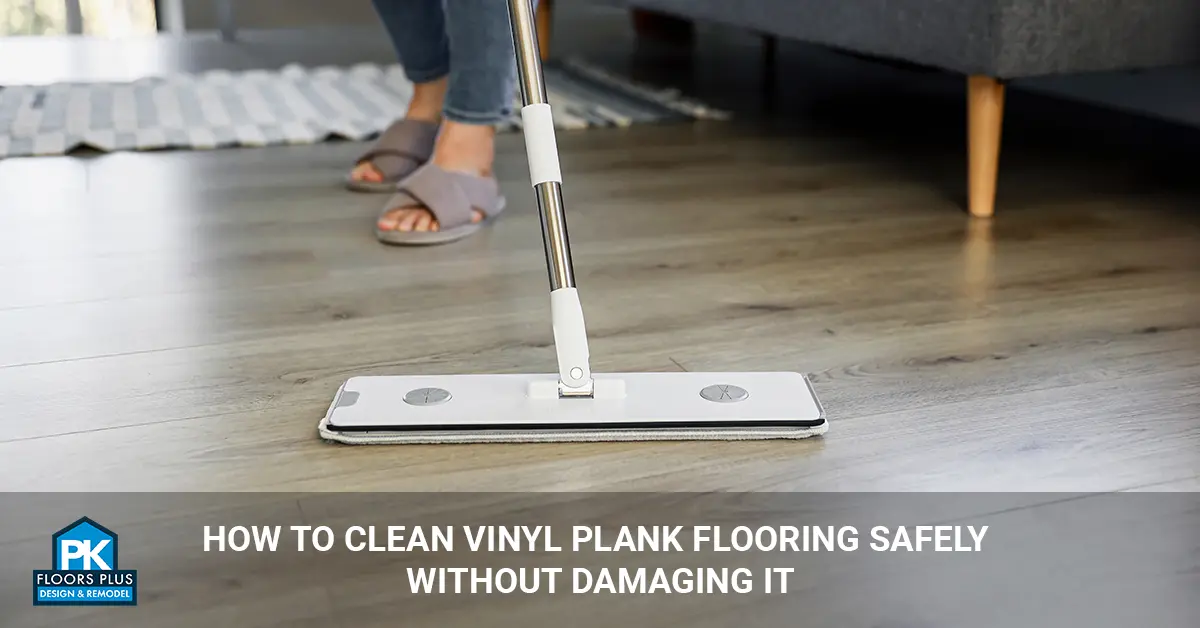
The safest way to mop vinyl plank flooring is to use a microfiber or spray mop with a gentle cleaner and as little water as possible. This keeps the floor clean without letting moisture seep into the seams.
Best mops to use:
- Microfiber mop
- Spray mop
Both use minimal water and clean the surface gently.
How to mop correctly:
- Fill a bucket with warm water.
- Add a drop of mild dish soap or a pH-neutral vinyl floor cleaner.
- Lightly dampen the mop; never soak it.
- Mop in the same direction as the planks for a smooth, streak-free finish.
- Let the floor air-dry.
Important:
Vinyl does not like standing water. Too much moisture can seep into the edges, weaken the adhesive, and damage the planks over time.
Best Safe Cleaners for Vinyl Plank Flooring
The best safe cleaners for vinyl plank flooring are mild, pH-neutral solutions that clean the surface without stripping or damaging the protective layer. These gentle options remove dirt and buildup while keeping your floors looking fresh.
Approved cleaners:
- pH-neutral vinyl floor cleaners
- Mild dish soap mixed with warm water
- Store-bought cleaners labeled as vinyl-safe
Safe homemade option (Vinegar solution):
- ½ cup white vinegar
- 1 gallon of warm water
Diluted vinegar helps break down everyday grime without harming the finish, making it a simple and effective cleaner for vinyl floors.
Cleaners and Tools You Should Never Use
The cleaners and tools you should never use on vinyl plank flooring are the ones that can scratch, dull, or permanently damage the surface. Even a single use of the wrong product can ruin the finish.
Avoid these:
- Steam mops (the heat can cause warping)
- Abrasive scrub brushes
- Scouring pads
- Bleach
- Ammonia
- Paste wax, polish, or oil-based products
- Strong detergents
- Full-strength vinegar (always dilute it)
How to Remove Stubborn Stains on Vinyl Plank Flooring
The best way to remove stubborn stains from vinyl plank flooring is to treat each type of stain with a gentle, safe method that won’t damage the surface. Using the right approach helps lift the stain without scratching or dulling your floor.
Scuff marks:
- Rub gently with a soft cloth and a little baking soda paste.
- Wipe clean and dry afterward.
Food or drink spills:
- Clean with mild soap and warm water.
Grease or oil:
- Use a diluted vinegar solution to break it down.
Ink, marker, or nail polish:
- Apply a small amount of rubbing alcohol to a cotton pad.
- Test in a hidden spot first to be safe.
Sticky residue:
- Warm vinegar works well.
- For tougher spots, use a vinyl-safe adhesive remover.
How to Prevent Damage While Cleaning
The best way to prevent damage while cleaning vinyl plank flooring is to use gentle methods that protect the surface from scratches, moisture, and pressure. A few simple habits go a long way in keeping your floors looking new.
Smart habits to follow:
- Avoid using too much water when mopping.
- Clean spills as soon as they happen.
- Place rugs or mats in entryways to catch dirt.
- Add felt pads under all furniture legs.
- Always lift furniture instead of dragging it.
These small steps help keep your vinyl floors scratch-free and prevent long-term wear patterns.
Deep Cleaning Vinyl Plank Flooring Without Damage
The safest way to deep clean vinyl plank flooring is to use gentle products and minimal water to remove buildup without harming the finish. A monthly deep clean helps your floors stay fresh and bright.
How to deep clean:
- Sweep thoroughly to remove dirt and dust.
- Mop with a mild, vinyl-safe cleaner.
- Rinse with clean water to remove any residue.
- Dry the floor completely with a soft towel or let it air-dry.
Avoid harsh scrub brushes or abrasive tools during deep cleaning, as they can scratch the surface and dull the protective layer.
If your floors show early signs of wear, reviewing the common vinyl flooring installation mistakes to avoid can help you understand how the original setup affects long-term cleaning and durability.
How to Clean Vinyl Plank Flooring with Pets or Kids
The best way to clean vinyl plank flooring in homes with pets or kids is to stay on top of daily messes so dirt, spills, and hair don’t build up or cause stains. Vinyl is durable and family-friendly, but regular quick cleanups help it stay in great shape.
Helpful tips:
- Use a microfiber dust mop daily to pick up pet hair.
- Clean spills right away to prevent staining.
- Keep pet bowls on waterproof mats to stop water drips.
- Use washable area rugs in busy play areas.
These simple habits make a big difference and help your vinyl floors stay clean and looking new.
Final Thought
The best way to keep vinyl plank flooring looking great is to clean it gently and consistently using safe, simple methods. Vinyl doesn’t need harsh chemicals or heavy scrubbing, just regular sweeping, light mopping, and quick spill cleanup. When you use the right products and avoid the wrong ones, your floors stay shiny, smooth, and damage-free for years. A little daily care goes a long way, especially in busy homes with kids or pets.
And if you’re planning to replace damaged planks, you can follow our guide on how to install vinyl plank flooring the right way for a smoother finish.

