The right flooring choice depends on how you use your home, how much moisture is present, and what you expect from the floor over time. Engineered hardwood and vinyl plank may look similar at first glance, but they perform very differently once they’re installed.
Engineered hardwood gives you the warmth and character of real wood and can add value to your home. Vinyl plank is built for durability, water resistance, and easy maintenance, making it a practical option for busy households.
This guide explains the real differences in plain language. By the end, you’ll know which flooring fits your lifestyle, budget, and rooms without confusion or guesswork.
Which Flooring Is Better for Most Homes?
Vinyl plank flooring is the better choice for most homes because it’s waterproof, durable, and easy to maintain. It handles everyday spills, humidity, and wear without much effort, which makes it practical for busy households.
Engineered hardwood is the better option if you want the look and feel of real wood and added home value. It works best in homes where moisture is controlled and conditions stay fairly stable.
What Is Engineered Hardwood Flooring?
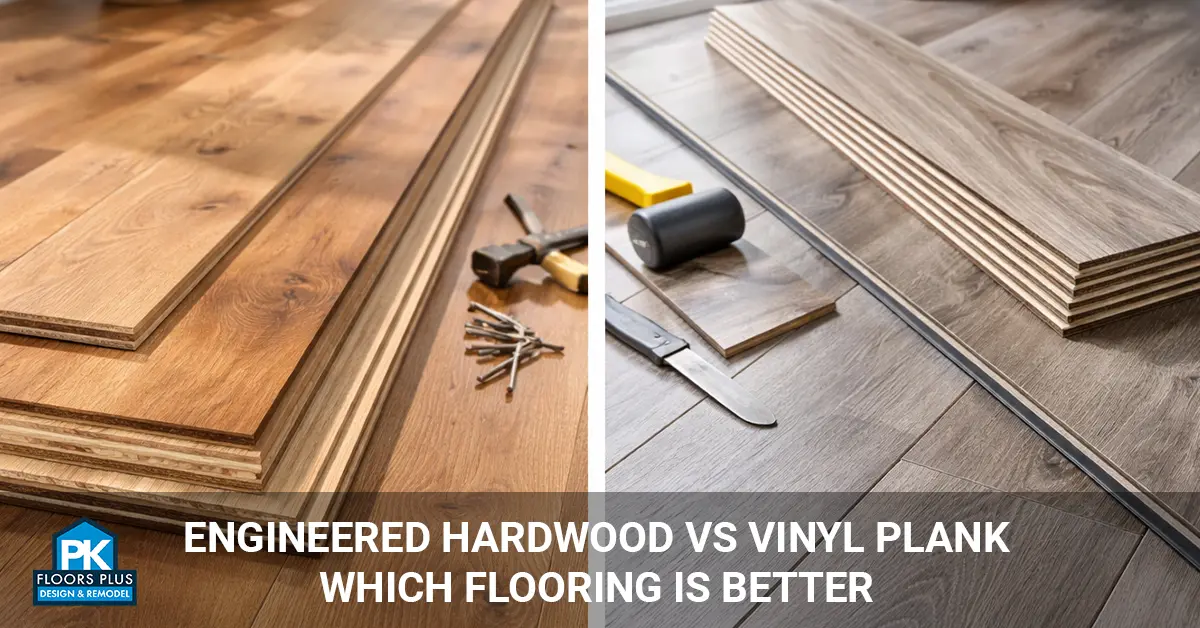
Engineered hardwood flooring is real wood flooring built to be more stable than solid hardwood. It has a thin layer of natural wood on top, supported by multiple layers of plywood or fiberboard underneath.
This layered design reduces expansion and contraction from moisture and temperature changes, which makes engineered hardwood more reliable for everyday living.
Pros of Engineered Hardwood Flooring
Engineered hardwood flooring offers the look of real wood with better performance for modern homes. It’s designed to handle everyday conditions more easily than solid hardwood.
- Real wood look and natural grain that feels warm and authentic
- Adds warmth and value to a home, making spaces feel more upscale
- Handles humidity better than solid hardwood, reducing movement and gaps
- Works over concrete subfloors, including condos and lower levels
Cons of Engineered Hardwood Flooring
Engineered hardwood flooring has a few drawbacks that are important to consider before buying. While it looks great, it still has limits when it comes to moisture and wear.
- Not waterproof, so standing water can cause damage
- Limited refinishing options because the top wood layer is thinner
- Can scratch or dent, especially in high-traffic areas
- Higher cost than vinyl plank, both for materials and installation
Best Rooms for Engineered Hardwood Flooring
Engineered hardwood flooring works best in rooms where moisture is controlled and conditions stay fairly stable. In these spaces, it holds up well and keeps its natural wood appearance.
The best rooms for engineered hardwood flooring include living rooms, bedrooms, dining rooms, condos, and other areas with controlled moisture.
What Is Vinyl Plank Flooring?
Vinyl plank flooring is a synthetic flooring option made from layered PVC materials that are designed to look like real wood. It’s built to handle water, heavy foot traffic, and everyday wear without damage.
Most vinyl plank flooring is completely waterproof, which makes it a reliable choice for busy homes and moisture-prone rooms.
Pros of Vinyl Plank Flooring
Vinyl plank flooring is built for durability and ease of use, which makes it a popular choice for modern homes.
- Fully waterproof, making it safe for kitchens, bathrooms, and basements
- Highly scratch- and stain-resistant, ideal for pets and kids
- Comfortable and quieter underfoot compared to harder surfaces
- Budget-friendly and easy to maintain, with simple cleaning routines
These advantages make vinyl plank a practical option for homes that need tough, low-maintenance flooring.
Cons of Vinyl Plank Flooring
Vinyl plank flooring is durable and practical, but it has a few limitations to keep in mind before choosing it.
- Does not add the same resale value as real wood, which can matter for long-term homeowners
- Cannot be refinished, so damaged planks must be replaced
- May feel less natural than real wood, despite realistic designs
These drawbacks are most noticeable if appearance and long-term home value are top priorities.
Best Rooms for Vinyl Plank Flooring
Vinyl plank flooring works best in areas where water, spills, and heavy traffic are common. Its waterproof design makes it especially reliable in busy homes.
The best rooms for vinyl plank flooring include kitchens, bathrooms, basements, laundry rooms, entryways, and homes with kids or pets.
Engineered Hardwood vs Vinyl Plank: Side-by-Side Comparison
Cost
Vinyl plank flooring has the lower overall cost for most homeowners. It’s generally cheaper to buy and easier to install, which helps keep total expenses down.
- Vinyl plank: Lower overall cost and affordable installation
- Engineered hardwood: Mid to higher price range due to real wood materials
Durability & Lifespan
Engineered hardwood usually lasts longer, with an average lifespan of 20–40 years when properly maintained. Its real wood surface can handle long-term use in the right conditions.
Vinyl plank typically lasts 15–30 years. While its lifespan may be shorter, it resists scratches, dents, and moisture damage better, which helps it perform well in busy households.
Water & Moisture Resistance
Vinyl plank flooring is fully waterproof, making it the best option for wet or spill-prone areas. It won’t swell, warp, or get damaged when exposed to water.
Engineered hardwood is moisture-resistant but not waterproof. It can handle small spills if they’re cleaned quickly, but standing water can cause damage. For kitchens, bathrooms, and basements, vinyl plank is the clear winner.
Appearance & Feel
Engineered hardwood looks and feels like real wood because it uses a natural wood surface layer. The grain, texture, and variation give it a more authentic appearance.
Vinyl plank offers realistic wood-style visuals with a softer feel underfoot. It tends to feel warmer and quieter, but engineered hardwood looks more natural overall.
Comfort & Sound
Vinyl plank is softer and quieter underfoot, which makes it more comfortable for standing and walking. Its flexible core and padding help reduce noise, especially in busy homes.
Engineered hardwood has a firmer feel and can produce more sound without proper underlayment. Adding padding can improve comfort and noise control, but the vinyl plank still feels quieter overall.
Installation
Vinyl plank flooring is the easiest option to install because it uses a DIY-friendly click-lock system. If you want to see the full process, our vinyl plank flooring installation guide walks through each step in detail. Most homeowners can install it quickly without special tools or experience.
Engineered hardwood offers more installation methods, including floating, glue-down, or nail-down. While this adds flexibility, installation is usually more complex and often handled by professionals.
Maintenance & Repairs
Vinyl plank flooring is easy to maintain with simple sweeping and mopping. If a plank gets damaged, it can usually be replaced without affecting the rest of the floor.
Engineered hardwood requires more careful cleaning to protect the wood surface. While it can be refinished in some cases, refinishing is limited and depends on the thickness of the top wood layer.
Which Flooring Is Better for Each Room?
Choosing the right flooring for each room makes a big difference in how long it lasts and how well it performs.
- Living rooms: Both engineered hardwood and vinyl plank work well, depending on your style and moisture levels.
- Bedrooms: Either option is suitable and comes down to personal preference.
- Kitchens: Vinyl plank is the better choice because of its waterproof performance.
- Bathrooms: Vinyl plank only, as engineered hardwood can be damaged by water.
- Basements: Vinyl plank is best since it handles moisture and humidity.
- Condos & apartments: Vinyl plank or engineered hardwood both work, especially over concrete subfloors.
Matching each room’s needs helps you avoid problems and ensures your flooring looks great for years.
Engineered Hardwood vs Vinyl Plank: Pros & Cons Summary
Engineered Hardwood
Engineered hardwood is a strong choice if you want the look of real wood and added home value. It brings warmth and character to a space but requires more care around moisture.
- Real wood appearance with natural grain and texture
- Adds value and appeal to a home
- Less water-tolerant, so it’s not ideal for wet areas
Vinyl Plank
Vinyl plank is designed for durability and low maintenance, making it a practical option for busy homes. It handles water and wear better than most flooring types.
- Waterproof and durable, ideal for moisture-prone areas
- Lower cost and easy care, with simple cleaning and maintenance
- Lower resale value compared to real wood flooring
Vinyl plank is a smart choice when performance and ease of use matter more than long-term home value.
Which Flooring Should You Choose Based on Your Needs?
- Best for Moisture-Prone Homes: Vinyl plank is the safest choice for moisture-prone homes because it’s fully waterproof and handles spills and humidity without damage.
- Best for Long-Term Value: Engineered hardwood is the better option for long-term value since it adds more appeal and resale potential to a home.
- Best for Homes with Pets or Kids: Vinyl plank performs better in busy homes because it resists scratches, handles spills, and reduces noise.
- Best for Budget Control: Vinyl plank offers reliable performance at a lower cost, making it easier to stay within budget.
- Best for DIY Installation: Vinyl plank is quicker and easier to install thanks to its simple click-lock system.
Common Mistakes to Avoid When Choosing Flooring
Most flooring problems happen when the material doesn’t match the room conditions. Avoiding these mistakes helps prevent early damage and costly replacements.
- Installing wood in wet areas, which can lead to swelling or warping
- Ignoring subfloor conditions, such as moisture or uneven surfaces
- Choosing looks over performance, instead of how the floor will actually be used
- Not considering long-term maintenance, including cleaning, repairs, and replacement
Making practical choices from the start helps your flooring last longer and perform better over time.
Final Thoughts
There is no single best flooring option for every home. Engineered hardwood is the right choice if you want real wood beauty and added value in spaces with controlled moisture. Vinyl plank is the better option if you need a waterproof, durable, and low-maintenance floor.
When you choose flooring based on your rooms, lifestyle, and budget, you get a floor that looks good, performs well, and lasts for years.

