

Most homes in Rockwall and across North Texas are built on concrete slab foundations. That is good news in many ways, since slabs are solid and stable, but it also means your new flooring will sit directly on concrete. What is happening in and under that slab can make or break a flooring installation.
Before you fall in love with a specific floor, it helps to understand how a slab affects each type of flooring and what preparation is needed to get a result that lasts.
Why Concrete Slabs Need Special Attention
Concrete may look dry and rigid, but it is porous and it moves. Three issues come up again and again:
1. Moisture. Concrete can release moisture vapor from the ground below, even when the surface feels perfectly dry. That vapor can cause adhesives to fail, wood to cup or swell, and vinyl or laminate to buckle or develop mold or odor problems. Many flooring manufacturers require moisture testing and set limits for the slab, and ignoring those limits can void a warranty.
2. Flatness. Slabs are rarely perfectly flat. Dips, humps, and ridges show through thin flooring and can cause gaps, squeaks, or loose planks. Manufacturers typically specify how flat the surface must be, often within a fraction of an inch over several feet.
3. Cracks and movement. Much of North Texas has expansive clay soil, which swells when wet and shrinks when dry. Over time, that can cause slabs to shift or crack. Hairline cracks are common and often harmless, but the way your flooring handles movement matters, especially with tile.
Step One: Test and Evaluate the Slab
A proper installation starts before any flooring arrives. A qualified installer will inspect the slab for cracks, uneven areas, old adhesive, and moisture. Moisture testing, using methods recommended by the flooring manufacturer, tells you whether the slab is ready or needs a moisture barrier or mitigation first. Skipping this step is one of the most common reasons floors fail early.
If you have had a leak, a burst pipe, or flooding, tell your installer right away. Our flood and water damage restoration team can dry out and address the problem before new flooring goes down, and our post on the hidden costs of a flooded home explains why it matters.
Step Two: Prepare the Surface
Once the slab is evaluated, preparation might include:
- Removing old flooring, adhesive, and debris, which our dustless floor removal helps keep clean
- Grinding down high spots
- Filling low spots with a self-leveling underlayment
- Repairing cracks and holes
- Installing a moisture barrier or crack isolation membrane when needed
This work is not glamorous, but it is where lasting floors are made. A beautiful floor on a poorly prepared slab will not stay beautiful.
How Each Flooring Type Handles a Slab
Flooring | How it works over slab | What to watch |
|---|---|---|
A strong match. Waterproof options handle slab conditions well | Needs a flat surface so planks do not flex or separate | |
Very durable and moisture tolerant | Slab cracks can telegraph through, so a crack isolation membrane is often used | |
Designed to be more dimensionally stable and is commonly floated or glued over slab | Moisture limits are strict, so testing is essential | |
Solid hardwood | Generally not recommended directly over concrete | Usually needs a subfloor system, which adds height and cost |
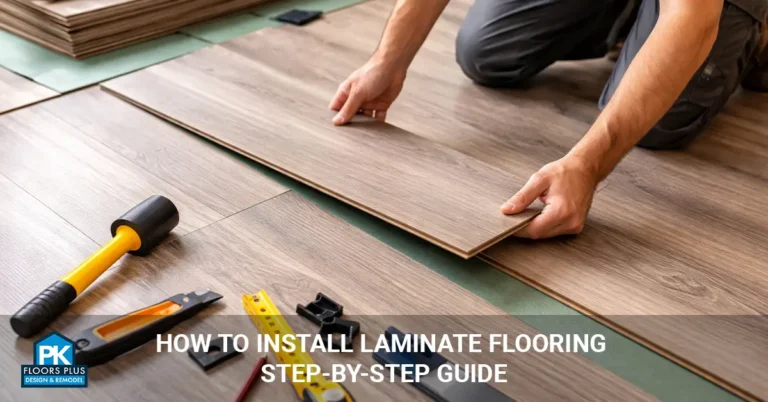
Laminate | Can float over slab with an underlayment | Not waterproof, so moisture and spills are a concern |
Beautiful and durable when installed correctly | Needs a very flat, stable substrate | |
Works with the right pad and moisture control | Moisture can cause odors and mildew |
If you are still comparing materials, these guides may help: engineered hardwood vs. vinyl plank, solid vs. engineered wood flooring, and SPC vs. LVP flooring.
Signs Your Slab May Be Causing Flooring Problems
- Floors that cup, buckle, or lift
- Gaps appearing between planks
- Cracked or popped tiles
- A musty smell, especially after rain
- Dark spots or discoloration at the edges of the floor
- Adhesive that will not hold
If you notice any of these, a professional evaluation can determine whether the cause is moisture, movement, or installation. See our page on flooring repair in Rockwall to learn when repair works and when replacement is the better option.
Questions to Ask Your Flooring Contractor
- Will you test the slab for moisture before installing?
- How do you handle uneven areas and cracks?
- Does the flooring manufacturer require a moisture barrier or specific adhesive?
- Will the installation keep my warranty valid?
- Who handles removal and disposal of the old floor?
Frequently Asked Questions
Can I install hardwood over a concrete slab? Engineered hardwood is commonly used over slab when moisture conditions are within the manufacturer’s limits. Solid hardwood generally requires a subfloor system. A moisture test and your installer’s recommendation will guide the choice.
What is the best flooring over concrete? Vinyl plank and tile are the most forgiving over slab, particularly in kitchens, baths, and areas where moisture is a concern. Engineered hardwood, laminate, and carpet can work too with proper preparation.
Do I need a moisture barrier? That depends on the slab’s moisture level and the flooring manufacturer’s requirements. Testing tells you whether one is needed.
Will cracks in my slab show through new flooring? They can, especially with tile. A crack isolation membrane or other preparation can help prevent cracks from telegraphing through.
Why does my floor feel uneven? Slabs often have minor dips and humps, and foundation movement can add to the problem. Leveling the surface before installation is the usual solution.
How long does flooring installation take? Most flooring installations take one to three days, but preparation work, such as leveling or moisture mitigation, can add time. We will provide a clear timeline during your consultation.
Do you offer free estimates? Yes. We offer free estimates and in-home consultations, and we can look at your slab and subfloor conditions as part of the process.
Start With a Solid Foundation
The right flooring on a properly prepared slab can last for decades. Contact PK Floors Plus or call 469-228-8483 to schedule a free consultation. Our team has more than 20 years of experience and serves Rockwall, Garland, Forney, Royse City, Wylie, McKinney, Plano, and communities throughout North Texas. Browse our recent flooring projects for inspiration.