

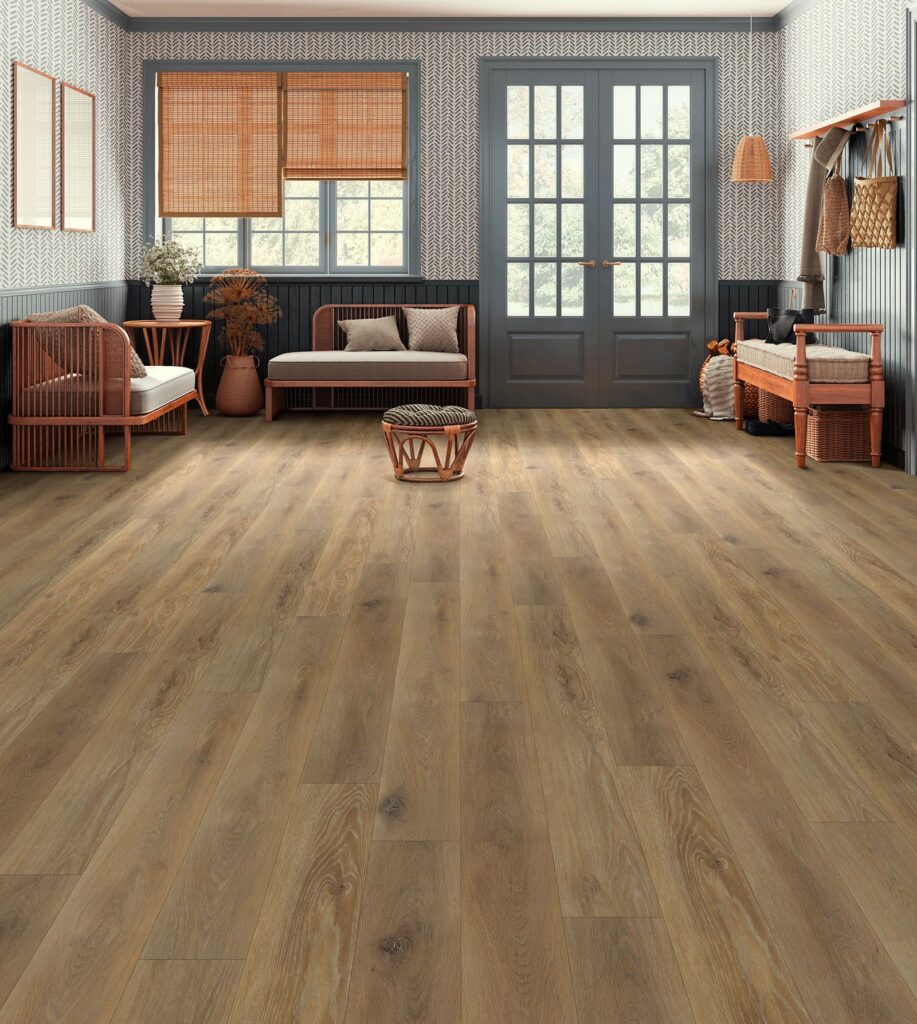
If you’re planning a flooring upgrade, chances are you’ve landed on two finalists: luxury vinyl plank and tile. Both hold up well in North Texas homes, both come in dozens of styles, and both can make a room feel brand new. But they aren’t interchangeable, and the right choice depends on where you’re installing it, how your household lives, and what you want to spend.
Here’s how vinyl plank and tile really compare, so you can walk into your consultation already knowing what questions to ask.
Durability and Water Resistance
Tile has always had a reputation as the toughest flooring option, and for good reason. Ceramic and porcelain tile are nearly impervious to water when properly installed and sealed, which is why they’re the default choice for bathrooms, laundry rooms, and entryways.
Luxury vinyl plank (LVP), often built as a wood plastic composite, has closed most of that gap. Modern WPC and rigid-core vinyl products are 100% waterproof at the surface layer, resist scratches from pets and furniture, and can handle temperature swings better than natural materials like hardwood. For families with kids, dogs, or a mudroom that sees a lot of traffic, vinyl plank is often the more forgiving day-to-day choice.
Bottom line: Tile wins for wet, high-heat areas like showers. Vinyl plank wins for whole-home consistency and everyday resilience.
Look and Feel Underfoot
This is where personal preference really takes over. Tile offers an authentic stone or slate look, along with cooler-to-the-touch comfort that Texas homeowners appreciate in the summer. It also comes in an enormous range of colors, patterns, and finishes, including options that mimic natural stone at a fraction of the cost and maintenance.
Vinyl plank, on the other hand, has become remarkably convincing at replicating hardwood grain, knots, and texture, while staying warmer and softer underfoot. It’s also quieter to walk on, which matters if you have a two-story home or an open floor plan where sound travels.
Installation and Cost
Vinyl plank is generally faster and less expensive to install than tile, since it doesn’t require mortar, grout lines, or the same curing time. This makes it a strong option if you’re renovating room by room or working within a tighter renovation budget. If financing is a factor, PK Floors Plus offers 0% financing options to help spread the cost of a larger flooring project.
Tile installation takes more time and skill, particularly with larger format tiles or intricate patterns, which is part of why professional installation matters so much. A poorly set tile floor can crack, shift, or develop uneven grout lines over time.
Maintenance Over the Long Run
Vinyl plank requires little more than regular sweeping and occasional mopping. There’s no grout to scrub or reseal.
Tile is nearly maintenance-free in terms of the tile itself, but grout lines need periodic cleaning and resealing to prevent staining and mildew, especially in bathrooms and kitchens.
Which One Fits Your Project?
- Choose tile for bathrooms, showers, laundry rooms, and spaces where water exposure is a daily reality.
- Choose vinyl plank for living rooms, bedrooms, hallways, and whole-home flooring where comfort, warmth, and quick installation matter most.
- Combine both — many Rockwall homeowners use tile in wet areas and vinyl plank everywhere else for a cohesive, practical layout.
Not sure which category your project falls into? Our team walks through material samples, subfloor conditions, and budget during every design consultation, so you’re not guessing.
Frequently Asked Questions
Is vinyl plank as durable as tile? Modern rigid-core and WPC vinyl planks are waterproof and highly scratch-resistant, making them comparable to tile for most residential uses. Tile still has the edge in areas with constant, direct water exposure, like showers.
Can vinyl plank be installed over existing tile? In many cases, yes, as long as the existing surface is flat, stable, and free of major damage. Our team evaluates your subfloor during the estimate to confirm the best approach, which may include dustless floor removal if the old flooring needs to come out first.
Which option is better for resale value? Both add value when installed well. Tile in bathrooms and entryways and hardwood-look vinyl plank in main living areas are consistently popular with buyers in the Rockwall market.
How long does installation typically take? Vinyl plank installations for an average room usually take 1–2 days. Tile can take 2–4 days depending on square footage, pattern complexity, and drying time. We’ll confirm your exact timeline during your free estimate.
Do you offer both materials from the same visit? Yes. We carry both product lines and can bring samples of tile and vinyl plank to the same appointment so you can compare them side by side in your own lighting.
Ready to compare samples in person? Get your free estimate or explore our full range of flooring services online.