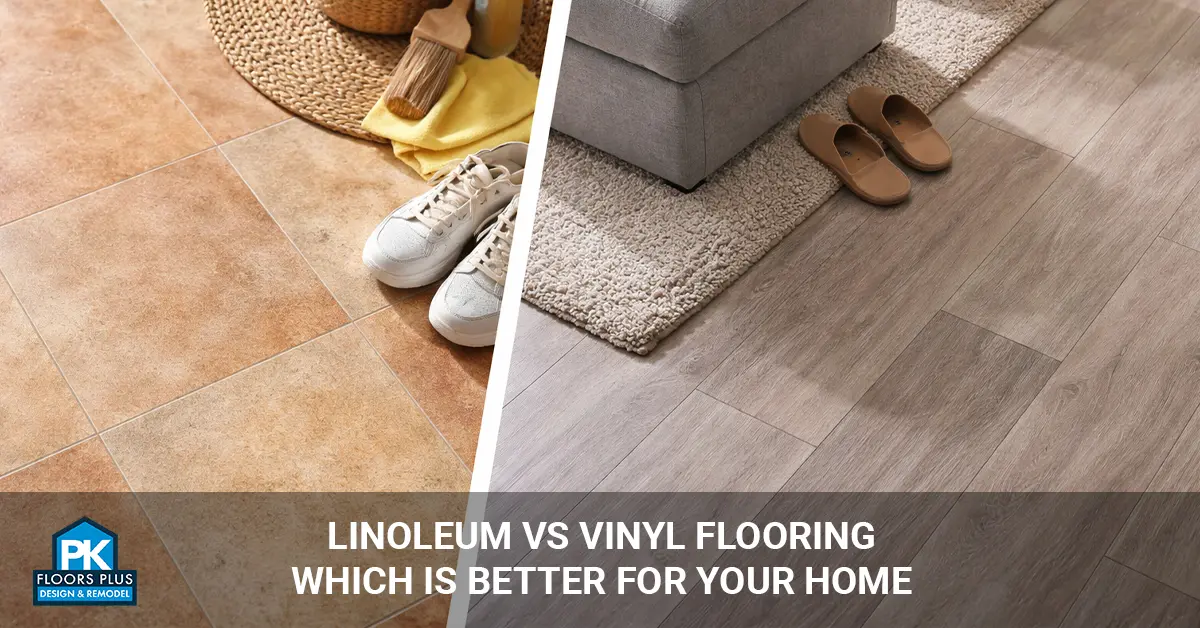
Linoleum and vinyl flooring may look similar at first, but they’re very different once you dig a little deeper. The better choice really comes down to what matters most to you. Cost. Durability. Water resistance. Or eco-friendliness.
This article breaks down the real differences between linoleum and vinyl flooring in a clear, simple way. You’ll see how each option performs in everyday use, so you can choose the one that fits your home, lifestyle, and budget without second-guessing your decision.
What Is Linoleum Flooring?
Linoleum flooring is a natural flooring material made from renewable ingredients like linseed oil, cork dust, wood flour, pine resin, and a jute backing. It’s valued for its long lifespan, natural antibacterial properties, and the way it wears evenly over time, often lasting 20 to 40 years with proper care.
What Is Vinyl Flooring?
Vinyl flooring is a synthetic flooring material made from plastic and petroleum-based products. It’s designed to be water-resistant, budget-friendly, and versatile in style, with options like luxury vinyl plank (LVP), vinyl tile, and sheet vinyl that work well in many areas of the home.
Linoleum vs Vinyl: Key Differences at a Glance
The main difference between linoleum and vinyl flooring is what they’re made of and how they age over time. Linoleum is a natural material that wears evenly, while vinyl is synthetic and depends on a protective top layer to prevent damage.
Linoleum is best known for long-term durability and sustainability. Vinyl is known for lower upfront cost and stronger water resistance.
Durability and Lifespan Comparison
Linoleum flooring is more durable over the long term and often lasts much longer than vinyl. Most linoleum floors last 20 to 40 years, while vinyl usually lasts 10 to 20 years, depending on quality and foot traffic. Because linoleum’s color runs through the material, scratches tend to be less noticeable as the floor ages.
Water Resistance and Moisture Performance
Vinyl flooring is more water-resistant than linoleum, which makes it a safer choice for bathrooms, basements, and other moisture-prone areas. Linoleum handles everyday spills just fine, but standing water can cause damage if seams aren’t sealed properly. In kitchens and dining areas, both options can perform well when installed correctly.
Maintenance and Cleaning Differences
Both linoleum and vinyl flooring are easy to clean, but vinyl generally requires less long-term maintenance. Linoleum benefits from occasional resealing to protect the surface, while vinyl typically only needs regular sweeping and damp mopping. Harsh chemicals should be avoided on both to prevent damage.
Comfort, Feel, and Noise Underfoot
Linoleum flooring feels warmer, quieter, and more comfortable underfoot than vinyl. Its natural materials provide slight cushioning, which makes it easier to stand on for longer periods. Vinyl tends to feel harder and colder, especially when installed over concrete subfloors.
Style, Colors, and Design Options
Vinyl flooring offers more design flexibility, including realistic wood, stone, and tile looks. Linoleum has a more classic style with solid colors, subtle patterns, and a matte finish. Many modern linoleum designs fit well in minimalist and mid-century interiors.
Environmental Impact and Health Considerations
Linoleum is the more eco-friendly flooring option because it’s made from renewable materials and is biodegradable. Vinyl is not biodegradable and may release VOCs, especially in lower-quality products. For homeowners who care about indoor air quality and sustainability, linoleum is often the better choice.
Cost Comparison: Upfront vs Long-Term
Vinyl flooring is cheaper upfront, which makes it attractive for tight budgets or short-term plans. Linoleum costs more initially but often costs less over time because of its longer lifespan and durability. The right choice depends on whether you’re thinking short-term or planning to stay in your home long-term.
Installation: Which Is Easier?
Vinyl flooring is easier to install, especially click-lock vinyl planks that are made for DIY projects. Linoleum, especially sheet linoleum, usually needs professional installation so seams are sealed correctly and moisture problems are avoided.
Best Rooms for Linoleum vs Vinyl
Linoleum works best in dry, everyday living spaces where comfort and durability matter most. It’s a strong choice for kitchens, living rooms, bedrooms, hallways, and home offices, where it holds up well to daily use.
Vinyl is better suited for moisture-prone areas like bathrooms, basements, laundry rooms, and mudrooms. Both linoleum and vinyl can handle high-traffic areas when you choose the right thickness and install them properly.
Pros and Cons Summary
Linoleum and vinyl both have clear strengths and trade-offs, and the better choice depends on what you value most in a floor.
Linoleum Pros
- Long lifespan
- Eco-friendly materials
- Comfortable underfoot
- Naturally antibacterial
Linoleum Cons
- Higher upfront cost
- Sensitive to moisture
- Professional installation is often recommended
Vinyl Pros
- Lower initial cost
- Highly water-resistant
- Easy installation
- Wide range of design options
Vinyl Cons
- Shorter lifespan
- Made from synthetic materials
- Scratches can be more noticeable over time
Which Is the Better Choice for Your Home?
Linoleum is the better choice if you want long-term durability, natural materials, and sustainability. Vinyl is the better option if you need a lower upfront cost, strong water resistance, and fast installation. The right choice depends on how long you plan to stay in your home and how the space will be used.
Final Thoughts
Linoleum and vinyl flooring both have a place in today’s homes. Linoleum stands out for its durability and eco-friendly materials, while vinyl is appealing for its lower cost and strong moisture resistance. Knowing how each option performs in everyday use makes it much easier to choose the flooring that truly fits your home and lifestyle.