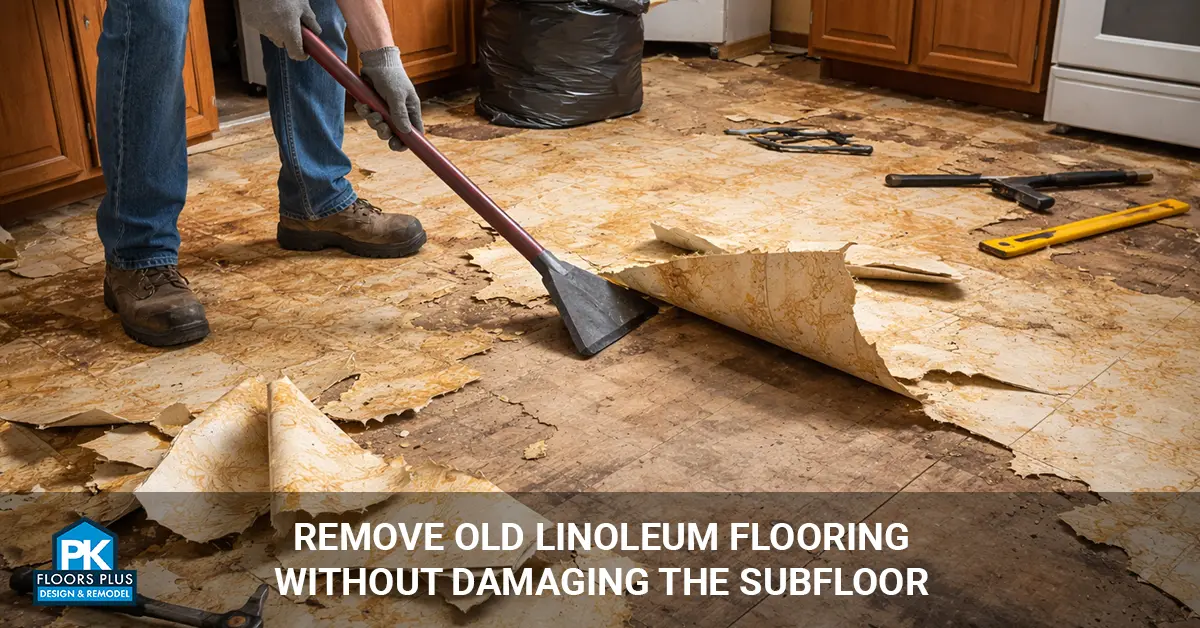
You can remove old linoleum flooring without damaging the subfloor if you use the right tools, work slowly, and follow the proper steps. Most damage happens when the flooring is pulled up too fast or scraped too aggressively, which leads to gouges, cracks, or costly repairs.
This guide explains the safest way to remove old linoleum flooring, whether it’s sheet linoleum or tiles, while keeping the surface underneath smooth, solid, and ready for new flooring.
What Type of Linoleum Flooring Do You Have?
The way you remove linoleum depends on the type installed in your home.
Some linoleum lifts easily, while others are firmly glued and take more time.
Sheet linoleum comes in large rolls and is glued across the entire floor. It usually pulls up in wide sections once the adhesive loosens, but it can tear if you rush.
Linoleum tiles are small individual pieces set with strong adhesive. These take more scraping and patience because each tile has to be loosened separately.
Floating or click-lock linoleum isn’t glued down and is the easiest to remove. This type is uncommon in older homes and often lifts up without tools.
Knowing which type you have helps you choose the right method and avoid using too much force that can damage the subfloor.
What’s Under Linoleum Flooring?
Linoleum flooring is usually installed over plywood, OSB, or concrete.
Knowing what’s underneath helps you remove the flooring without causing damage.
Plywood or wood subfloors are common in older homes and are easy to gouge if scraped too hard. They also absorb moisture, so water should be used sparingly.
OSB subfloors are similar to plywood but are even more sensitive to moisture. Too much water can cause swelling or soft spots.
Concrete slabs are stronger and less likely to be damaged, but aggressive tools can leave the surface uneven.
Wood-based subfloors need gentle scraping and minimal moisture to stay smooth and solid for new flooring.
Tools and Safety Gear You’ll Need
Removing linoleum safely is much easier when you have the right tools ready before you start. Good tools reduce effort and help prevent damage to the subfloor.
Basic tools you’ll need
- A utility knife to cut the linoleum into small, manageable sections
- A floor scraper or putty knife to loosen the flooring and adhesive
- A pry bar to lift the edges without forcing them
- A heat gun or hair dryer to soften stubborn adhesive and make removal easier
Using proper tools keeps the job controlled, safer, and far less frustrating.
Optional Tools
Optional tools can make linoleum removal faster and easier, especially when the adhesive is stubborn. You may not need them for every floor, but they help reduce scraping effort.
- A subfloor-safe adhesive remover to loosen tough glue without damaging the surface
- A long-handled scraper to reduce bending and apply even pressure over larger areas
These tools help you work more comfortably and protect the subfloor from unnecessary damage
Safety Gear
Wearing proper safety gear protects you while removing linoleum and helps you work more carefully. It also reduces the risk of injury and accidents during removal.
- Work gloves protect your hands from sharp edges and rough adhesive
- Eye protection keeps debris and dust out of your eyes
- A dust mask or respirator helps you avoid breathing in dust and old adhesive particles
When you feel protected and comfortable, you’re less likely to rush or use excessive force, which helps keep the subfloor in good condition.
Safety Precautions Before You Start
You should take safety precautions before removing linoleum to protect your health and avoid costly damage. Skipping this step can create serious risks.
If your home was built before the 1980s, the linoleum or adhesive may contain asbestos. If you’re not sure, stop and have the material tested before removing anything.
Other important safety steps
- Open windows and doors to improve airflow
- Turn off HVAC systems to keep dust from spreading through the house
- Remove baseboards slowly and carefully to avoid damaging walls
These precautions reduce health hazards and help prevent unnecessary repairs later.
How to Remove Sheet Linoleum Without Damaging the Subfloor
Sheet linoleum is usually easier to remove than tiles because it comes up in large sections. The key is to work slowly and avoid pulling too hard.
Start by cutting the linoleum into strips about 6 to 12 inches wide using a utility knife. Smaller sections are easier to control and put less stress on the subfloor.
Use a putty knife or pry bar to lift a corner. Pull the linoleum back slowly at a low angle. If it doesn’t release easily, apply gentle heat to soften the adhesive instead of forcing it.
Keep working in small sections until all of the linoleum is removed.
How to Remove Linoleum Tiles Safely
Linoleum tiles take more time to remove because each tile is bonded with strong adhesive. Rushing this step is the most common cause of subfloor damage.
Start at a loose edge or a damaged tile. Slide a floor scraper underneath and push forward slowly. Apply steady pressure instead of forcing the tile up.
If a tile won’t release, use gentle heat to soften the adhesive. This makes scraping easier and helps prevent gouges, especially on wood subfloors.
Work one tile at a time and expect this process to take longer than removing sheet linoleum.
How to Remove Old Linoleum Adhesive Without Ruining the Subfloor
Removing the adhesive carefully is the most important step to avoid damaging the subfloor. This is where rushing causes the most problems.
Start by scraping the adhesive with a wide floor scraper held at a shallow angle. Use steady pressure and avoid sharp blades on wood subfloors to prevent gouges.
If residue remains, apply gentle heat or use a subfloor-safe adhesive remover. Always test products in a small area first. Avoid soaking the floor, especially if it’s plywood or OSB.
Once the adhesive is gone, wipe the surface with a lightly damp cloth and let it dry completely before moving on.
Removing Linoleum From a Concrete Subfloor
Linoleum can be removed from concrete safely with scraping and proper ventilation.
Concrete is durable, but the surface still needs to stay smooth.
Use a long-handled scraper to remove the linoleum and leftover adhesive. For stubborn glue, adhesive removers work well on concrete, but make sure the area is well ventilated.
Avoid grinding the surface unless it’s absolutely necessary. Grinding creates dust and can leave the concrete uneven, which makes installing new flooring harder.
How to Fix Minor Subfloor Damage
Minor subfloor damage can be fixed easily before installing new flooring. Taking care of small issues now prevents bigger problems later.
Fill shallow gouges or scratches with wood filler and let it dry completely. Lightly sand rough or raised areas to create a smooth surface. For low spots, use a leveling compound to even out the floor.
Fixing these problems ahead of time helps your new flooring install properly and last longer.
When You Should Hire a Professional
Hiring a professional is the safest choice when linoleum removal becomes risky or complex.
DIY removal isn’t always the best option.
You should call a professional if asbestos is suspected, the adhesive is extremely thick or spread across the entire floor, or the subfloor shows signs of water damage or rot.
Professional removal helps prevent costly structural repairs and ensures the job is done safely and correctly.
What to Do After Removing Linoleum Flooring
After removing linoleum, the next step is to prepare the subfloor for new flooring.
This step ensures proper installation and long-term performance.
Inspect the entire subfloor for damage, soft spots, or uneven areas. Vacuum thoroughly to remove dust and debris. Allow the floor to dry completely before moving forward.
A clean, flat, and dry subfloor is essential for installing new flooring successfully.
Common Mistakes to Avoid
Avoiding common mistakes helps protect the subfloor and saves time and money.
Most damage happens when the removal process is rushed.
Pulling linoleum too aggressively can tear the subfloor. Using sharp blades on wood surfaces often causes deep gouges. Skipping adhesive removal leads to uneven flooring later. Ignoring moisture damage can cause long-term problems under new floors.
Avoiding these mistakes keeps repairs minimal and the project on track.
Final Thoughts
Removing old linoleum flooring safely is all about patience, the right tools, and a careful approach. Working in small sections, using heat instead of force, and protecting the subfloor at every step makes a big difference.
When the job is done correctly, you’re left with a clean, solid surface ready for new flooring, and you avoid unnecessary repairs and added costs.