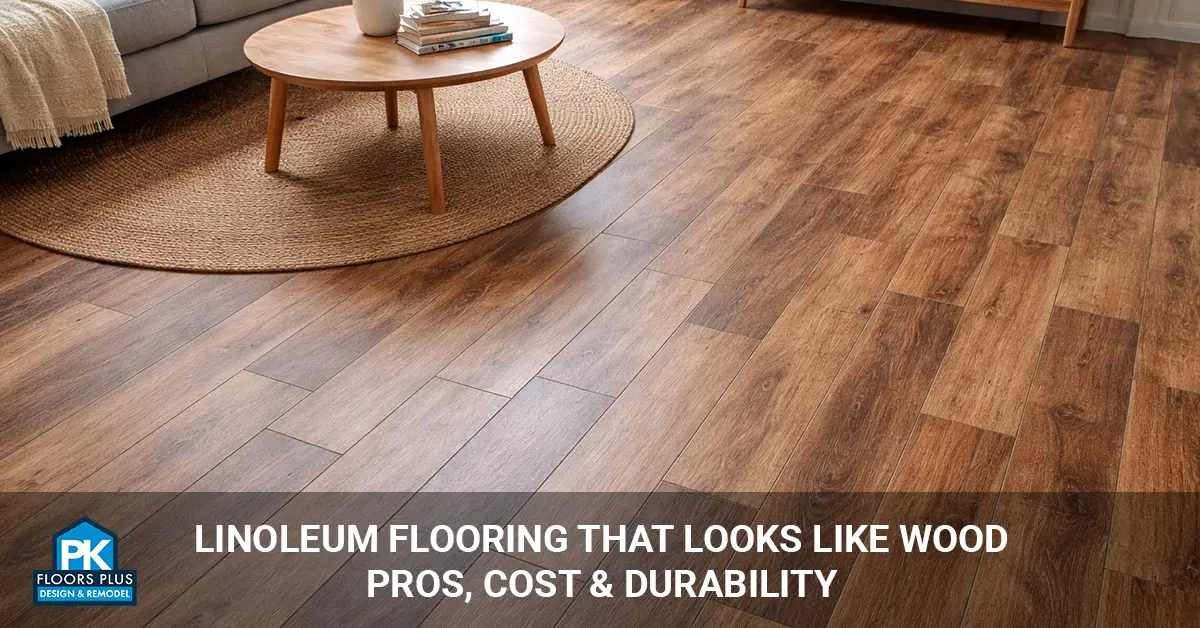
Linoleum flooring that looks like wood gives you the warmth of hardwood with less upkeep and better everyday durability. It’s a great choice for homeowners who love the look of wood but want a floor that’s easier to live with.
This guide explains how wood-look linoleum works, where it performs best, how it compares to other flooring options, and whether it’s the right fit for your home.
What Is Wood-Look Linoleum Flooring?
Wood-look linoleum flooring is a natural flooring option designed to look like real hardwood. It offers the appearance of wood with a softer, more comfortable feel.
Linoleum is made from linseed oil, cork dust, wood flour, and natural resins. Wood grain patterns are added to create the look of planks and natural textures.
Unlike vinyl, linoleum is made from renewable materials and has color throughout the material, not just on the surface. This gives it a warmer, more natural feel underfoot.
Does Linoleum Flooring Really Look Like Wood?
Yes, modern linoleum flooring can look very close to real wood when it’s installed the right way. Newer designs use realistic grain patterns, plank-style layouts, and natural color variation.
It looks best in rooms with good natural light and wider plank styles. While it doesn’t have the exact depth of real hardwood, most homeowners find the difference hard to notice once the floor is in place.
Benefits of Linoleum Flooring That Looks Like Wood
Wood-look linoleum offers the look of hardwood with fewer hassles and lower upkeep. It’s designed for real life, not constant maintenance.
This flooring gives your space a warm, natural appearance without the need for sanding or refinishing. It’s durable enough for daily foot traffic and feels comfortable underfoot. Linoleum is also made from natural materials, making it a good option for homeowners who prefer eco-friendly products.
Cleaning is simple. With basic care, linoleum holds up well and keeps its appearance for years.
Linoleum vs Hardwood Flooring
Linoleum and hardwood may look similar, but they behave very differently in everyday use. The right choice depends on how much wear your floors see.
Hardwood has a classic look and can be refinished, but it’s sensitive to moisture, scratches, and temperature changes. Linoleum is more forgiving and handles daily foot traffic with less worry.
Linoleum also costs less upfront and is easier to maintain. While hardwood can last longer in ideal conditions, linoleum often performs better in busy homes with kids, pets, and constant use.
Linoleum vs Vinyl Wood-Look Flooring
Linoleum and vinyl may look similar, but they are made very differently and feel different underfoot. Knowing the difference helps you choose the right floor for your home.
Vinyl is made from synthetic materials and often feels harder and colder. Linoleum is softer, warmer, and made from natural ingredients. Linoleum also wears more evenly over time, while vinyl depends on a printed surface layer that can show wear as it ages.
For homeowners who value comfort and sustainability, linoleum is often the better option. If you’re comparing multiple options, a full linoleum vs vinyl flooring comparison can help you decide which material fits your home and lifestyle best.
Best Rooms for Wood-Look Linoleum Flooring
Wood-look linoleum works best in rooms where comfort and durability are important. It’s designed for everyday living, not just appearance.
This flooring is a strong choice for kitchens, bedrooms, living rooms, hallways, and home offices. It handles foot traffic well and feels warmer and softer than tile or vinyl.
It’s not ideal for areas with constant moisture, such as full bathrooms or laundry rooms, unless the floor is properly sealed and carefully maintained.
Is Wood-Look Linoleum Durable Enough for Daily Use?
Yes, wood-look linoleum is durable enough for daily use in busy homes.
It’s built to handle real life.
Linoleum resists scratches better than hardwood and stands up well to foot traffic, kids, and pets. With proper care, it can last 20 to 40 years.
That durability makes wood-look linoleum a smart choice for families who want long-term value without constant repairs.
Maintenance and Cleaning Tips
Linoleum flooring is easy to maintain with a few simple habits. Regular care keeps it looking good for years.
Sweep or vacuum often to remove dirt and grit. Clean with a damp mop and a mild, pH-neutral cleaner. Avoid harsh chemicals, steam cleaners, and too much water, as they can damage the surface.
Use felt pads under furniture and place rugs in high-traffic areas to help protect the finish and extend the floor’s life.
Installation Options for Wood-Look Linoleum
Wood-look linoleum comes in sheets, tiles, and planks to fit different spaces and budgets. Each option has its own installation needs.
Sheet linoleum provides a smooth, seamless finish but usually requires professional installation. Linoleum planks and tiles are easier to handle and may work for experienced DIY homeowners.
No matter the format, the subfloor must be clean and flat. Most installations take one to two days, depending on the size and layout of the room.
Cost of Linoleum Flooring That Looks Like Wood
Wood-look linoleum flooring usually costs less than hardwood and offers strong long-term value. It sits in the middle range when it comes to pricing.
Material costs are typically moderate, with installation added on top. While linoleum may cost more upfront than vinyl, it often lasts longer and holds up better over time.
That durability can make linoleum a better value in the long run.
Pros and Cons of Wood-Look Linoleum Flooring
Wood-look linoleum has several advantages that make it a popular choice for many homes. It’s designed for comfort, durability, and everyday use.
Pros
- A natural, warm appearance similar to real wood
- Durable and built to last for decades
- Made from eco-friendly, natural materials
- Comfortable and softer underfoot than tile or vinyl
- Easy to clean and maintain with simple care
Cons
- Limited moisture tolerance compared to tile or vinyl
- Fewer design and color options than vinyl flooring
- Professional installation is often recommended for the best results
Wood-look linoleum is best for homeowners who value comfort, durability, and natural materials over high-gloss finishes or waterproof flooring.
Common Mistakes to Avoid
Avoiding common mistakes helps wood-look linoleum perform better and last longer.
Most problems come from choosing the wrong product or skipping preparation.
One common mistake is confusing linoleum with vinyl and buying the wrong flooring. Skipping proper subfloor preparation can also lead to uneven surfaces and visible flaws.
Using harsh cleaners or too much water can wear the floor down faster. Choosing the right thickness and finish is also important, as it affects comfort, durability, and long-term performance.
Final Thoughts
Wood-look linoleum flooring gives you the warmth of wood with durability that works for everyday life. It’s comfortable, made from natural materials, and easier to care for than hardwood.
If you like the look of wood but want less upkeep, wood-look linoleum is a smart option worth considering.