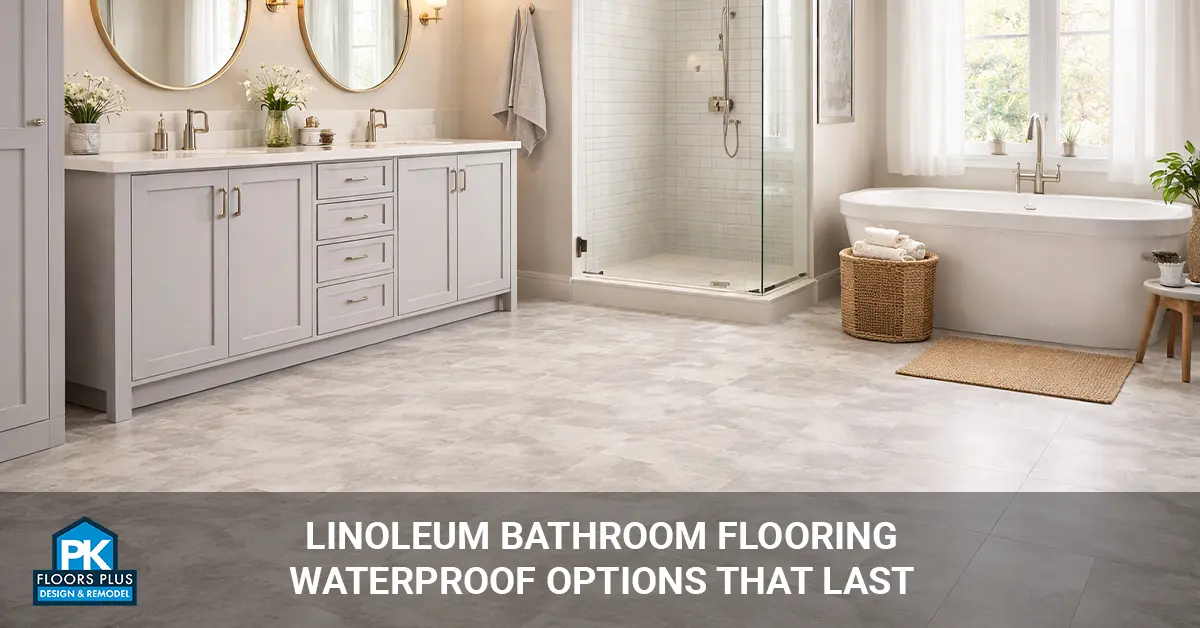
Linoleum bathroom flooring can be a long-lasting option when the right product is installed the right way. It feels comfortable underfoot, is easy to maintain, and gives bathrooms a clean, finished look.
If you’re unsure whether linoleum can handle moisture and daily bathroom use, this guide explains what works, what to avoid, and how to choose linoleum options that hold up over time.
Is Linoleum a Good Choice for Bathroom Flooring?
Yes, linoleum can be a good choice for bathroom flooring when it’s properly installed and sealed. It works best in bathrooms where moisture is controlled and spills are cleaned up quickly.
Linoleum is comfortable underfoot, durable, and easier to stand on than tile. However, it’s not the best option for areas with constant standing water unless extra precautions are taken.
Is Linoleum Flooring Waterproof or Water-Resistant?
Linoleum flooring is water-resistant, not fully waterproof. It handles splashes and bathroom humidity well, but standing water can cause damage over time.
Proper sealing, tight seams, and correct installation are essential. When moisture is controlled and spills are cleaned quickly, linoleum performs well in bathrooms.
What Is Linoleum Bathroom Flooring Made Of?
Linoleum bathroom flooring is made from natural materials like linseed oil, cork dust, wood flour, and natural resins. These ingredients create a durable surface that feels warmer and softer underfoot than tile.
Unlike vinyl, linoleum isn’t synthetic. Its color runs through the material instead of sitting only on the surface, which helps it wear evenly and keep its appearance longer.
Waterproof Linoleum Options for Bathrooms
Sheet linoleum is the best waterproof-style option for bathrooms. It creates a nearly seamless surface that helps block moisture.
When installed professionally with heat-welded or tightly sealed seams, sheet linoleum offers strong moisture resistance. Linoleum tiles and planks have more seams, which makes them less suitable for full bathrooms.
Avoid unsealed seams and poorly fitted products in wet areas to prevent water damage.
Best Bathroom Areas for Linoleum Flooring
Linoleum works best in bathrooms with moderate moisture levels. It’s a practical choice where water exposure is limited.
Powder rooms, guest bathrooms, and half baths are ideal spaces for linoleum. It can also work in full bathrooms if ventilation is good and water is cleaned up quickly.
Linoleum should not be installed inside showers or wet rooms where water is constant.
Linoleum vs Vinyl Bathroom Flooring
Vinyl is better for bathrooms where full waterproofing is the top priority, while linoleum focuses more on comfort and durability. A detailed linoleum vs vinyl flooring comparison can help you decide which option fits your bathroom best. Linoleum is better where comfort and long-term durability matter more.
Vinyl is fully waterproof and made from synthetic materials. Linoleum is water-resistant and made from natural materials. Linoleum feels warmer and softer underfoot, while vinyl tends to feel harder and colder.
For bathrooms with light to moderate moisture, many homeowners choose linoleum for its comfort and natural feel.
Linoleum vs Tile in Bathrooms
Linoleum is more comfortable than tile because it’s warmer and softer underfoot.
It’s easier on your feet during daily use.
Tile is fully waterproof, but it feels hard and cold and can be uncomfortable to stand on for long periods. Tile grout also needs regular cleaning and can crack over time.
Linoleum has fewer joints and is easier to maintain, though proper sealing is important to protect it from moisture.
How Durable Is Linoleum in a Bathroom?
Linoleum is durable enough for daily bathroom use when moisture is properly managed. It handles foot traffic, humidity, and normal temperature changes well.
With proper care, linoleum bathroom flooring can last 20 to 40 years. Cleaning up spills quickly and keeping good ventilation in the bathroom make a big difference in how long it lasts.
Maintenance and Cleaning Tips for Linoleum Bathroom Floors
Linoleum bathroom flooring is easy to care for with a simple cleaning routine.
Regular maintenance helps prevent moisture damage and keeps the floor looking good.
Sweep or vacuum to remove dirt and grit. Clean with a damp mop and a mild, pH-neutral cleaner. Avoid harsh chemicals, steam cleaners, and too much water, as they can damage the surface.
Place bath mats near sinks, tubs, and showers to protect the floor from excess moisture.
Installation Options for Linoleum in Bathrooms
Sheet linoleum is the most reliable option for bathroom flooring. It offers better moisture protection than tiles or planks.
Professional installation is strongly recommended to ensure tight seams and proper sealing. The subfloor must be clean, flat, and completely dry. Most bathroom installations take one to two days to complete.
Cost of Linoleum Bathroom Flooring
Linoleum bathroom flooring usually costs less than tile or hardwood and offers good long-term value. It falls into a moderate price range for most homeowners.
Material costs are reasonable, with installation added based on the size and layout of the bathroom. While linoleum may cost more than basic vinyl, it often lasts longer and feels more comfortable underfoot.
Pros and Cons of Linoleum Bathroom Flooring
Linoleum bathroom flooring has several benefits that make it a practical option for many homes. It works well when comfort and easy care are priorities.
Pros
- Comfortable and warm underfoot
- Easy to clean and maintain
- Made from natural materials
- Durable when properly installed and cared for
Cons
- Not fully waterproof, so standing water can cause damage
- Professional installation is usually recommended
- Not suitable for shower areas or wet rooms
Linoleum works best in bathrooms where moisture is well controlled and comfort is a priority.
Common Mistakes to Avoid
Avoiding common mistakes helps linoleum bathroom flooring last longer and perform better. Most problems come from product confusion or poor installation.
One common mistake is confusing linoleum with vinyl and choosing the wrong flooring. Skipping proper sealing or subfloor preparation can also lead to moisture problems.
Letting water sit on the floor shortens linoleum’s lifespan. For better moisture control, always choose sheet linoleum in bathrooms.
Final Thoughts
Linoleum bathroom flooring can be a durable and comfortable choice when the right products and installation methods are used. It’s easy to maintain, softer underfoot than tile, and works well in many bathrooms.
If you want a bathroom floor that balances comfort, durability, and long-term value, linoleum is a solid option to consider.