
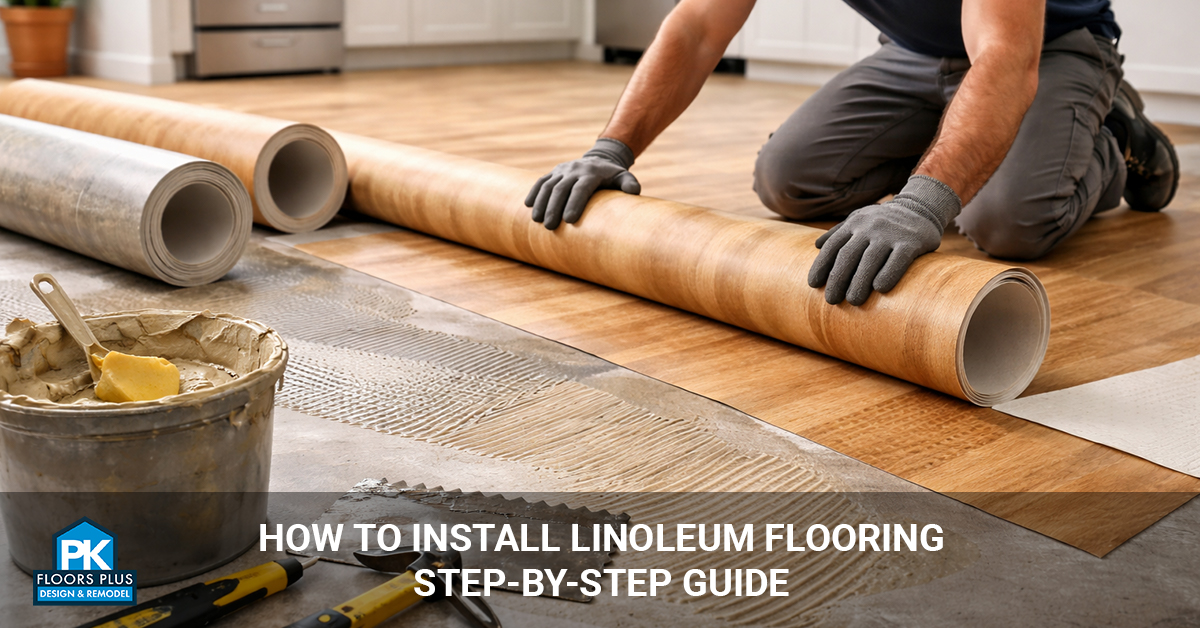
Installing linoleum flooring is something many homeowners can handle, as long as they choose the right type and take time to prepare. Linoleum is durable, comfortable to walk on, and built to last. But it needs to be installed correctly to avoid issues like bubbling, lifting, or moisture damage.
This guide walks you through how to install linoleum flooring step by step. It covers the tools you’ll need, how to prepare the subfloor, and the most common mistakes to avoid. Everything is explained in clear, simple language so you can move forward with confidence.
Can You Install Linoleum Flooring Yourself?
Yes, you can install linoleum flooring yourself if you’re using linoleum tiles or click-lock planks and the subfloor is in good shape. These options are more forgiving and work well for DIY projects.
Sheet linoleum is much harder to install. The seams have to be cut, fitted, and sealed perfectly, which is why professional installation is usually the safer choice.
Types of Linoleum Flooring and How They’re Installed
Linoleum flooring is installed differently depending on the type you choose, and knowing this upfront makes the job much easier. Each option comes with its own level of difficulty and tools.
- Sheet linoleum is glued down and rolled flat. It offers the best moisture resistance, but it’s also the hardest to install and usually requires professional help.
- Linoleum tiles are glued down one piece at a time. They’re easier to handle and simple to replace if one tile gets damaged.
- Click-lock (floating) linoleum snaps together without adhesive. It’s the most DIY-friendly option and works well for homeowners installing linoleum for the first time.
The type you choose determines the tools you’ll need, whether adhesive is required, and how much experience the job takes. If you’re still deciding between materials, a detailed linoleum vs vinyl flooring comparison can help you understand differences in cost, durability, and installation difficulty.
Tools and Materials You’ll Need
Having the right tools ready before you start makes linoleum installation faster, smoother, and far less stressful. It also helps prevent mistakes once the flooring is in place.
Basic tools and materials include:
- Tape measure
- Utility knife with sharp blades
- Straightedge or metal ruler
- Adhesive (if required)
- Notched trowel
- Floor roller or rolling pin
- Spacers
- Seam sealer (for sheet linoleum)
Optional tools, such as a heat gun or seam roller, can make it easier to work around tight corners and create clean seams.
How to Prepare the Subfloor for Linoleum Flooring
Proper subfloor preparation is the most important step in installing linoleum flooring. The surface must be flat, clean, dry, and smooth, because any bumps, cracks, or moisture problems will show through and shorten the life of the floor.
Key preparation steps include:
- Remove old flooring and any adhesive residue
- Patch low spots and sand down high areas
- Clean all dust and debris thoroughly
- Test for moisture, especially on concrete subfloors
Skipping this step is the most common reason linoleum flooring fails early, even when everything else is done right.
Step-by-Step: How to Install Linoleum Flooring
Installing linoleum flooring works best when you follow each step in order and don’t rush the process. Every step matters for a clean, long-lasting result.
Step 1: Acclimate the Linoleum
Linoleum should sit in the room for 24 to 48 hours before installation. This gives the material time to adjust to the room’s temperature and humidity, which helps prevent curling or expansion later.
Step 2: Measure and Dry-Fit the Flooring
Measure the room carefully and lay the linoleum in place without adhesive first. Dry-fitting lets you check cuts, seam placement, and pattern alignment before anything becomes permanent.
Step 3: Cut the Linoleum to Fit
Cut the linoleum slowly using a sharp utility knife and a straightedge. Leave a small expansion gap around the walls, which will be hidden later by baseboards or trim.
Step 4: Apply Adhesive or Lock the Planks
For glue-down linoleum, spread adhesive evenly with a notched trowel and follow the manufacturer’s timing instructions. For click-lock linoleum, snap the planks together according to your layout plan without using glue.
Step 5: Roll and Secure the Floor
Rolling the floor is essential for proper bonding. Use a floor roller to press the linoleum firmly into the adhesive, removing air pockets and ensuring full contact with the subfloor.
Step 6: Seal Seams and Trim Edges
Seal the seams on sheet linoleum to protect against moisture. Once the floor is secure, reinstall baseboards, trim, and transition strips to finish the installation cleanly.
Common Linoleum Flooring Installation Mistakes to Avoid
Avoiding these common mistakes will greatly improve the final result and extend the life of your linoleum floor. Most problems begin before the first piece of flooring is even installed.
Common mistakes to watch out for include:
- Skipping proper subfloor preparation
- Using the wrong adhesive for the flooring type
- Not allowing enough acclimation time
- Poor seam sealing, especially with sheet linoleum
- Installing linoleum in moisture-prone areas without proper protection
Taking the time to do each step correctly helps prevent lifting, bubbling, and early failure.
How Long Does Linoleum Flooring Installation Take?
Linoleum flooring installation usually takes one to two days per room, depending on the room size and the type of linoleum being installed. DIY projects often take longer, especially when you factor in adhesive drying time and proper seam sealing.
DIY vs Professional Installation: Which Is Better?
DIY installation is best for linoleum tiles and click-lock flooring in small to medium rooms where the subfloor is in good condition. These options are more forgiving and easier to handle.
Professional installation is the better choice for sheet linoleum, large spaces, or moisture-prone areas, and reviewing linoleum flooring cost in 2025 can help you decide whether hiring a professional fits your budget.
What to Do After Installing Linoleum Flooring
After installing linoleum flooring, it’s important to protect the surface while it sets and cures. This helps prevent shifting, damage, or bonding issues.
Follow these post-installation steps:
- Avoid walking on the floor for at least 24 hours
- Wait 48–72 hours before moving furniture back in
- Avoid wet mopping during the first week
- Use felt pads under furniture legs to prevent scratches
These steps allow the adhesive to cure properly and help your new floor last longer.
Final Thoughts
Installing linoleum flooring the right way takes preparation, patience, and attention to detail. When it’s done correctly, linoleum can deliver decades of durability, comfort, and easy maintenance. By following the proper steps and avoiding common mistakes, you can achieve a clean, professional-looking result that holds up for years to come.