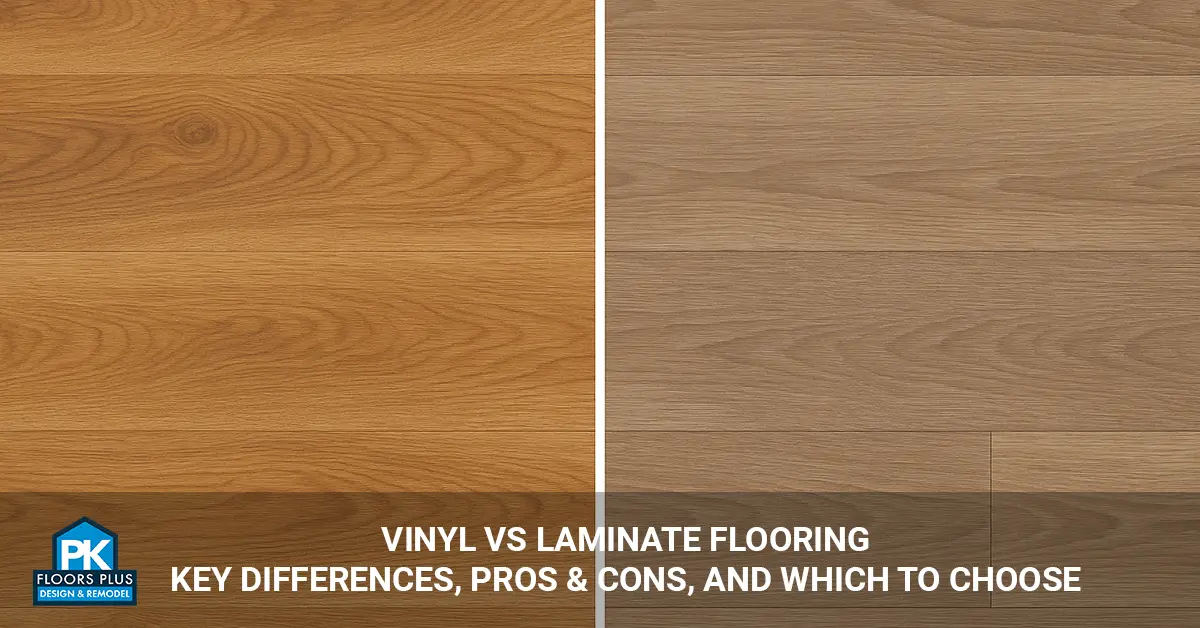
Vinyl and laminate flooring are two budget-friendly flooring options that give you the look of hardwood without the high cost. Both are popular because they’re stylish, easy to install, and durable enough for busy homes. Even though they look similar, vinyl and laminate perform very differently, especially when it comes to water resistance, durability, and how they feel under your feet.
This guide breaks down the key differences in simple terms. You’ll learn the pros and cons of each flooring type and when to choose vinyl over laminate or laminate over vinyl. By the end, you’ll have a clear idea of which one is the best fit for your home and lifestyle.
What’s the Difference Between Vinyl and Laminate Flooring?
The biggest difference between vinyl and laminate flooring is the material they’re made from. Vinyl is built from waterproof synthetic materials, while laminate has a wood-based core. This core difference affects everything from how the floors handle water and heat to how durable, comfortable, and quiet they are in your home.
Vinyl is the better choice for rooms with moisture, like bathrooms and kitchens. Laminate is great if you want a more realistic wood feel underfoot. Both flooring types are stylish, budget-friendly, and simple to install, which is why homeowners compare them so often.
Vinyl Flooring: What It Is and How It Works
Vinyl flooring is a fully waterproof flooring material made from PVC and several synthetic layers that are designed to resist moisture and heavy wear. Because it doesn’t swell, warp, or absorb water, vinyl performs extremely well in areas where spills and humidity are common.
The main types of vinyl flooring include:
- Luxury Vinyl Plank (LVP): mimics the look of real wood
- Luxury Vinyl Tile (LVT): recreates the appearance of stone or tile
- Sheet vinyl: large, budget-friendly rolls for wide spaces
- SPC/WPC vinyl: rigid, strong, and very durable options
Vinyl is the best choice for bathrooms, kitchens, laundry rooms, and basements, any space where moisture is a concern, and you need flooring that can handle daily life without damage.
Laminate Flooring: What It Is and How It Works
Laminate flooring is a wood-based flooring made from multiple layers that are fused together to look and feel like real hardwood. It includes a durable wear layer on top, a realistic image layer, a strong HDF core for stability, and a backing layer that prevents warping.
Laminate uses a floating click-lock system, which means the planks snap together without glue or nails. This makes installation quick, clean, and DIY-friendly. Laminate is an excellent choice for living rooms, bedrooms, hallways, and home offices, any room where you want comfort, warmth, and a natural wood appearance without the high price of real hardwood.
Vinyl vs Laminate: Side-by-Side Comparison
| Feature | Vinyl Flooring | Laminate Flooring |
| Water Resistance | 100% waterproof | Water-resistant; some waterproof options |
| Durability | Excellent for dents, water | Excellent for scratches |
| Appearance | Very good | More realistic wood look |
| Comfort | Softer, quieter | Feels more like real wood |
| Installation | Click-lock or glue-down | Mostly click-lock |
| Cost | Affordable | Affordable |
| Best For | Bathrooms, kitchens, basements | Living rooms, bedrooms, hallways |
Durability & Lifespan: Which Lasts Longer?
Vinyl flooring generally lasts longer because it’s fully waterproof and resists dents, stains, and moisture. High-quality vinyl floors can stay in great shape for 20–30 years, even in busy homes.
Laminate is also very durable and offers excellent scratch resistance, which makes it a great option for homes with pets or active families. Good laminate flooring typically lasts 15–25 years, depending on its AC rating, thickness, and how well it’s maintained.
If water is your biggest concern, vinyl clearly lasts longer. But if you want the best scratch resistance, laminate often performs better.
Water Resistance: Which Flooring Handles Moisture Better?
Vinyl flooring handles moisture better because it is 100% waterproof. This makes vinyl the safest choice for areas where spills, humidity, or standing water are common.
You can install vinyl confidently in:
- Bathrooms
- Kitchens
- Laundry rooms
- Basements
Laminate, on the other hand, is water-resistant but not fully waterproof unless the product specifically states it. If water sits on laminate for too long, its wood-based core can swell or become damaged.
So if moisture is a major concern in your home, vinyl is the more reliable option.
Appearance & Style Options
Laminate flooring usually looks more realistic because it uses deeper image layers and textured surfaces that closely imitate real wood. This gives laminate a warm, natural appearance that many homeowners prefer.
Vinyl has also come a long way, especially in premium LVP and LVT styles. Modern vinyl can look highly convincing, offering wood, tile, and stone designs that are stylish and waterproof.
If you want the most realistic wood look, laminate typically wins. But if you want the widest range of styles, especially waterproof wood and tile options, vinyl gives you more versatility.
Comfort & Feel Underfoot
Laminate flooring feels more like real hardwood because its rigid wood-based core gives it a warm, solid, and comfortable feel. This makes laminate a great choice for living spaces where you want that authentic wood sensation under your feet.
Vinyl is softer and quieter, and many vinyl planks include built-in padding that adds extra comfort. This cushioning makes vinyl a good option for families with kids, pets, or anyone who prefers a softer step.
Installation: Which Is Easier to Install?
Both vinyl and laminate flooring are easy to install, especially when you use click-lock planks that snap together. This makes either option a good choice for DIY projects.
Laminate almost always installs as a floating floor, meaning it sits on top of your subfloor without glue or nails. Vinyl offers more flexibility because it can be installed as a floating floor, glued down, or even peel-and-stick. Vinyl is also thinner and easier to cut, which makes it slightly more beginner-friendly.
If you’re new to DIY installation, both flooring types are manageable, but vinyl may feel a bit easier for first-timers.
Maintenance & Cleaning
Vinyl and laminate flooring are both easy to maintain, but vinyl is more forgiving and handles everyday cleaning with less worry. Vinyl stands up to water, spills, and frequent mopping without damage, which makes it one of the lowest-maintenance flooring options available.
How to clean vinyl flooring:
- Sweep or vacuum regularly
- Use a damp mop as needed
- No risk of water damage from normal cleaning
How to clean laminate flooring:
- Sweep regularly to prevent scratches
- Damp mop lightly (never soak the floor)
- Avoid steam mops, which can cause swelling
- Keep standing water off the surface
If you want a flooring option that’s truly hassle-free and moisture-proof, vinyl is the better choice for easy maintenance.
Cost Comparison: Vinyl vs Laminate
Laminate flooring is usually slightly cheaper than vinyl, making it the more budget-friendly option for most homeowners. Both are affordable compared to hardwood, but the overall cost can vary depending on quality, thickness, and brand.
Typical price ranges:
- Vinyl: $2–$7 per sq. ft.
- Laminate: $1–$5 per sq. ft.
Installation costs for both are similar, especially if you choose floating click-lock planks. Vinyl sheet flooring can be even more cost-effective for larger areas because it covers more space with fewer seams and less labor.
Pros and Cons of Vinyl Flooring
Vinyl flooring has clear advantages and a few drawbacks, making it important to understand both before choosing it for your home.
Pros of Vinyl Flooring
Vinyl has several benefits that make it a top choice for busy, moisture-prone areas.
- 100% waterproof, perfect for wet spaces
- Great for bathrooms and kitchens
- Durable and long-lasting, even in high-traffic areas
- Easy to install with click-lock or glue-down options
- Ideal for homes with pets and kids, thanks to its resilience
Cons of Vinyl Flooring
Vinyl also comes with some limitations you should consider.
- Can dent under heavy furniture or sharp pressure
- Cheaper vinyl products may fade over time
- May look slightly less realistic than high-end laminate flooring
Vinyl is a strong all-around option, especially when you need waterproof flooring, but appearance and dent resistance may vary depending on the product you choose.
Pros and Cons of Laminate Flooring
Laminate flooring has several strengths and a few limitations, so understanding both will help you decide if it’s the right fit for your space.
Pros of Laminate Flooring
Laminate offers many benefits that make it a popular alternative to hardwood.
- Very realistic wood texture that looks natural
- Highly scratch-resistant, great for pets and active families
- Affordable compared to hardwood and luxury vinyl
- Comfortable underfoot due to its thicker, wood-based core
- DIY-friendly thanks to its simple click-lock installation
Cons of Laminate Flooring
Laminate also has some drawbacks, especially in rooms with moisture.
- Not fully waterproof, unless labeled as water-resistant
- It can swell if exposed to standing water
- Not ideal for bathrooms or very humid areas
Laminate is a great choice for dry rooms where you want the look and feel of real wood at an affordable price.
Vinyl vs Laminate for Each Room
The best flooring for each room depends on how much moisture, foot traffic, and durability you need. Vinyl works better in wet or humid spaces, while laminate is ideal for dry areas where you want a realistic wood look.
Here’s a quick room-by-room guide:
- Bathroom: Vinyl (100% waterproof)
- Kitchen: Vinyl (handles spills and steam easily)
- Living Room: Laminate (warm, stylish, and wood-like)
- Bedroom: Laminate (comfortable and cozy)
- Basement: Vinyl (moisture-safe and durable)
- Rental Property: Both (affordable and low-maintenance)
- Hallways: Laminate (excellent scratch resistance)
Choosing the right flooring for each room ensures you get the best performance and longest lifespan.
Which Should You Choose: Vinyl or Laminate?
You should choose vinyl if you want fully waterproof flooring that can be installed in any room, including kitchens, bathrooms, and basements. Vinyl is durable, kid-friendly, pet-friendly, and extremely easy to maintain, making it a great all-around choice.
You should choose laminate if you want the most realistic wood look, a warm and comfortable feel underfoot, and excellent scratch resistance. Laminate works best in living rooms, bedrooms, hallways, and other dry areas where style and comfort matter most.
If moisture is your main concern, pick vinyl. If you care more about wood realism and comfort, go with laminate.
Final Thoughts
Vinyl and laminate flooring are both great options, but the right choice depends on where you plan to use them and what matters most in your home. Vinyl is the better pick for moisture-prone rooms and long-term durability, making it perfect for bathrooms, kitchens, and basements. Laminate is the ideal choice for dry spaces where you want the most realistic wood look without paying hardwood prices.
No matter which flooring you choose, both vinyl and laminate can upgrade your home with beautiful, modern style while keeping costs affordable.